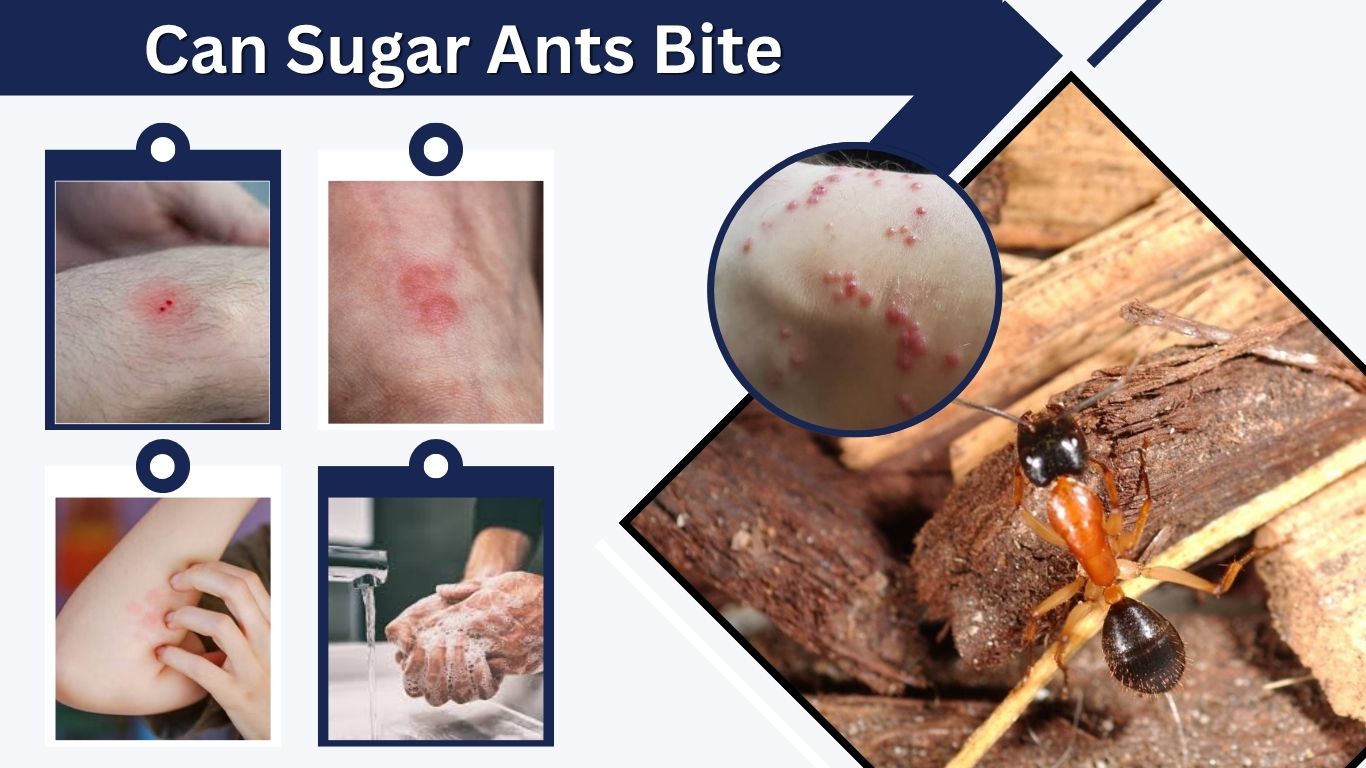
Can sugar ants bite? Yes, some ants commonly called sugar ants can bite humans with their mandibles, although the bites are usually mild and uncommon. The name “sugar ant” is used for several different ants attracted to sweet foods, so biting behavior varies by species. Banded sugar ants, for example, can bite when disturbed, while many tiny household sugar ants rarely cause noticeable injuries. Most encounters result in little more than brief discomfort, redness, or itching. Understanding their behavior can help you prevent bites and manage ants safely.
Can Sugar Ants Bite Humans?
Sugar ants are generally more interested in food than people. They enter kitchens, pantries, and other areas looking for sugar, crumbs, syrups, fruit, and other food sources. However, ants have mandibles used for carrying food and defending themselves, so some species can pinch human skin when handled, trapped, or threatened.
Why Sugar Ants May Bite
A sugar ant may bite when:
- It becomes trapped against your skin
- You disturb a nest
- You accidentally squeeze the ant
- Ants are defending their colony
- You handle an ant directly
- Large numbers crawl beneath clothing
- A worker perceives a threat
They do not normally seek humans specifically to obtain blood or food.
Do Sugar Ants Bite or Sting?
Most ants commonly described as sugar ants rely primarily on their jaws rather than a medically significant sting.
The exact answer depends on the species because “sugar ant” is a common name rather than one precise scientific group.
Some ants bite and may release defensive chemicals around the affected area. Others have stingers, although many small household ants associated with sugary foods cause little or no noticeable reaction.
Correct species identification is therefore useful if repeated painful encounters occur.
What Does a Sugar Ant Bite Look Like?
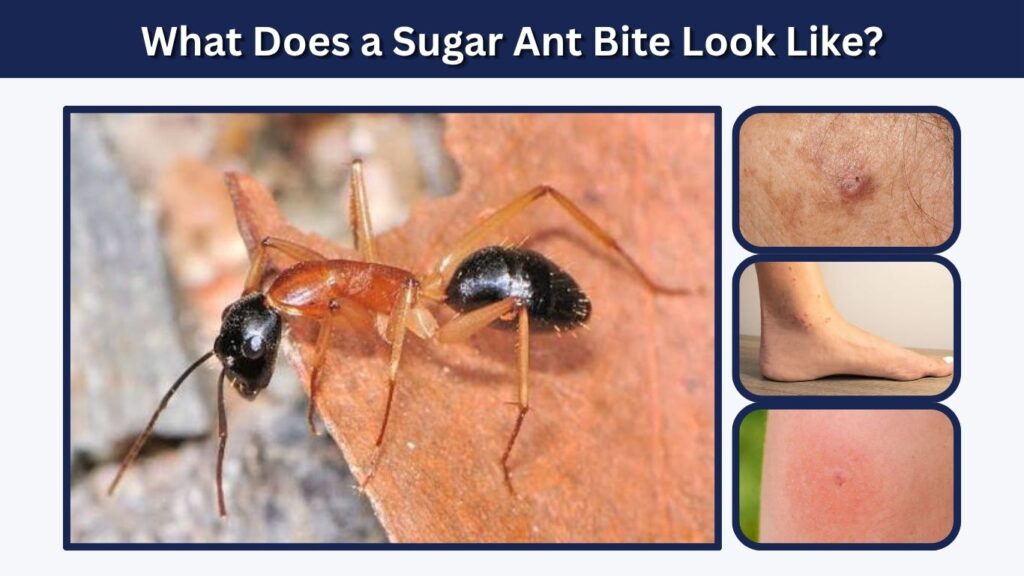
A minor sugar ant bite may be difficult to distinguish from other small insect bites or skin irritation. The mark can appear as a tiny red spot or raised bump and may produce brief itching or tenderness. Reactions vary according to ant species and individual skin sensitivity.
Common Sugar Ant Bite Symptoms
Possible symptoms include:
- Small red mark
- Mild itching
- Brief pinching sensation
- Localized tenderness
- Minor swelling
- Small raised bump
- Temporary burning sensation
For most people, symptoms remain localized and gradually improve.
Repeated scratching may irritate the skin further and make the bite look more serious than it originally was.
Can Sugar Ants Leave Bite Marks?
Yes, a noticeable mark is possible, but not every bite leaves one.
A very small ant may pinch the skin without producing visible changes. When irritation occurs, it usually appears around the point of contact.
A sugar ant bite cannot reliably be identified from a skin mark alone because mosquito bites, flea bites, mites, contact irritation, and other insects can produce similar-looking bumps.
Can Banded Sugar Ants Bite?
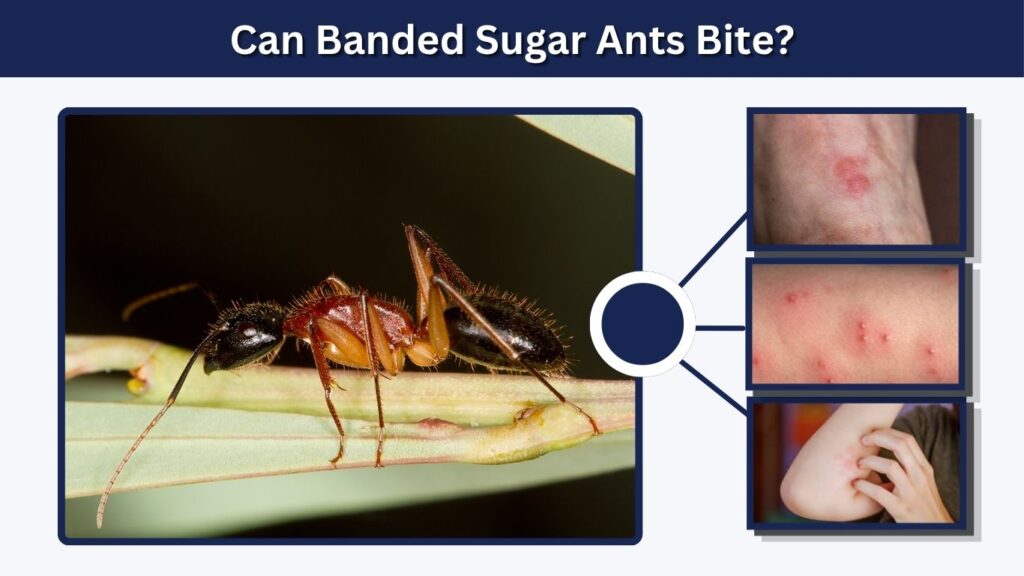
The banded sugar ant is an Australian carpenter ant commonly known as Camponotus consobrinus. These ants are much larger than many tiny household ants and are capable of delivering a noticeable bite when disturbed. They normally avoid conflict but may defend themselves if handled or if their nesting area is threatened.
Banded Sugar Ant Bite
A banded sugar ant may use its strong mandibles to grip the skin.
Possible effects include:
- Sharp pinching sensation
- Local redness
- Mild burning
- Temporary pain
- Small amount of swelling
- Itching afterward
These ants can also use defensive chemical secretions, which may make irritation more noticeable.
Despite their size, they are not normally aggressive toward people unless disturbed.
Can Black Sugar Ants Bite?
The term “black sugar ant” can refer to different dark-colored household ants depending on location.
Many small black ants attracted to sugar are physically capable of using their mandibles, but their bites may be too weak to cause significant discomfort.
Larger carpenter-type ants can deliver a more noticeable pinch.
If dark ants are repeatedly causing painful bites, identifying the exact species is better than relying on the general name “sugar ant.”
Are Sugar Ant Bites Dangerous?
For most people, a typical sugar ant bite is a minor nuisance rather than a serious medical concern. Sugar ants are not comparable to highly defensive stinging ants such as some fire ants. Nevertheless, individual reactions differ, and any insect exposure can occasionally produce more substantial irritation in sensitive people.
When a Bite May Need Attention
Watch for symptoms such as:
- Increasing redness
- Significant swelling
- Severe or persistent pain
- Warmth around the affected area
- Drainage or signs of infection
- Widespread rash or hives
- Swelling beyond the immediate bite area
Seek urgent medical attention for difficulty breathing, swelling of the tongue or throat, faintness, or other signs of a severe allergic reaction.
Can Sugar Ant Bites Cause Infection?
The bite itself does not normally cause infection. However, scratching an itchy bite can break the skin and allow bacteria to enter.
Keep the area clean and avoid repeatedly scratching it.
Increasing pain, spreading redness, warmth, pus, or other worsening symptoms could indicate a skin infection and should be evaluated by a healthcare professional.
How to Treat a Sugar Ant Bite
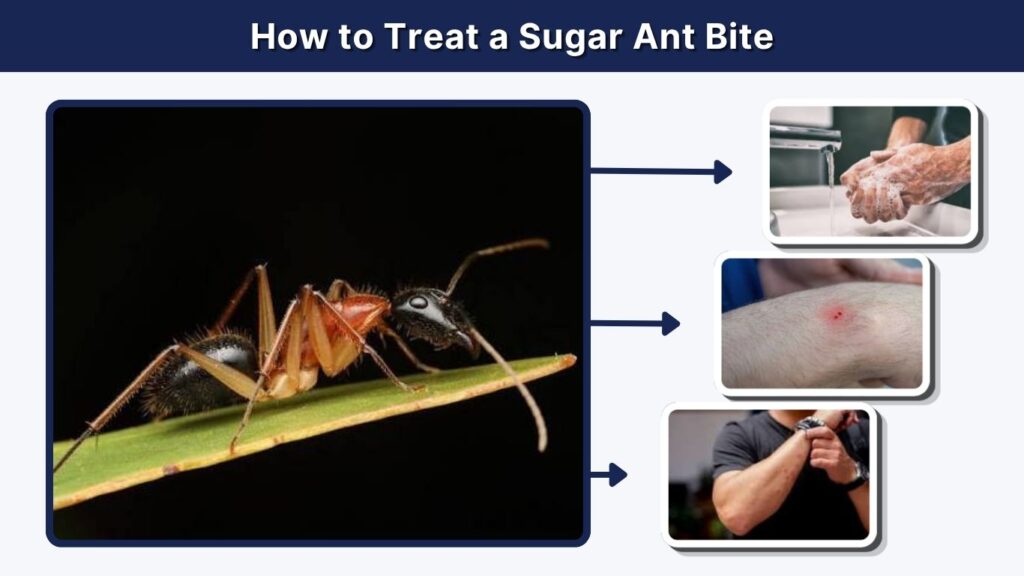
Most minor bites require only simple home care. The goal is to clean the skin, reduce discomfort, and prevent scratching. Because the common name “sugar ant” can describe multiple species, monitor your reaction instead of assuming every bite will behave identically.
Basic Sugar Ant Bite Care
For a mild bite:
- Wash the affected skin with soap and water.
- Dry the area gently.
- Apply a cool compress for swelling or discomfort.
- Avoid scratching the bite.
- Keep irritated skin clean.
- Monitor for worsening redness or swelling.
For persistent itching, a pharmacist or healthcare professional can recommend an appropriate over-the-counter option based on your circumstances.
How Long Does a Sugar Ant Bite Last?
A mild bite may cause discomfort for only a few minutes, while redness or itching can persist for several hours or longer.
Duration depends on the ant species, intensity of the bite, and individual reaction.
If a mark continues worsening rather than improving, becomes very painful, or develops signs of infection, consider medical evaluation instead of assuming it is a normal ant bite.
Why Are Sugar Ants Crawling on You?
Sugar ants do not normally approach humans because they want to bite. They may crawl onto people because food odors, sweet residues, perspiration, or nearby food sources attract them. If you are sitting close to an established ant trail, workers may simply travel across clothing or skin.
What Attracts Sugar Ants Around People?
Potential attractions include:
- Sweet drinks
- Fruit juice
- Candy
- Syrup
- Food crumbs
- Desserts
- Sticky hands
- Food spills
- Open trash
- Pet food
Washing away food residues and keeping eating areas clean can greatly reduce contact.
Do Sugar Ants Feed on Humans?
No. Sugar ants are not blood-feeding parasites like mosquitoes, fleas, or bed bugs.
They are generally searching for carbohydrate-rich foods and other nutrients.
Some ant species also consume proteins from insects, meats, or pet foods. A sugar ant walking over your skin is usually exploring rather than trying to feed on you.
How to Prevent Sugar Ant Bites
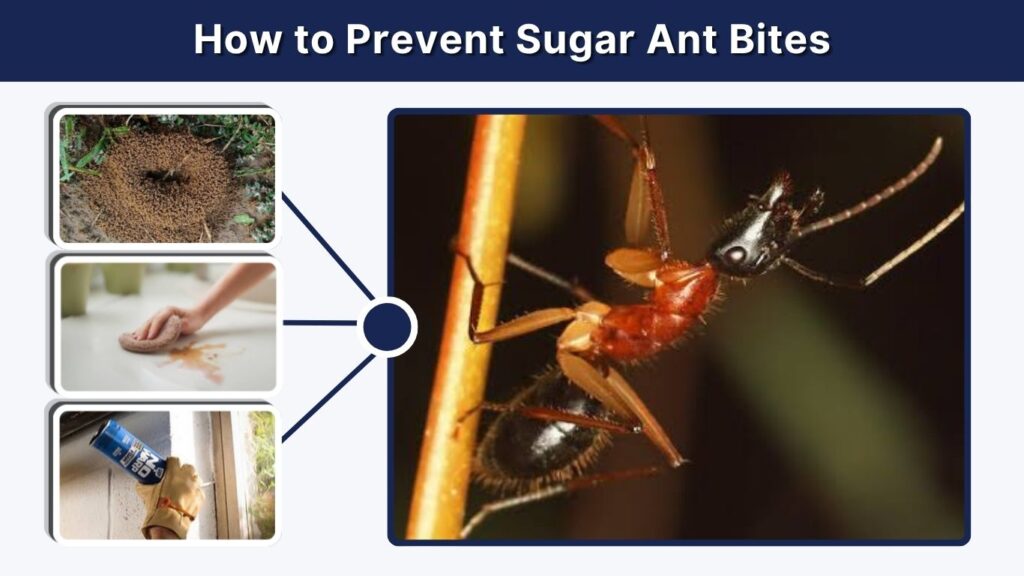
Preventing bites largely means preventing close contact with ants. Because most encounters happen when ants are accidentally trapped, touched, or disturbed, reducing indoor infestations and avoiding direct nest disturbance can make bites unlikely.
Ways to Avoid Sugar Ant Bites
Try these precautions:
- Do not handle ants with bare fingers.
- Avoid disturbing nests.
- Clean sweet spills immediately.
- Store sugar and sweets in sealed containers.
- Keep counters free of crumbs.
- Wash sticky food residues from hands.
- Seal gaps around windows and doors.
- Clean pet feeding areas.
- Empty garbage regularly.
- Use gloves when moving materials containing ants.
Managing the food source is often more effective than repeatedly killing individual worker ants.
Keeping Sugar Ants Out of the House
Follow ant trails to determine where workers are entering.
Seal small cracks around baseboards, windows, doors, utility lines, and wall openings when practical. Keep food sealed and wipe kitchen surfaces regularly.
Ant baits can sometimes provide more effective colony control than contact sprays because workers carry bait back toward the nest. Always follow product labels and keep pest-control products away from children and pets.
FAQs
1. Can sugar ants bite you?
Yes. Some ants called sugar ants can bite humans using their mandibles, particularly when they are trapped, handled, or defending a nest. Most bites are minor and may cause only a brief pinch, mild redness, itching, or a small bump.
2. Do sugar ant bites hurt?
A bite may feel like a small pinch or mild sting. Tiny household ants may produce little noticeable discomfort, while larger species such as banded sugar ants can deliver a stronger bite. Pain is generally temporary unless significant irritation or another reaction develops.
3. Can banded sugar ants bite humans?
Yes. Banded sugar ants are relatively large ants with strong mandibles and can bite when threatened or handled. Their defensive secretions may contribute to localized irritation. However, they normally avoid people and do not intentionally seek humans as prey.
4. Are sugar ant bites dangerous?
Most sugar ant bites are not dangerous and produce only mild localized symptoms. Keep the skin clean and monitor the area. Seek medical attention if you experience rapidly increasing swelling, severe pain, widespread hives, breathing difficulty, or other symptoms suggesting a serious reaction.
5. How do you stop sugar ants from biting?
Avoid handling or crushing ants against your skin and reduce infestations by removing food sources. Clean sweet spills, store food in sealed containers, follow ant trails, seal entry points, and use properly labeled ant-control products when necessary. Reducing indoor ant activity greatly reduces accidental bites.