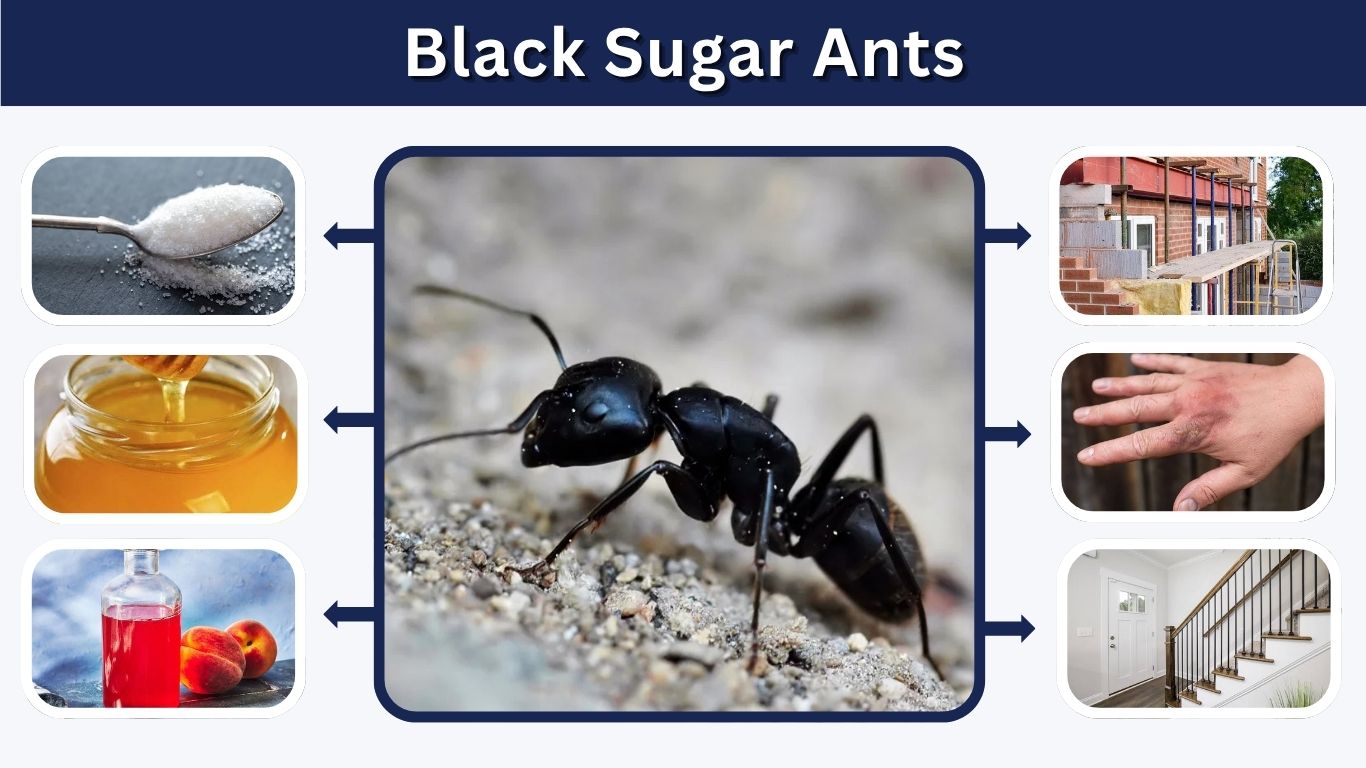
Black sugar ants are small dark-colored ants that often appear in kitchens, bathrooms, pantries, and around sweet foods. However, “black sugar ant” is not always a precise species name. People commonly use it for several black ants attracted to sugar, while the black-headed sugar ant (Camponotus nigriceps) is a specific Australian species. Identifying the ants by their size, body shape, nesting habits, and behavior can help determine what is actually inside your home and the best way to manage them.
What Are Black Sugar Ants?
The term black sugar ant is commonly used for dark ants that readily visit sugary foods. It can include several household ant species rather than describing one universal species.
Ants may enter houses through extremely small gaps and establish nests in wall voids, behind baseboards, beneath countertops, or outdoors beneath objects and soil.
Black Sugar Ant Identification
Common features of ants described as black sugar ants include:
- Dark brown to black coloration
- Six legs
- Elbowed antennae
- Narrow waist
- Rounded abdomen
- Workers traveling along established trails
- Strong attraction to sugary foods
- Activity around kitchens, sinks, and food-storage areas
The exact size varies considerably depending on the species.
Are Sugar Ants Always Black?
No. “Sugar ant” describes feeding behavior or a common-name group more than a single appearance.
Depending on the species, sugar-loving ants may be black, dark brown, reddish, yellowish, or combinations of these colors. Therefore, color alone is not enough for reliable identification.
Tiny Black Sugar Ants in the House
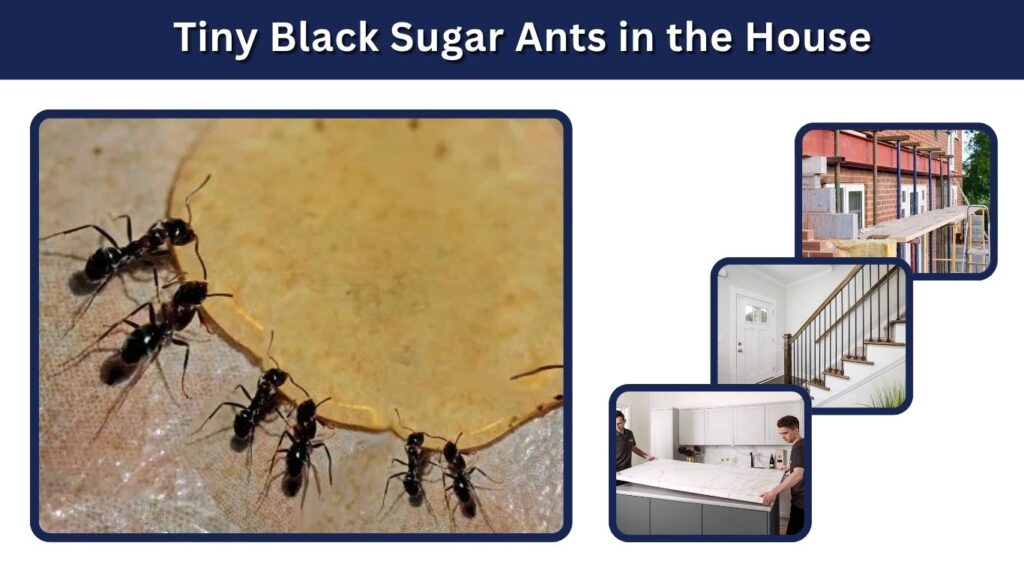
Tiny black ants are especially noticeable when workers discover spilled drinks, syrup, fruit, crumbs, or other food.
One common household ant frequently confused with a general “sugar ant” is the odorous house ant. Workers are small—around 1/10 inch long—and can become persistent indoor food pests.
Where Do Black Sugar Ants Hide?
Inside houses they may travel or nest around:
- Kitchen cabinets
- Countertops
- Baseboards
- Wall cavities
- Window frames
- Plumbing openings
- Sinks
- Dishwashers
- Trash containers
- Pet feeding areas
Ant nests themselves can be difficult to see because many species use hidden wall spaces or other protected cavities.
Why Are Black Sugar Ants in My Kitchen?
The kitchen provides several resources ants need: food, moisture, warmth, and protected hiding places.
A tiny amount of syrup, soda, fruit juice, honey, or food residue can support repeated foraging. Once a worker discovers food, other members of the colony may follow chemical trails to the same location.
This is why a few ants can seemingly turn into a long trail within a relatively short period.
Black-Headed Sugar Ant
The black-headed sugar ant (Camponotus nigriceps) is different from the tiny household ants that Americans may casually call black sugar ants.
It is an Australian Camponotus species and is considerably larger than typical tiny kitchen ants. Published ant references describe C. nigriceps as a large species whose abdominal coloration can vary from very dark to brownish or yellowish shades.
What Does a Black-Headed Sugar Ant Look Like?
Typical characteristics include:
- Distinctive dark or black head
- Relatively large body
- Long legs
- Robust Camponotus-type body shape
- Dark to variable abdominal coloration
- Larger queen than workers
Because Camponotus contains many species worldwide, size and color should be considered together rather than relying only on the ant’s black head.
Black-Headed Sugar Ant Queen
A queen is substantially larger and heavier-bodied than ordinary workers.
Queens have a more developed thorax because young reproductive females originally possess wings. After mating, queens generally shed their wings and focus on producing eggs.
Seeing a large ant does not automatically mean you have found a queen, however. Camponotus colonies can contain workers of noticeably different sizes.
Sugar Ants vs. Black Ants
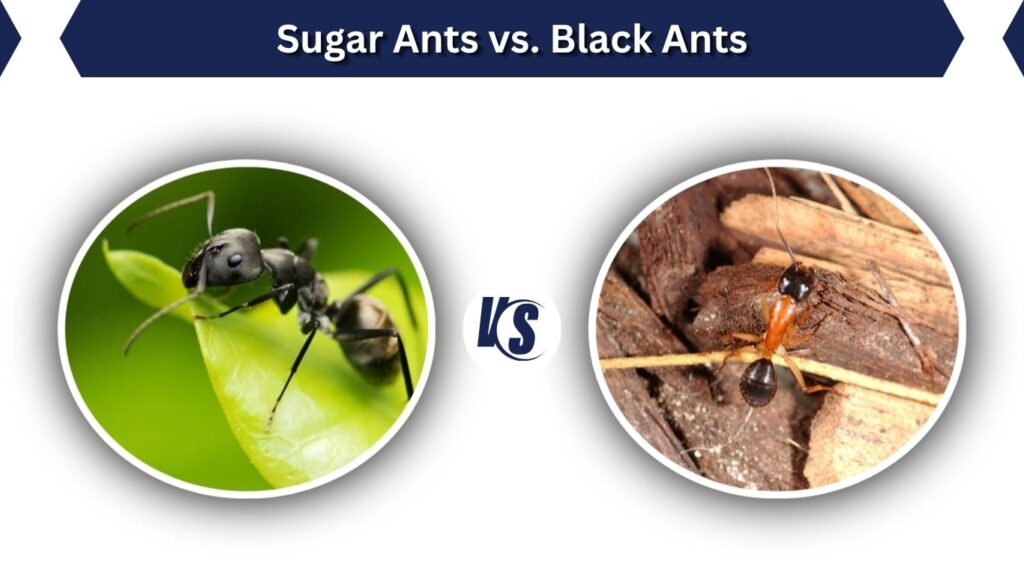
Sugar ants and black ants are not necessarily separate categories.
“Black ant” describes appearance, while “sugar ant” often describes ants attracted to sugary foods. A black ant can therefore also behave like a sugar ant.
Black Ant vs. Sugar Ant
| Feature | Sugar Ant | Black Ant |
| Meaning | Common name often based on food attraction | General description based on color |
| Color | Black, brown, reddish or other shades | Usually dark brown or black |
| Size | Depends on species | Depends on species |
| Eats sugar | Commonly | Many species do |
| One specific species? | Usually no | No |
| May enter homes | Yes | Yes |
The phrase “black sugar ant” should therefore be treated as a descriptive common name unless a specific species has been identified.
Do Black Sugar Ants Bite?
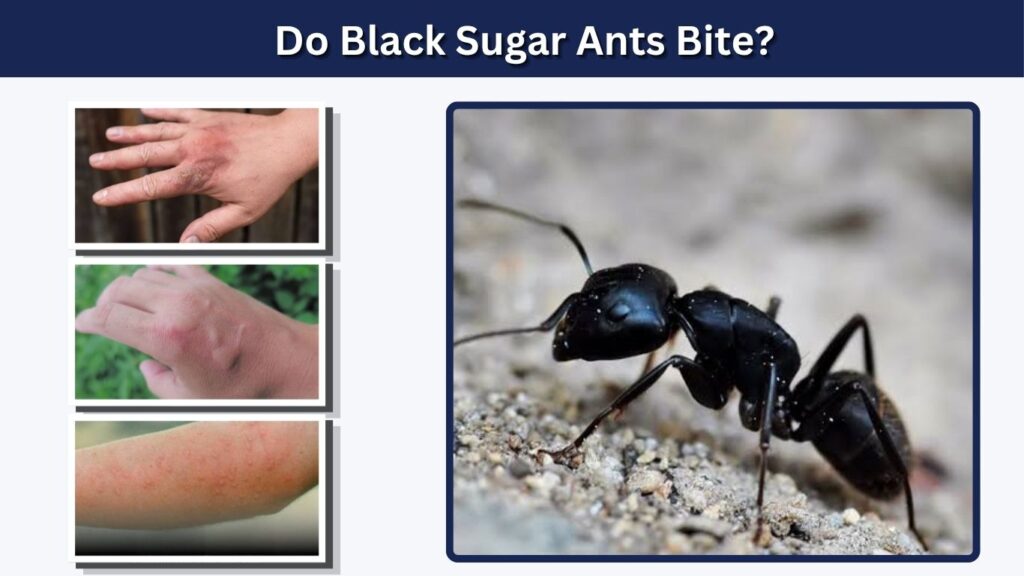
Some ants can bite when disturbed, but the tiny household species commonly called sugar ants are generally more of a nuisance than a serious threat.
A person may occasionally notice minor irritation after handling ants, but a painful sting or significant skin reaction can suggest that another ant species is involved.
What Do Black Sugar Ant Bites Look Like?
A minor reaction could produce:
- Small red spot
- Temporary itching
- Mild tenderness
- Slight localized swelling
Bite appearance alone is not a reliable way to identify an ant.
Fire ants and some other defensive species can produce much more noticeable reactions, so ants causing repeated painful stings should not simply be assumed to be harmless sugar ants.
What Do Black Sugar Ants Eat?
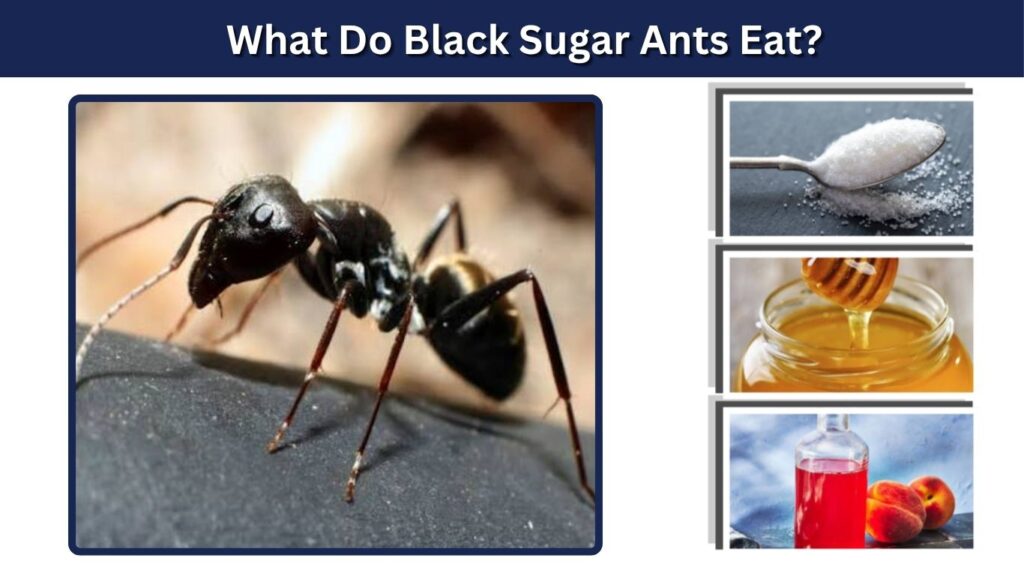
Sweet foods are particularly attractive to many household ants, but their diets usually extend beyond table sugar.
They may forage for carbohydrates, proteins, fats, insects, or naturally occurring honeydew depending on species and colony needs.
Foods That May Attract Them
Common attractions include:
- Sugar
- Honey
- Syrup
- Soft drinks
- Fruit
- Juice
- Candy
- Cake crumbs
- Pet food
- Grease
- Dead insects
Outdoors, ants may also collect sugary honeydew produced by aphids and scale insects. Honeydew is known to attract ants and other insects.
How to Get Rid of Black Sugar Ants
Simply crushing visible workers rarely solves a persistent infestation because most colony members remain inside the nest.
Successful control begins by removing food sources, blocking entry points, and locating active trails.
Steps to Control Black Sugar Ants
- Clean sugary spills immediately.
- Wipe counters after preparing food.
- Store sugar and sweets in sealed containers.
- Keep pet food covered when not being used.
- Empty trash regularly.
- Repair leaking pipes and faucets.
- Seal cracks around windows and doors.
- Follow ant trails to locate entry points.
- Use appropriately labeled ant baits where necessary.
- Avoid spraying repellent directly around bait stations.
Ant species differ in nesting habits, so finding where workers are traveling can provide useful clues. Ants may nest in soil, beneath objects, wall voids, or moisture-damaged wood depending on the species.
Black Sugar Ants in a Sugar Container
If ants get into stored sugar, discard contaminated food if appropriate and wash the container thoroughly.
Before refilling it, identify how the ants reached the area. Clean nearby shelves, remove food residue, and store sugar in a container with a tight-fitting lid.
Killing ants inside the container without addressing the trail will usually allow more workers to return.
Black Sugar Ants vs. Carpenter Ants
Large black ants should receive closer attention because they may be carpenter ants rather than tiny household sugar ants.
Carpenter ants are relatively large; for example, black carpenter ant queens can reach around 1/2 inch. Carpenter ants may establish nests in moisture-damaged wood and travel considerable distances while foraging.
Key Differences
Tiny black sugar ants are generally much smaller and frequently appear around exposed foods.
Carpenter ants are larger and may indicate a nest in damp or damaged wood. Finding repeated numbers of large ants indoors—particularly winged individuals—deserves more attention than encountering a few tiny food-foraging ants.
FAQs
Are black ants sugar ants?
Some can be. “Black ant” refers mainly to color, whereas “sugar ant” is commonly used for ants attracted to sweet foods. Many black ant species readily consume sugary substances.
Are black sugar ants dangerous?
Most tiny household ants described as black sugar ants are nuisance pests rather than dangerous insects. However, correct species identification is important because not every small black ant behaves the same way.
What is the scientific name of the black-headed sugar ant?
The black-headed sugar ant is Camponotus nigriceps, an Australian species.
Why do black sugar ants keep coming back?
They usually return because an active colony remains nearby and workers continue finding food or water inside the house. Removing visible ants without controlling the colony or food source rarely ends the problem.
Are big black sugar ants carpenter ants?
They may be. Large black ants indoors can be carpenter ants, particularly when they are associated with moisture-damaged wood. Size, body structure, nesting site, and worker variation should be checked before identifying them.