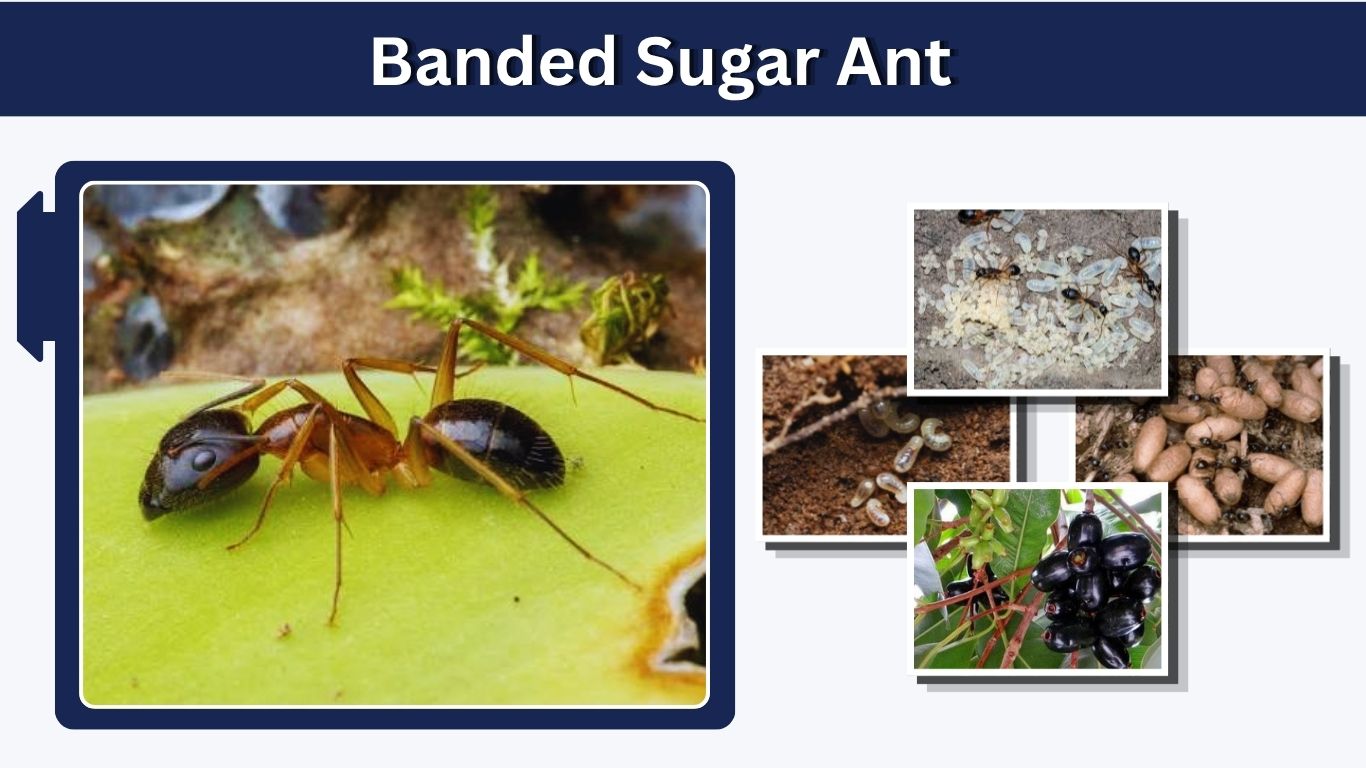
The banded sugar ant is one of Australia’s most recognizable native ants, known for its large body, dark head and abdomen, and contrasting orange-brown middle section. Its scientific name is Camponotus consobrinus, and it commonly occurs in forests, woodlands, gardens, and urban areas. These ants are especially noticeable after sunset when workers leave their nests to search for sweet foods and insects. Although banded sugar ants may enter houses, they are generally considered far less dangerous than aggressive stinging ants.
What Is a Banded Sugar Ant?
The banded sugar ant (Camponotus consobrinus) belongs to the family Formicidae and the genus Camponotus, a large group commonly known as carpenter ants or sugar ants. The species is native to Australia and is particularly associated with eastern and southeastern parts of the country.
Their common name comes partly from their attraction to sweet substances. Banded sugar ants frequently forage at night, sometimes forming obvious trails between their nest and a reliable food source. CSIRO notes that Camponotus sugar ants are mostly nocturnal and commonly emerge around dusk.
Banded Sugar Ant Identification
Look for these characteristics:
- Scientific name: Camponotus consobrinus
- Family: Formicidae
- Body length: approximately 5–15 mm
- Head: usually black
- Middle body: orange-brown to yellowish brown
- Abdomen: predominantly dark or black
- Legs: generally brownish to orange-brown
- Antennae: distinctly elbowed
- Activity: commonly most active from dusk through the night
The combination of their relatively large size and contrasting orange-brown and black coloration makes them easier to recognize than many smaller household ants.
Banded Sugar Ant Size
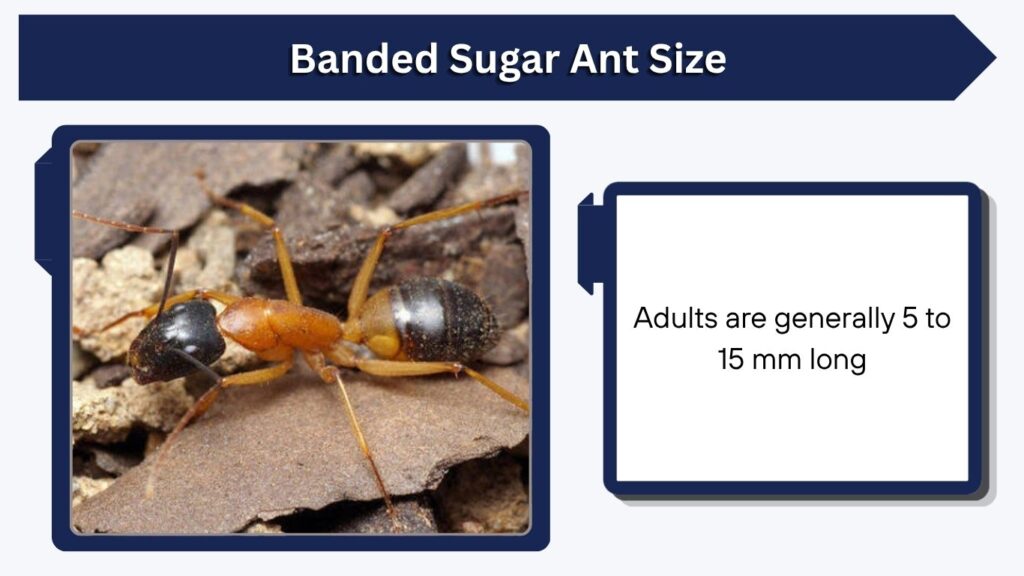
Banded sugar ants are large compared with many common household ant species. Adults are generally 5 to 15 mm long, although individuals in the same colony may differ considerably in size.
Worker ants perform everyday tasks such as gathering food and caring for developing ants. Larger workers have more powerful heads and mandibles and may sometimes be informally called soldiers or major workers.
A banded sugar ant queen is usually larger and more robust than ordinary workers. A newly emerged reproductive queen has wings before mating. After mating and beginning a colony, ant queens typically shed their wings. Male reproductive ants also have wings and participate in mating flights.
Banded Sugar Ant Habitat and Distribution
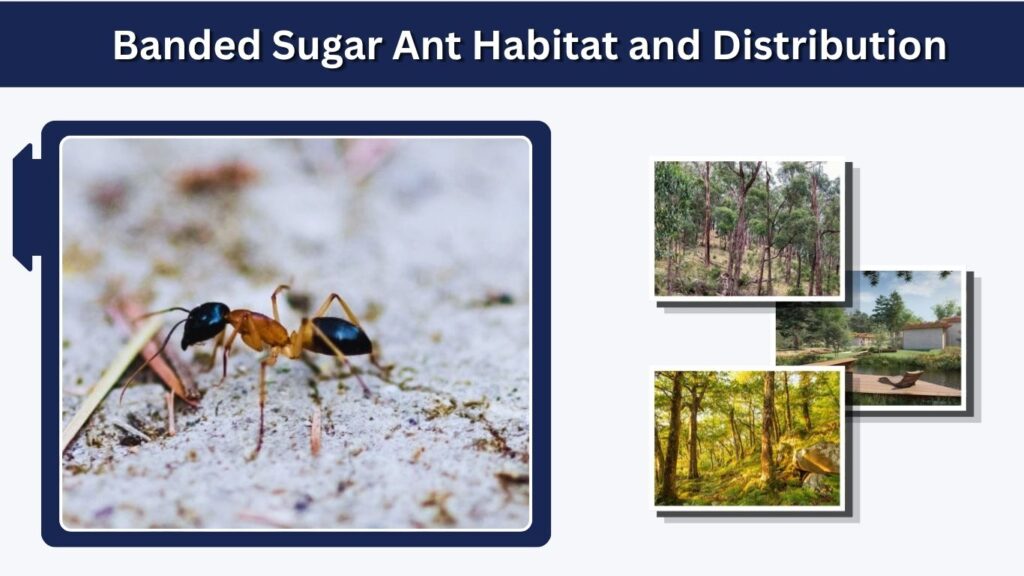
The banded sugar ant is an Australian species. It occurs in natural and human-modified environments, including forests, woodlands, heath and urban areas. The species is especially familiar in southeastern Australia and can occur around homes, parks and gardens.
People searching for banded sugar ants in Brisbane may encounter this species or related Camponotus ants. Its Australian distribution extends through parts of eastern Australia.
By contrast, Camponotus consobrinus should not be assumed to be the species behind a similar-looking sugar ant found in Oregon or elsewhere in the United States. North America has its own Camponotus carpenter ant species.
Where Do Banded Sugar Ants Live?
Common habitats include:
- Forests and woodlands
- Heathland
- Suburban gardens
- Lawns and landscaped areas
- Around trees and plant roots
- Beneath rocks
- Inside naturally occurring cavities in wood
- Soil around buildings and paving
Their ability to use several different nesting environments helps explain why banded sugar ants are also encountered around residential properties.
Banded Sugar Ant Nest
A banded sugar ant nest may be located in soil, around plant roots, between rocks or within holes and cavities in wood. Camponotus ants are flexible nest builders and do not rely on one type of nesting site.
Around houses, watch for regular ant trails leading toward:
- Cracks around paving
- Tree bases
- Garden beds
- Logs or old timber
- Gaps beneath stones
- Soil beside walls
- Wooden cavities
Seeing a few ants indoors does not automatically mean the colony is actually inside the house. Workers can travel away from their nest while searching for food.
What Do Banded Sugar Ants Eat?
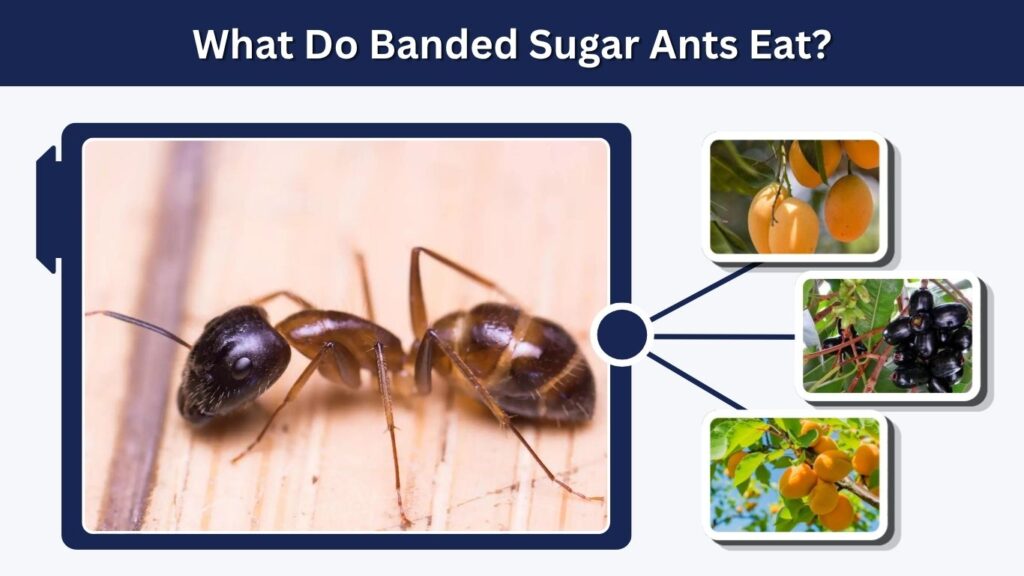
As their name suggests, banded sugar ants are strongly associated with sugary foods. Ants in the genus Camponotus may consume nectar, honeydew and other sweet substances while also feeding on animal material and insects.
Around homes, they may be attracted to accessible food residues.
Foods That May Attract Sugar Ants
- Nectar
- Honeydew produced by sap-feeding insects
- Dead insects
- Small arthropods
- Fruit and other sweet plant material
- Spilled sugary drinks
- Syrup or honey
- Sweet food crumbs
Their natural diet explains why workers sometimes appear around kitchens, bins, pet feeding areas or outdoor entertaining spaces.
Do Banded Sugar Ants Bite?
Banded sugar ants cannot sting. CSIRO describes Camponotus sugar ants as stingless but notes that they possess strong mandibles and can bite defensively. They can also use acidic defensive secretions.
Agriculture Victoria describes Camponotus consobrinus specifically as a timid native ant and states that it generally does not bite or sting people.
Therefore, a practical way to interpret the evidence is that these ants are not normally aggressive toward humans, but handling or crushing a large worker may still provoke defensive behavior.
Are Banded Sugar Ants Dangerous?
For most people, banded sugar ants are not considered dangerous. They are very different from ants such as red imported fire ants, which aggressively sting and can cause significant reactions. Agriculture Victoria specifically lists sugar ants as a native look-alike for fire ants rather than an equivalent health threat.
A defensive bite, if one occurs, may cause temporary pinching, irritation or localized redness.
Banded Sugar Ant Bite Treatment
For minor skin irritation:
- Wash the area gently with soap and water.
- Avoid scratching irritated skin.
- Apply a cold compress if the area feels uncomfortable.
- Monitor the skin for increasing swelling or irritation.
- Seek medical advice if symptoms are severe, spreading or otherwise concerning.
If the insect produced repeated painful stings rather than a simple ant bite, consider whether it may have been a different ant species.
Banded Sugar Ant Queen, Colony and Life Cycle
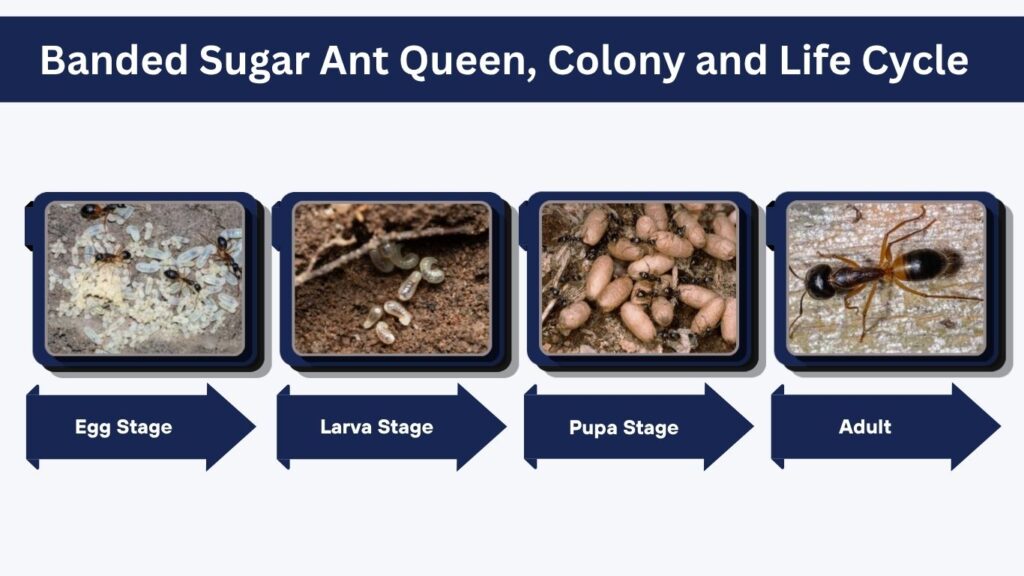
A banded sugar ant colony is organized around reproductive queens, workers and seasonal reproductive males and females. Ant queens are responsible for laying eggs, while wingless workers gather food, maintain the nest and care for larvae and pupae.
Banded Sugar Ant Life Cycle
Like other ants, development occurs through four main stages:
- Egg
- Larva
- Pupa
- Adult
During reproductive periods, winged queens and males can emerge for mating. A successfully mated queen can shed her wings and establish or contribute to a colony.
Queens generally live substantially longer than individual workers, although a reliable fixed banded sugar ant lifespan should not be assigned to every colony because survival depends on environmental conditions, food and colony health.
Banded Sugar Ants in the House
Finding a banded sugar ant in the house is often associated with food-seeking workers rather than a major indoor infestation. Their nighttime activity means homeowners may notice them around kitchens or bathrooms after dark.
Food odors and reliable moisture can make a building worth exploring.
What Attracts Banded Sugar Ants?
Common attractants include:
- Sugary spills
- Food crumbs
- Open rubbish
- Pet food
- Sweet beverages
- Honey or syrup
- Insects attracted to outdoor lights
- Accessible moisture
Keeping these resources unavailable can significantly reduce indoor ant activity.
How to Get Rid of Banded Sugar Ants
Control works best when you determine where workers are coming from rather than simply killing individual ants.
Start by following active trails toward the likely nesting area.
Banded Sugar Ant Control
- Remove food sources. Clean sugary spills, crumbs and food preparation areas.
- Store food securely. Use sealed containers for sweets and other attractive foods.
- Clean pet feeding areas. Remove leftover food, particularly overnight.
- Seal entry points. Repair gaps around doors, windows, pipes and wall openings.
- Reduce outdoor attractants. Keep rubbish containers closed and clean.
- Follow ant trails. Determining the nest location makes control more effective.
- Use an appropriate ant bait when necessary. Baits allow workers to carry insecticide toward colony members instead of only killing visible foragers.
- Contact a pest professional when ants repeatedly emerge from structural cavities or the colony cannot be located safely.
Avoid disturbing a nest unnecessarily. Killing a handful of visible workers rarely eliminates an established colony.
FAQs
Are banded sugar ants dangerous?
No. They are generally timid, stingless native Australian ants and are not regarded as a major danger to people.
Do banded sugar ants bite humans?
They are not normally aggressive, although Camponotus ants possess mandibles capable of defensive biting if strongly disturbed or handled.
How big is a banded sugar ant?
Workers and other individuals are generally about 5–15 mm long, making them relatively large ants.
Where do banded sugar ants nest?
They can nest in soil, around plant roots, between rocks, inside twigs and trees, and within suitable cavities in wood.
What do banded sugar ants eat?
They forage for sweet substances such as nectar and honeydew while also consuming insects and other available food materials. Their attraction to sweet foods can bring workers into homes.