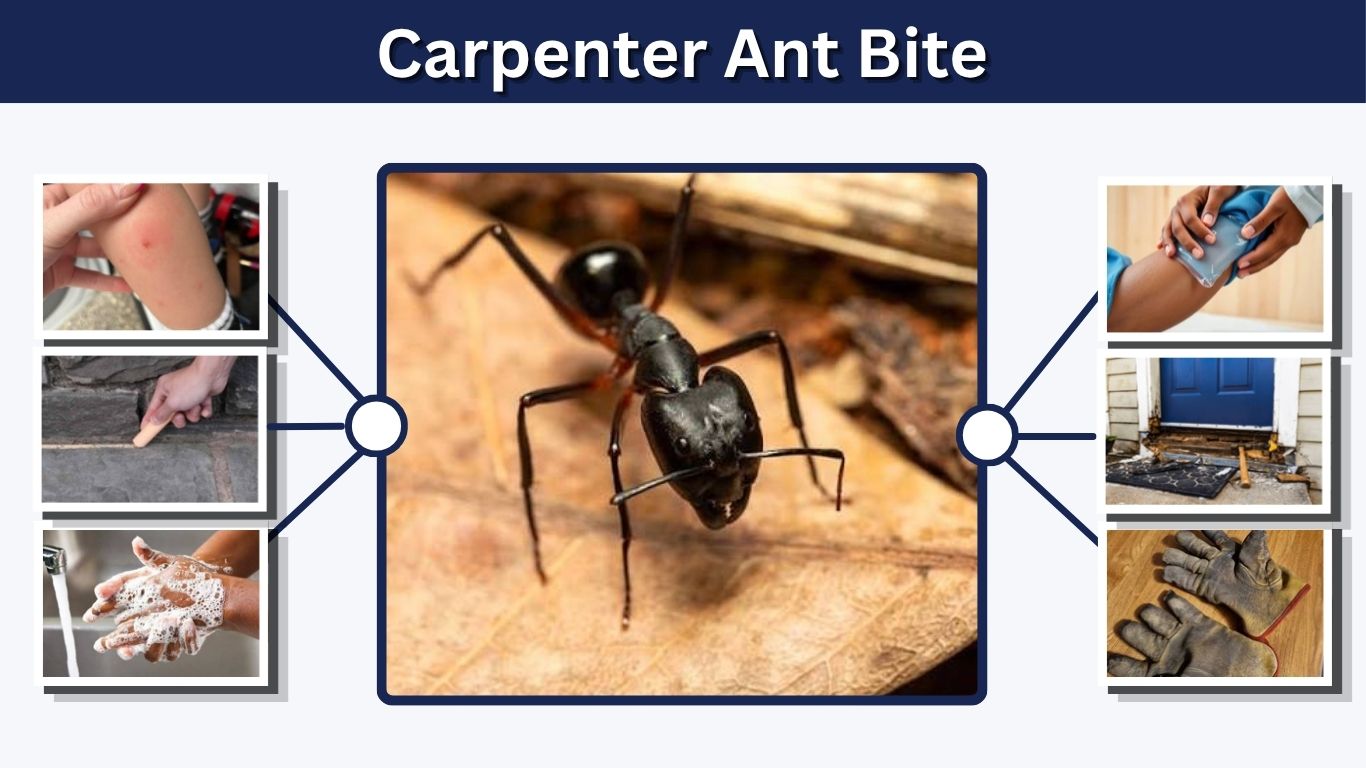
A carpenter ant bite can cause a sharp pinch, localized redness, and mild swelling. These ants bite with their jaws and may spray formic acid into the wound, adding a burning sensation. They do not sting. Most minor bites can be managed with gentle cleaning and a cold compress, but worsening symptoms or signs of an allergic reaction need medical attention. Here is how to recognize a possible bite, care for it, and tell when another insect or skin problem may be responsible.
What Does a Carpenter Ant Bite Look Like?
A suspected carpenter ant bite may leave a small irritated area or raised bump, although the mark can be subtle. There is no dependable size, shape, or puncture pattern that confirms the species. Seeing the ant bite provides stronger evidence than finding ants nearby after noticing a skin mark.
Common Symptoms
Possible symptoms include:
- A brief, sharp pinching sensation.
- Localized redness or discoloration.
- Mild swelling or tenderness.
- Burning or irritation around the affected area.
- Itching as the skin reacts.
Reactions differ between people. A small amount of swelling does not automatically mean infection or a severe allergy. General ant-bite symptoms include pinching pain, redness, and local swelling.
Can Carpenter Ant Bite Pictures Confirm a Bite?
No. Photos may show examples of skin irritation, but similar marks can result from other bites, scratching, or unrelated skin conditions. Redness may also be harder to see on darker skin.
If identification matters, photograph the insect safely and note when symptoms began. Do not handle another ant to recreate the bite.
Why Do Carpenter Ants Bite?
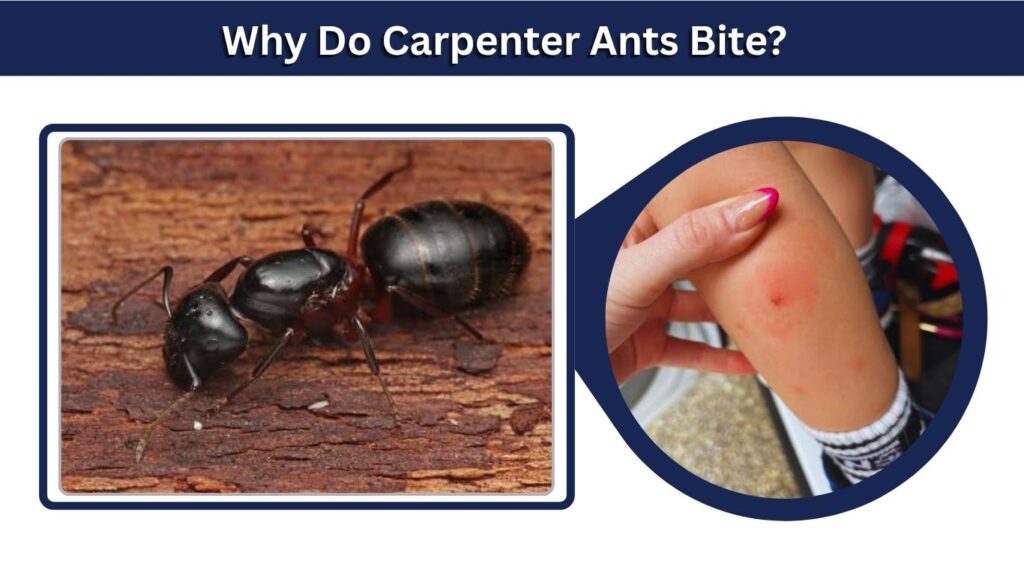
Carpenter ants generally bite defensively when handled, trapped against skin, or disturbed around their nest. They are not blood-feeding insects seeking people as a food source. Encounters may happen while moving firewood, gardening, or working around infested wood. Avoid touching ants directly, even if you only see one.
Strong Jaws and Formic Acid
Carpenter ants use their mandibles to grip and bite. They can also spray formic acid into a fresh wound, which contributes to burning.
The acid comes from an opening at the rear of the body; it is not injected through a stinger. Carpenter ants lack a functional sting.
Black, Red, and Florida Carpenter Ants
Carpenter ants vary in color, including black, brown, and reddish combinations. Florida carpenter ants include species with rusty-orange areas and darker abdomens.
Color alone does not predict the severity of a bite or prove which ant caused it. Common names also differ between regions.
Carpenter Ant Bite Treatment
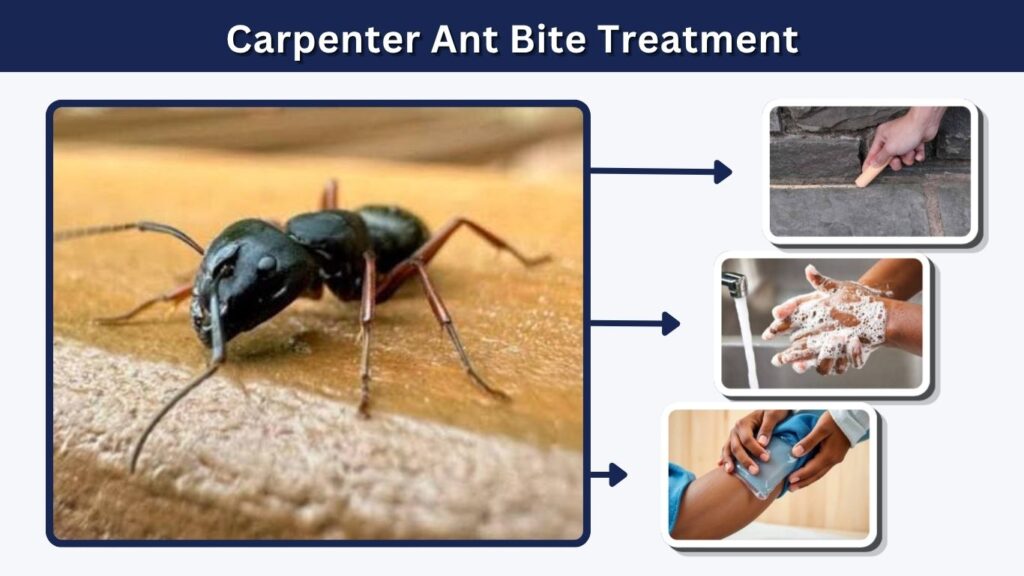
For a mild, localized reaction, basic first aid usually provides the most useful relief. Remove the ant, move away from the nest, and clean the affected skin. Treatment should address discomfort without irritating the area further. If symptoms are severe or spreading beyond the bite, skip home remedies and obtain medical help.
What to Do Right Away
- Remove the ant carefully. Brush it away without grabbing it with bare fingers.
- Wash with soap and water. Gently clean the area and pat it dry.
- Apply a cold compress. Use a cloth-wrapped cold pack for about 15–20 minutes. Do not place ice directly on skin.
- Elevate the area if swollen. This may help reduce discomfort.
- Avoid scratching. Protect broken skin with a clean dressing when appropriate.
These measures follow general insect-bite first aid. There is no carpenter ant stinger to extract.
Medicines and Home Remedies
A pharmacist can advise whether an oral antihistamine or an appropriate hydrocortisone product would help itching. Follow age restrictions and package directions, and check before treating babies or young children.
Avoid cutting, squeezing, or trying to “neutralize” the bite with household chemicals. Vinegar and baking soda are not necessary treatments.
Is a Carpenter Ant Bite Dangerous?
An isolated carpenter ant bite is usually a minor problem, but the insect’s identity should never override concerning symptoms. A suspected bite may also have another cause. Pay attention to how you feel overall and whether the affected area is improving, remaining stable, or becoming increasingly painful and swollen.
Emergency Signs of an Allergic Reaction
Call your local emergency number immediately for:
- Difficulty breathing, wheezing, or a tight throat.
- Swelling of the tongue, mouth, or throat.
- Fainting, collapse, or severe dizziness.
- Widespread hives accompanied by breathing problems or other systemic symptoms.
If you have a prescribed adrenaline/epinephrine autoinjector and symptoms of anaphylaxis, use it immediately according to your action plan and call emergency services. Antihistamines do not replace emergency treatment.
Signs That Need Medical Assessment
Seek medical advice for increasing pain, spreading redness, warmth, pus, fever, or symptoms that are worsening rather than settling. Also obtain advice for bites near the eye, substantial swelling, or a previous severe reaction to insect bites or stings.
Scratching can break the skin and increase the chance of infection. Antibiotics are not routinely needed for a simple, uninfected bite; a clinician should assess suspected infection.
Carpenter Ant Bite vs. Fire Ant Sting
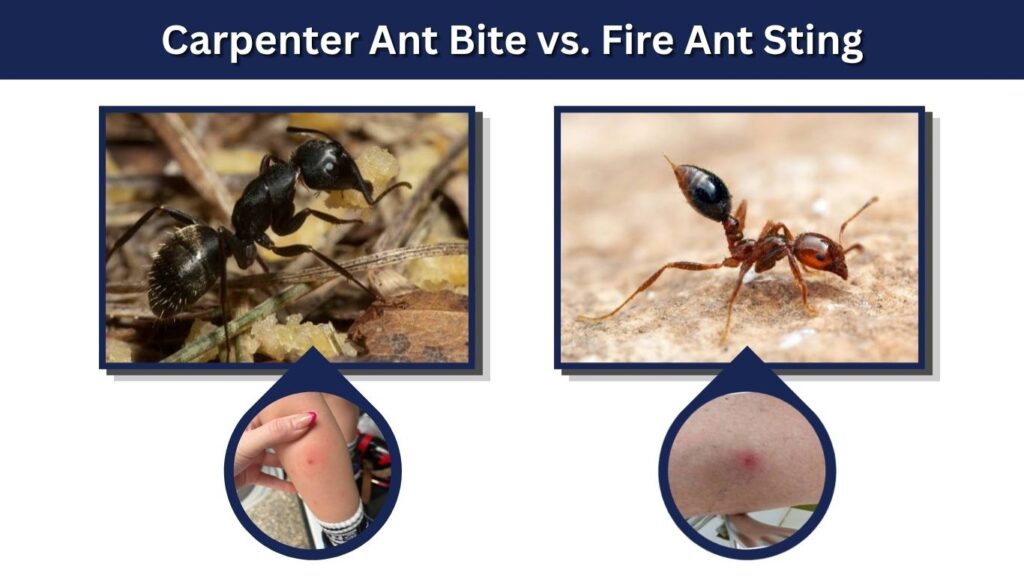
People often use “ant bites” for both injuries, but the mechanisms differ. Carpenter ants bite and may apply defensive acid. Fire ants can grip the skin with their jaws and then sting, injecting venom. That distinction helps explain why a fire ant encounter may produce a different pattern of pain and skin changes.
Key Differences
| Feature | Carpenter ant bite | Fire ant sting |
| Main mechanism | Jaw pinch, sometimes followed by formic acid | Venom delivered through a stinger |
| Initial sensation | Pinching, sometimes burning | Often immediate burning |
| Typical skin response | Local irritation, redness, or mild swelling | Itchy welt, often followed by a white pustule |
| Identification | Skin appearance alone is unreliable | Pustules are suggestive, but context still matters |
Fire ant stings often develop white pustules within about 24 hours. These can be sterile reactions to venom rather than infection, but scratching them open can introduce bacteria. Do not squeeze or pop them.
How to Prevent Carpenter Ant Bites
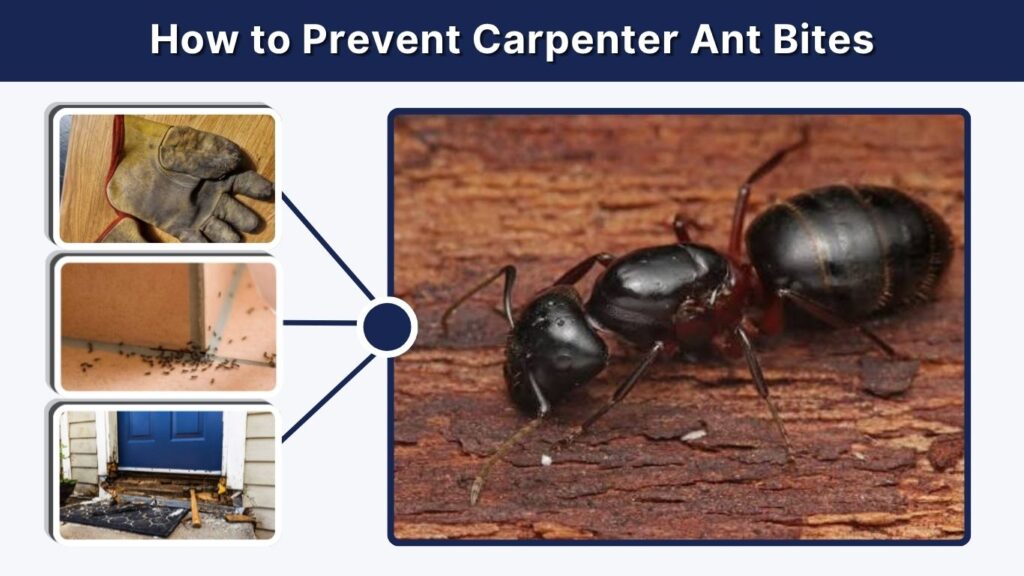
Avoiding direct contact is more useful than worrying about every ant you see. Carpenter ants may forage indoors without nesting there, so sightings alone do not establish the nest’s location. Repeated activity, wood debris, or moisture-damaged wood may warrant inspection. Keep children and pets away from suspected nests.
Practical Prevention Steps
- Wear gloves when handling firewood or old timber.
- Avoid picking up ants or disturbing nests.
- Repair leaks and address moisture-damaged wood.
- Keep firewood away from the house.
- Seek professional identification when indoor activity persists.
Carpenter ants excavate wood for nesting; they do not eat it. Nest location and moisture correction are important parts of managing an infestation.
FAQs
How Long Does a Carpenter Ant Bite Last?
Minor discomfort may fade quickly, while local irritation can take a few days to settle. There is no fixed timeline for everyone. Get medical advice if symptoms worsen or fail to improve.
How Painful Is a Carpenter Ant Bite?
It may feel like a sharp pinch followed by burning, particularly if formic acid reaches the wound. Ant size, bite location, and individual sensitivity affect the experience; a single numerical pain score would be misleading.
Can Winged Carpenter Ants Bite?
Winged females can bite defensively if handled. Wings identify a reproductive stage, not a separate stinging species. Avoid handling swarmers and seek identification if they repeatedly appear indoors.
What Should I Do About a Suspected Bite on My Dog?
Move your dog away from the ants and contact your veterinarian if pain or swelling persists. Facial swelling, breathing difficulty, repeated vomiting, or collapse requires urgent veterinary attention. Do not give human medicines without veterinary guidance.
Should a Carpenter Ant Bite Form a Blister?
A blister is not a reliable identifying feature of a carpenter ant bite. Do not pop it. Increasing pain, spreading inflammation, unusual discoloration, or a worsening lesion deserves medical assessment rather than identification from pictures alone.