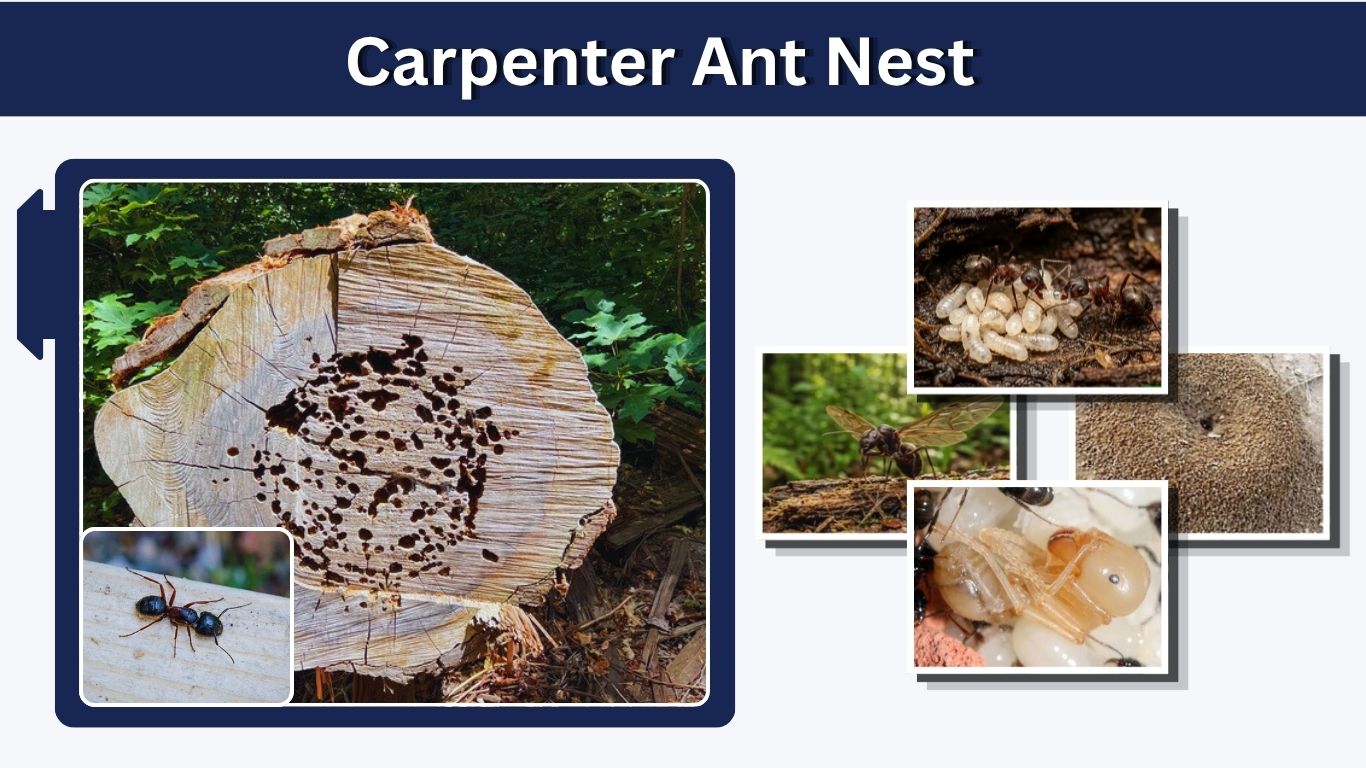
A carpenter ant nest can stay hidden for months or even years because most colonies develop inside wood, wall voids, trees, or other protected spaces. Unlike termites, carpenter ants do not eat wood; they excavate it to create smooth tunnels and chambers. Signs such as frass, large worker ants, faint rustling sounds, or moisture-damaged wood can help reveal a hidden colony. Knowing what a carpenter ant nest looks like, where it may be located, and how to remove it can prevent further damage.
What Does a Carpenter Ant Nest Look Like?
Carpenter ant nests are made up of smooth galleries and chambers excavated inside wood or other hollow spaces. The ants remove wood fibers rather than consuming them, which often leaves behind sawdust-like frass. Because much of the nest remains hidden, homeowners may see only a small opening or debris pile rather than the entire colony.
Carpenter Ant Nest Identification
Common signs of a carpenter ant nest include:
- Smooth tunnels inside wood
- Sawdust-like frass nearby
- Dead insect parts mixed with debris
- Large black, reddish, or dark ants
- Small openings in wood or walls
- Rustling sounds inside walls
- Ant trails leading to cracks
- Moist or decaying wood
- Winged ants appearing indoors
The galleries are usually cleaner and smoother than termite-damaged wood.
What Does the Nest Look Like Inside Wood?
Inside damaged wood, carpenter ants create connected chambers that follow softer areas and the grain of the timber.
These galleries often look polished because the ants repeatedly travel through them. They may expand over time as the colony grows.
Wood weakened by moisture, rot, or previous insect activity is especially attractive because it is easier to excavate.
Where Do Carpenter Ants Nest?
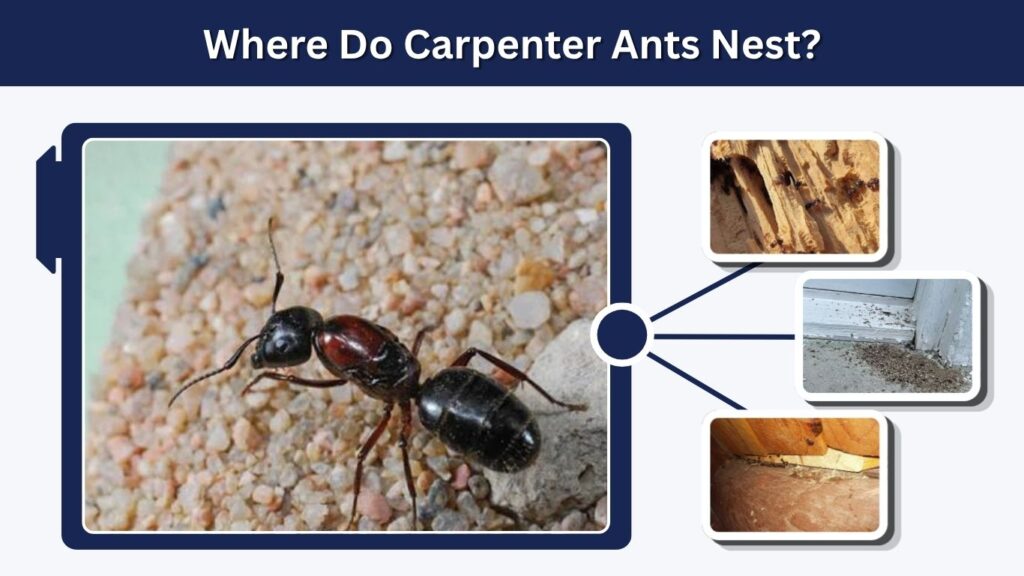
Carpenter ants can establish nests both outdoors and inside buildings. Outdoor nests are common and may serve as the main colony, while indoor nests are sometimes satellite colonies connected to a larger colony outside. Their preferred locations usually provide moisture, protection, and easy access to food.
Carpenter Ant Nest in a House
Common indoor nesting locations include:
- Wall voids
- Window frames
- Door frames
- Attics
- Basements
- Crawl spaces
- Roof structures
- Wooden beams
- Areas around plumbing
- Cabinets
- Flooring
- Moisture-damaged framing
Leaks around roofs, pipes, windows, and bathrooms can create especially favorable conditions.
Carpenter Ant Nest in Walls
A carpenter ant nest in a wall can be difficult to locate because the ants remain hidden during much of the day.
Possible signs include ants emerging from electrical outlets, cracks, baseboards, or gaps around pipes. Fine frass may collect beneath a small wall opening.
In a quiet room, a large colony can occasionally produce faint rustling sounds inside a wall, especially when the ants are disturbed.
Carpenter Ant Nest in an Attic
Attics can provide nesting sites where roof leaks or condensation have damaged wood.
Inspect rafters, roof decking, areas around vents, and sections near chimneys or plumbing penetrations. Frass on attic insulation or wooden beams may indicate a nest above the debris.
Do Carpenter Ants Nest Outside?
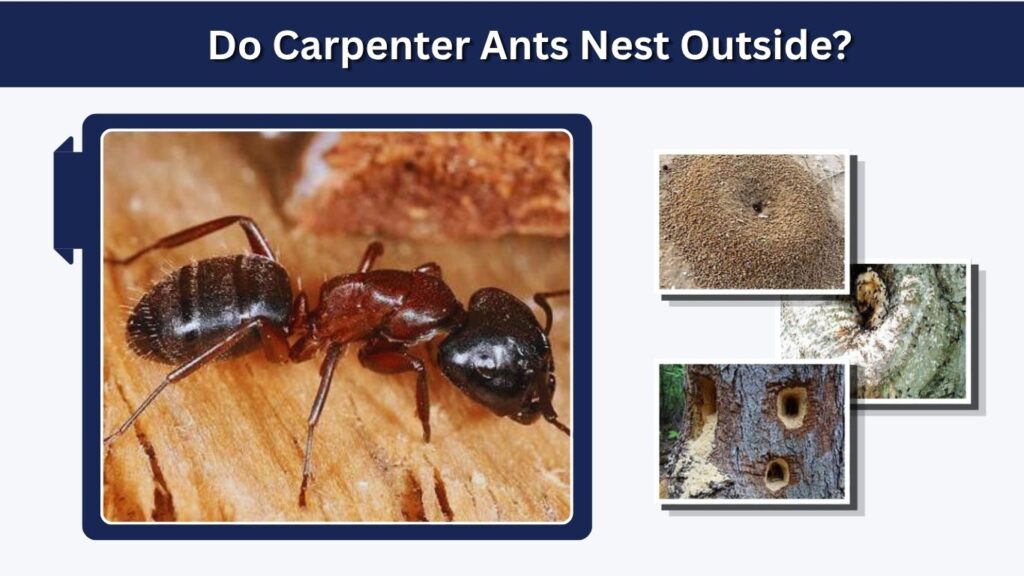
Yes. Many carpenter ant colonies originate outdoors. Trees, stumps, logs, landscape timbers, and underground spaces associated with wood can all provide nesting locations. Outdoor colonies may send workers long distances while searching for food, which means seeing carpenter ants indoors does not automatically prove that the main nest is inside your house.
Carpenter Ant Nest in a Tree
Carpenter ants frequently nest in trees containing:
- Hollow sections
- Rotting heartwood
- Broken branches
- Old wounds
- Moist cavities
- Dead portions
The presence of ants does not necessarily mean they caused the tree’s original damage. They often exploit wood that is already weakened by rot or moisture.
Workers may enter through cracks, wounds, or openings where branches have broken.
Carpenter Ant Nest in the Ground
Carpenter ants can appear to have nests in the ground, although the colony is often associated with buried wood, tree roots, stumps, or other organic material.
You may see ants disappearing into a hole beside a tree, landscaping timber, deck post, or buried root.
Unlike mound-building ant species, carpenter ants do not always create an obvious mound around their entrance.
Carpenter Ant Nest in the Yard
Outside nests may be found in old stumps, dead trees, firewood piles, fences, sheds, wooden landscape borders, and fallen logs.
Finding an outdoor colony away from the house is not always a structural concern. Problems become more significant when workers regularly travel toward a building or when satellite colonies become established indoors.
How to Find a Carpenter Ant Nest
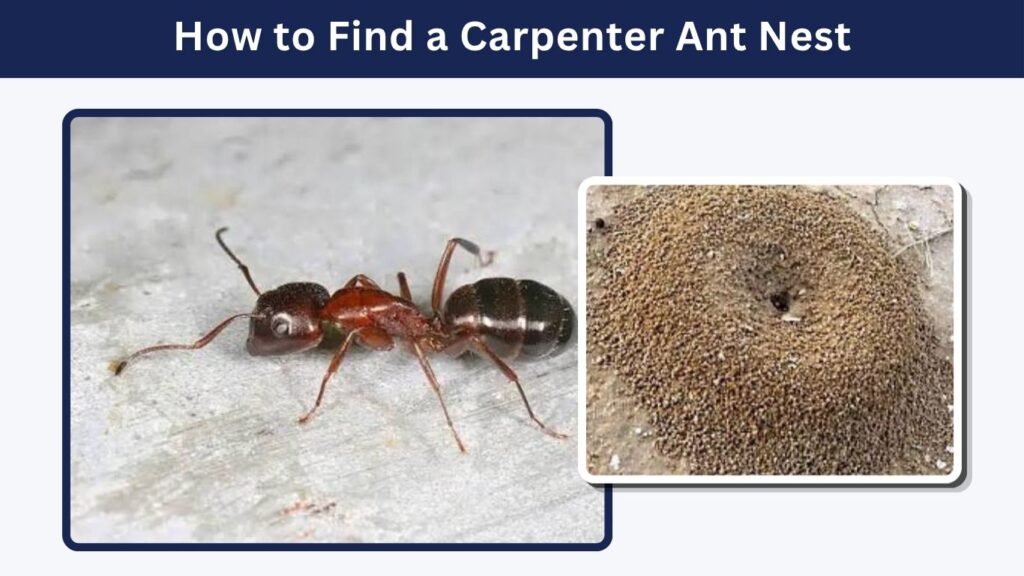
Finding the colony is often the most important part of carpenter ant control. Killing workers individually may reduce visible activity temporarily but does not necessarily affect the queen or hidden colony. Because carpenter ants are especially active after dark, tracking them during the evening can help reveal where they are entering and leaving.
Follow Carpenter Ant Trails
To locate a nest:
- Watch ants after sunset.
- Follow workers instead of killing them immediately.
- Look for ants carrying food.
- Check where trails enter walls or wood.
- Inspect nearby trees and stumps.
- Look for recurring frass piles.
- Examine moisture-damaged areas.
- Check plumbing and roof leak locations.
Workers moving toward the nest may have noticeably full abdomens after feeding.
Look for Carpenter Ant Frass
Frass is one of the strongest clues to an active nesting site.
A pile may appear beneath a tiny opening in a window frame, baseboard, beam, or wall. Clean up the existing debris and check later to see whether fresh material appears.
Repeated accumulation can help narrow down the location of an active gallery.
Listen for Activity
Large carpenter ant colonies may sometimes be heard inside walls.
Place your ear near a suspected area when the house is quiet. Light tapping on the wall may disturb the ants and increase movement temporarily.
Rustling alone is not enough to confirm a colony, but when combined with frass and visible ants, it can strengthen the evidence.
Carpenter Ant Parent and Satellite Nests
Carpenter ants can maintain more than one nesting location. A mature parent colony may produce satellite colonies containing workers, larvae, and pupae. Understanding this behavior explains why treating one visible area does not always eliminate the entire infestation.
What Is a Satellite Nest?
A satellite nest is a secondary nesting site connected to the main colony.
These nests may form in warmer or drier locations that are suitable for developing larvae and pupae. Satellite colonies inside homes may exist even when the main queen remains outdoors.
This is why a house can have significant carpenter ant activity without containing the primary colony.
How Far Do Carpenter Ants Travel From the Nest?
Workers may travel considerable distances while foraging, sometimes hundreds of feet depending on species and conditions.
Therefore, finding ants around a kitchen, bathroom, or patio does not necessarily mean the nest is directly beneath that location.
Following established trails is usually more useful than assuming the colony is closest to where ants are first seen.
How Many Carpenter Ants Are in a Nest?
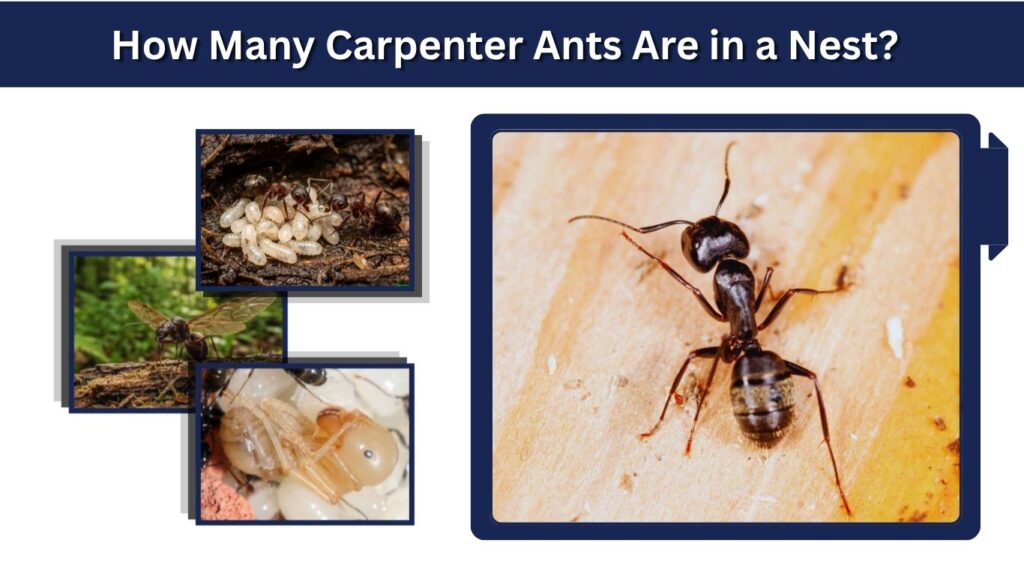
Colony size varies greatly according to species and maturity. A young colony may contain relatively few individuals, while an established colony can contain thousands of ants. Some large carpenter ant colonies may include multiple satellite nests spread across a property.
Carpenter Ant Colony Structure
A colony commonly contains:
- One or more queens depending on species
- Worker ants
- Developing larvae
- Pupae
- Eggs
- Winged reproductive ants during certain seasons
The queen usually remains protected deep inside the parent nest.
Workers are the ants most commonly seen traveling through houses or along outdoor trails.
Why Would a Queen Carpenter Ant Leave the Nest?
Queens generally remain in protected nesting areas once a colony is established.
However, winged reproductive females leave mature colonies during mating flights. After mating, a new queen searches for an appropriate location to begin another colony.
Seeing a single winged queen outdoors during swarm season does not necessarily indicate an indoor infestation.
How to Remove a Carpenter Ant Nest
Successful carpenter ant nest removal requires dealing with the colony rather than simply cleaning up frass or killing visible workers. The correct approach depends on whether the nest is exposed, hidden inside a wall, located outdoors, or connected to several satellite colonies.
Remove Moisture Sources
Begin by correcting conditions that encourage nesting.
Check for:
- Roof leaks
- Plumbing leaks
- Poor window seals
- Damp crawl spaces
- Improper drainage
- Rotting wood
- Condensation
- Wood touching wet soil
Replacing heavily damaged wood may also be necessary after the ant problem is controlled.
Use Carpenter Ant Baits Carefully
Slow-acting ant baits can sometimes help because worker ants may carry food back toward nestmates.
Use only products specifically labeled for carpenter ants and follow the label instructions exactly. Avoid spraying repellent insecticides near active bait placements because this may reduce the ants’ willingness to feed on the bait.
Different colonies may also have changing food preferences, so results can vary.
Treat Accessible Nests
When a nest is clearly exposed in damaged wood, removal may involve eliminating the colony and replacing the affected material.
Hidden wall nests are more complicated. Drilling walls or applying pesticides into structural cavities without knowing the exact colony location may be ineffective and can create unnecessary exposure or property damage.
Professional pest control may be preferable for concealed nests.
When to Call a Pest Control Professional
Carpenter ants can be difficult to eliminate when several nesting sites are present. Professional inspection becomes especially valuable when ants repeatedly return after treatment, the colony cannot be located, or structural wood may be compromised.
Signs Professional Help May Be Needed
Consider professional assistance if you notice:
- Large numbers of indoor carpenter ants
- Repeated frass piles
- Winged ants emerging inside
- Multiple suspected nesting areas
- Ant activity inside walls
- Visible structural wood damage
- Persistent moisture problems
- Ants returning after DIY treatment
A professional can help determine whether the nest is indoors, outdoors, or part of a larger network of colonies.
FAQs
Carpenter ant colonies can be difficult to locate because workers may travel far from their nesting site and multiple nests can exist at the same time. Tracking trails, looking for frass, and inspecting moisture-damaged wood provide some of the best clues.
What does a carpenter ant nest look like?
A carpenter ant nest contains smooth galleries and chambers excavated inside wood. Frass, insect fragments, and small exit openings may be visible outside the nest.
Do carpenter ants make nests in the ground?
They can appear to nest underground, particularly around buried wood, roots, old stumps, or landscape materials. They generally do not produce prominent soil mounds like some other ants.
How do I find a carpenter ant nest in my house?
Follow workers during evening hours, look for recurring frass, inspect damp wood, and watch where ants disappear into walls, window frames, or other openings.
Can carpenter ants have more than one nest?
Yes. Mature colonies can develop satellite nests separate from the parent colony. This can make an infestation harder to eliminate.
What should I do after finding a carpenter ant nest?
Avoid focusing only on visible workers. Identify moisture problems, determine whether additional nests exist, use properly labeled control methods, and consider professional treatment if the colony is inside structural wood or difficult to access.