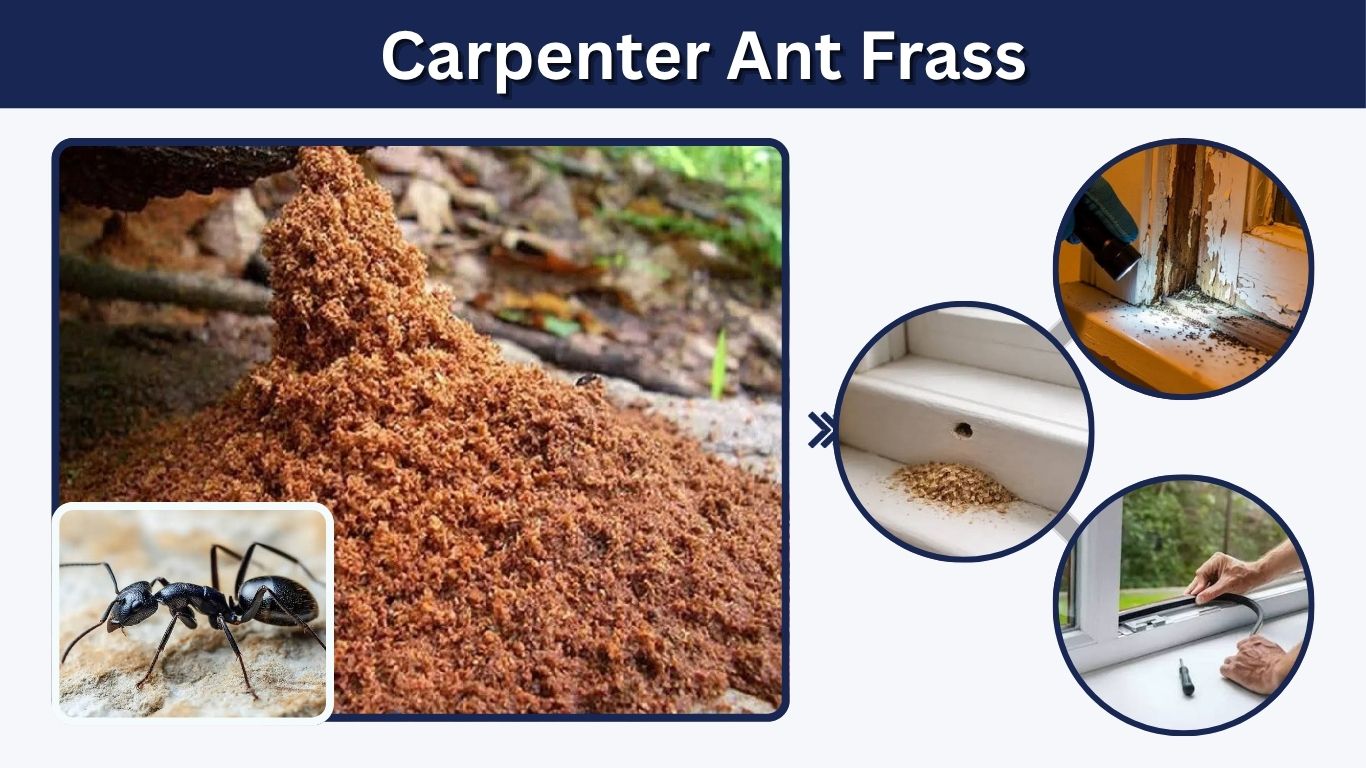
Carpenter ant frass is one of the clearest warning signs that carpenter ants may be excavating wood somewhere inside or around your home. It often resembles coarse sawdust, but a closer look may reveal wood fragments, dead ants, insect body parts, and other debris pushed from the colony. Frass commonly appears near window sills, baseboards, wall voids, attics, or damaged wood. Knowing what carpenter ant frass looks like—and how it differs from termite frass—can help you identify the problem early.
What Is Carpenter Ant Frass?
Carpenter ants do not eat wood the way termites do. Instead, they remove wood while excavating smooth galleries where the colony can live. The material they remove is carried outside the nest and discarded through small openings. This mixture of wood debris and colony waste is commonly called carpenter ant frass.
What Does Carpenter Ant Frass Look Like?
Carpenter ant frass often has the appearance of coarse sawdust or small wood shavings.
Typical characteristics include:
- Coarse sawdust-like material
- Irregular pieces of wood
- Different particle sizes
- Wood fibers or shavings
- Dead ant bodies
- Ant legs or other insect parts
- Pieces of insect exoskeleton
- Sometimes soil or other debris
The color depends largely on the wood being excavated. Frass from pale wood may appear tan or cream, while debris from darker wood can look brown.
Why Do Carpenter Ants Produce Frass?
Carpenter ants excavate galleries by biting away pieces of wood with their mandibles. They carry the unwanted material through tunnels and push it outside their nesting area.
This process helps keep galleries clean. As a result, a pile of frass may develop beneath a small crack, hole, or opening connected to the colony.
Fresh piles that repeatedly return after cleaning can indicate ongoing carpenter ant activity.
Where Is Carpenter Ant Frass Usually Found?
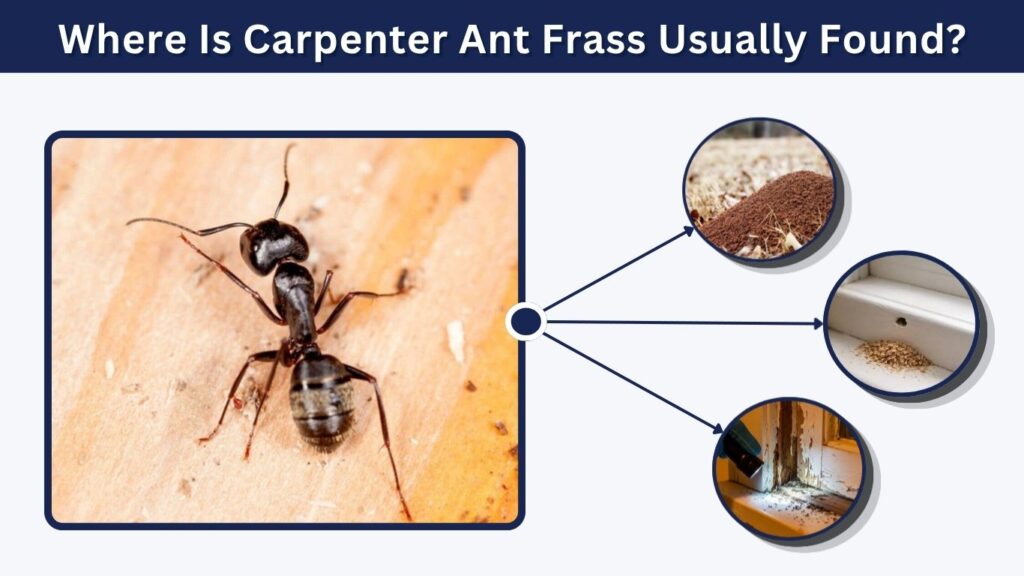
Carpenter ant frass can appear anywhere ants are nesting inside wooden structures. Because colonies often prefer damp, softened, or previously damaged wood, frass frequently appears near areas with moisture problems. Finding the debris does not always reveal the exact location of the nest, but it can provide an important clue.
Carpenter Ant Frass on Window Sills
Window sills are one of the most noticeable locations for carpenter ant frass.
Moisture can enter around poorly sealed windows and gradually soften surrounding wood. Carpenter ants may take advantage of these conditions to establish galleries.
You might notice a small pile of sawdust-like debris appearing repeatedly on the sill. Check the surrounding frame for cracks, water damage, hollow areas, or small openings where ants may be pushing debris out.
Carpenter Ant Frass in the House
Indoor frass may appear around:
- Baseboards
- Door frames
- Window frames
- Wall openings
- Plumbing penetrations
- Crawl spaces
- Attics
- Basements
- Wooden beams
- Cabinets
- Flooring edges
- Areas near leaking roofs or pipes
Frass may also collect inside cobwebs below an active opening, making it look as though debris has been suspended along the wall.
Carpenter Ant Frass in Attics and Basements
Attics and basements may provide suitable carpenter ant nesting areas when moisture is present.
In attics, problems can occur near roof leaks, damaged rafters, vents, or poorly sealed openings. In basements, ants may be associated with damp framing, sill plates, plumbing areas, or wood close to soil.
Finding frass in these locations should prompt an inspection for both ants and moisture damage.
How to Identify Carpenter Ant Frass
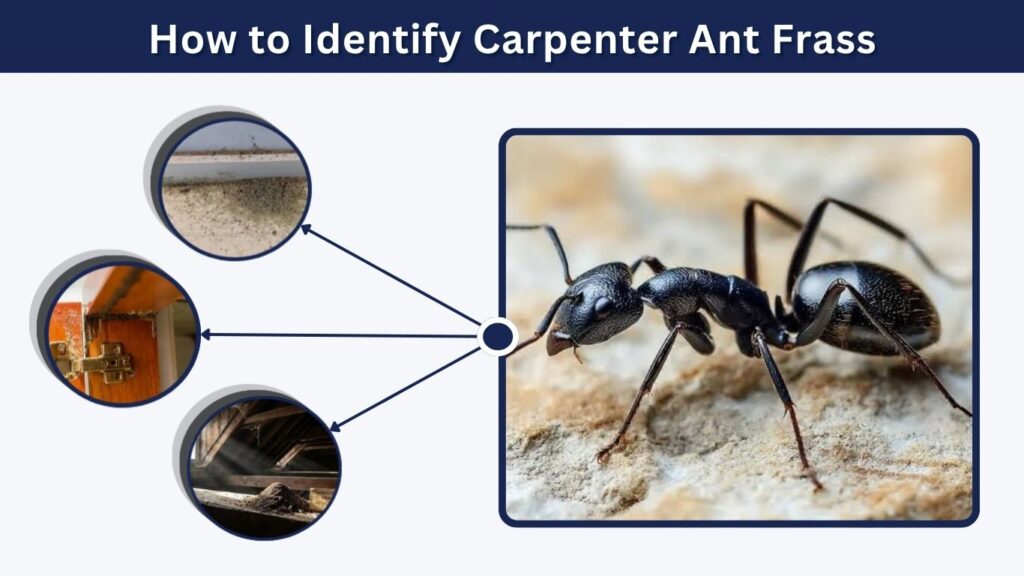
Frass alone can provide useful information, but identification is more reliable when other carpenter ant signs are present. Examine the texture of the debris and nearby wood rather than assuming that every pile of sawdust comes from carpenter ants. Drilling, renovations, wood-boring beetles, and other insects can create similar-looking material.
Signs of Carpenter Ant Frass
Look for a combination of these clues:
- Coarse sawdust piles
- Irregular wood fragments
- Dead ants mixed into debris
- Insect legs or body parts
- Small openings above the pile
- Large ants nearby
- Ant activity at night
- Reappearing debris after cleaning
- Damp or damaged wood
- Smooth internal wood galleries
The presence of insect fragments mixed with wood particles is particularly useful because carpenter ant colonies often remove dead ants and other waste along with excavated wood.
Carpenter Ant Galleries
Wood damaged by carpenter ants usually contains relatively smooth, clean-looking galleries.
Because carpenter ants excavate rather than digest wood, the tunnels may look as if they were sanded along the inside. The galleries generally follow softer portions of the wood and can become extensive when a colony remains active for a long period.
Termite damage usually has a different appearance.
Carpenter Ant Frass vs. Termite Frass
Carpenter ant and termite activity can both involve structural wood, which is why their debris is frequently confused. However, the insects damage wood differently. Carpenter ants remove wood to create nesting galleries, while termites consume cellulose as food. The resulting debris can therefore provide important identification clues.
Carpenter Ant Frass
Carpenter ant frass typically contains:
- Irregular sawdust
- Coarse wood shavings
- Fibrous wood pieces
- Various particle sizes
- Dead ants
- Insect body parts
- Other colony debris
It generally looks messy and uneven.
Termite Frass
Visible pellet-like termite frass is most commonly associated with drywood termites.
Drywood termite droppings usually consist of:
- Tiny hard pellets
- Fairly uniform shapes
- Similar particle sizes
- Grain-like piles
- Pellets with distinct ridges or sides
The pellets can vary in color depending on the wood being consumed.
Importantly, not every termite infestation produces obvious piles of pellet frass. Subterranean termites, for example, are more commonly associated with mud tubes and concealed wood damage.
Carpenter Ant Frass vs. Termite Droppings
The easiest visual difference is usually texture.
Carpenter ant debris looks like rough sawdust mixed with irregular waste. Drywood termite frass looks more like numerous tiny, consistently shaped pellets.
If you find loose wood fibers mixed with ant legs or other insect remains, carpenter ants become more likely. If you find piles consisting almost entirely of uniform pellets, drywood termites may be the stronger possibility.
Professional identification is worthwhile when structural damage is involved because treatment differs significantly between ants and termites.
Does Carpenter Ant Frass Mean You Have an Infestation?
Finding carpenter ant frass strongly suggests that carpenter ants have been excavating wood nearby, but it does not always tell you whether the main colony is inside your house. Carpenter ants can maintain parent and satellite colonies, and workers may travel substantial distances while searching for food.
Carpenter Ant Frass but No Ants
It is possible to find frass without seeing any carpenter ants.
Carpenter ants are often most active during evening and nighttime hours. They may also travel inside walls, ceilings, or hidden structural spaces where they are difficult to observe during the day.
If a cleaned frass pile returns, active excavation may still be occurring.
Watch the area after dark and inspect surrounding moisture-damaged wood, but avoid unnecessarily opening walls or structural components.
Does Frass Mean the Wood Is Seriously Damaged?
Not necessarily.
A small amount of frass may come from limited excavation, while a long-established colony may create much more extensive galleries. The amount of visible debris does not always correspond directly to the amount of hidden damage.
More concern is warranted if wood feels soft, hollow, weakened, or structurally unstable.
How to Get Rid of Carpenter Ant Frass
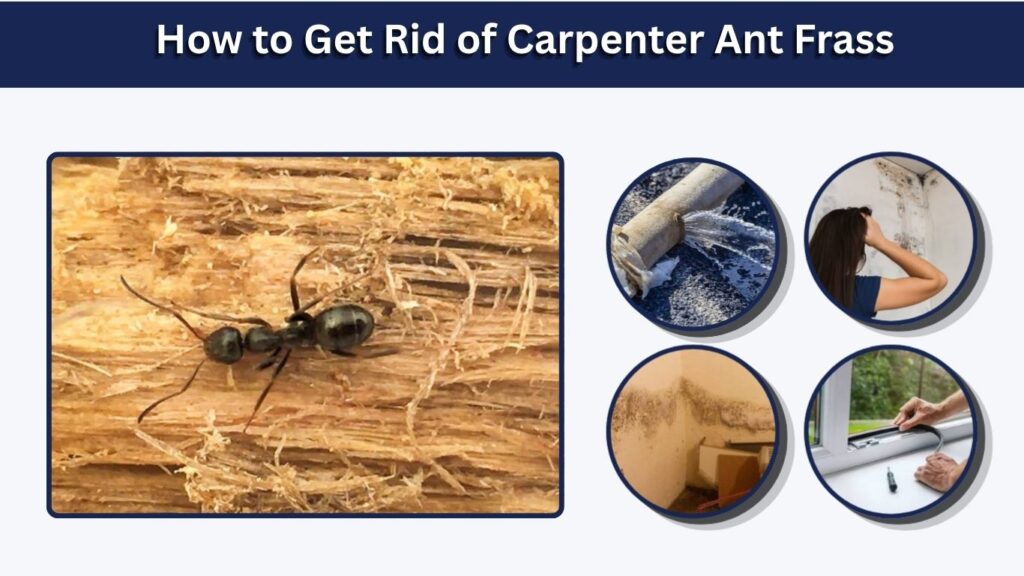
Removing the visible debris does not eliminate carpenter ants. Frass is a symptom of nesting activity, so successful control depends on finding and addressing the source of the infestation. Cleaning can help monitor whether new material continues to appear, but the underlying colony and moisture conditions must also be addressed.
Clean and Monitor the Area
Begin by carefully vacuuming up existing debris.
Then monitor the location to see whether another pile develops. Fresh frass appearing in the same place can help pinpoint an active gallery or disposal opening.
Avoid simply sealing an opening before determining where the ants are nesting, because the colony may continue using another exit.
Find and Correct Moisture Problems
Carpenter ants commonly establish nests in moisture-damaged wood.
Check for:
- Plumbing leaks
- Roof leaks
- Condensation
- Poor drainage
- Damaged window seals
- Rotting exterior wood
- Wet crawl spaces
- Wood contacting damp soil
Repairing moisture problems makes the environment less suitable for future nesting and can prevent additional wood deterioration.
Control the Carpenter Ant Colony
Finding the actual nesting area is more important than repeatedly killing individual worker ants.
Appropriately labeled carpenter ant baits or control products may be useful in some situations when used exactly according to the product label. However, colonies hidden inside walls, roofs, structural timbers, or inaccessible areas can be difficult to eliminate.
A pest management professional may be appropriate when frass repeatedly returns, multiple locations are involved, winged carpenter ants appear indoors, or structural wood seems damaged.
Carpenter Ant Frass and Wood Damage
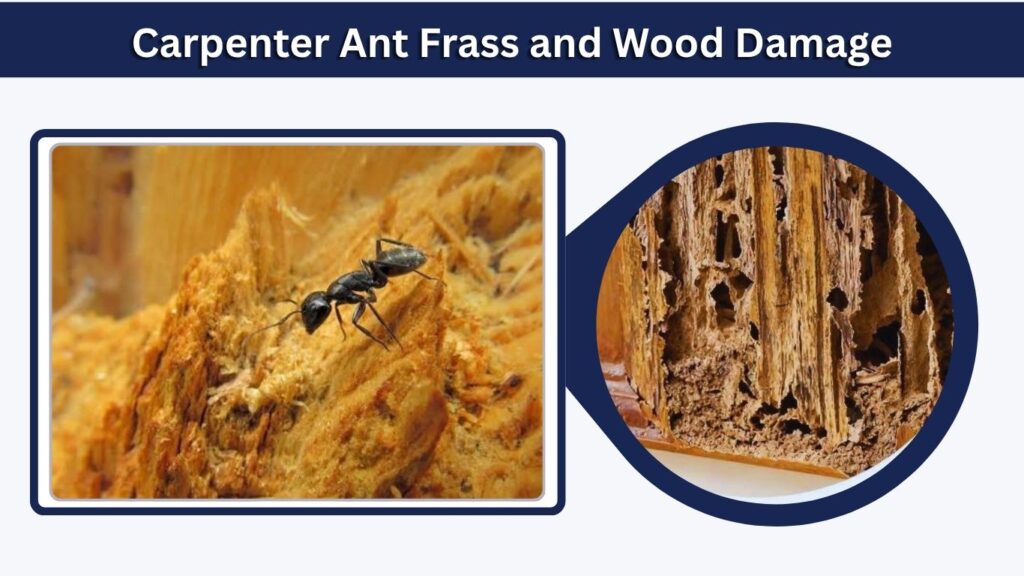
Carpenter ants can remain unnoticed because much of their activity occurs inside wood. Over time, continued excavation can enlarge nesting galleries and potentially weaken already compromised materials. They are particularly associated with wood that has been softened by moisture, decay, or previous damage.
Signs the Problem May Be Serious
Warning signs include:
- Large quantities of recurring frass
- Multiple frass piles
- Hollow-sounding wood
- Soft or crumbling structural lumber
- Numerous carpenter ants indoors
- Winged ants emerging inside
- Visible galleries
- Persistent moisture damage
- Activity continuing despite control attempts
Structural concerns should be evaluated promptly rather than judged by frass alone.
FAQs
Carpenter ant frass is useful for identifying hidden activity because ants may remain out of sight for much of the day. Understanding where the debris comes from and how it differs from termite evidence can help determine the next step.
Do carpenter ants leave grass?
Yes. Carpenter ants remove wood and other debris from their galleries and push it outside the nest, creating sawdust-like frass piles.
Does carpenter ant frass contain insect parts?
It often can. Frass may include dead ants, insect legs, exoskeleton fragments, wood particles, and other colony debris.
Why is the carpenter ant frass on my window sill?
The ants may be excavating wood somewhere around the window frame. Moisture-damaged window structures are particularly attractive nesting locations.
What is the difference between termite and carpenter ant frass?
Carpenter ant frass usually looks like irregular sawdust and wood shavings mixed with debris. Drywood termite frass consists mainly of small, hard, relatively uniform pellets.
Should I remove carpenter ant frass?
Yes, you can vacuum it up, but cleaning alone will not stop the infestation. Monitor whether the pile returns and investigate the nearby wood for carpenter ant activity and moisture problems.