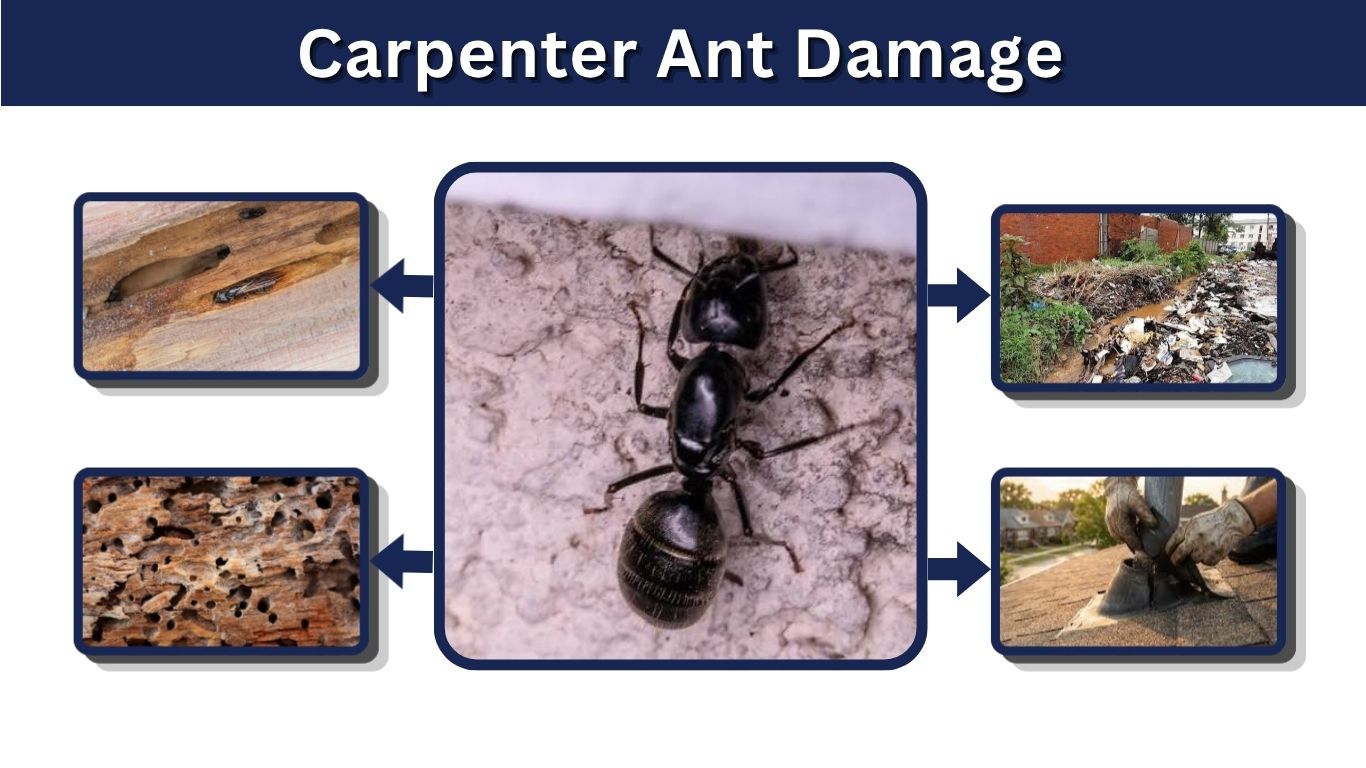
Carpenter ant damage develops when ants excavate wood to make nesting spaces. Unlike termites, they do not eat the wood. Instead, they remove material, leaving galleries that can eventually weaken affected timber. Damp or decaying wood often provides a starting point, although damage can extend into sound wood. Finding sawdust or ants indoors deserves attention, but neither automatically proves a serious structural problem. The practical next steps are to identify the pest, locate its nesting areas, address moisture, and determine whether damaged materials need repair.
What Does Carpenter Ant Damage Look Like?
Carpenter ant wood damage can remain hidden beneath an intact surface. Visible openings therefore cannot establish its full extent.
Smooth Galleries and Coarse Debris
Exposed tunnels often look smooth and sanded. Ants push excavated material outside, sometimes leaving piles below window frames or along walls.
This debris, commonly called frass, may contain coarse wood fibers, insect fragments, and other nest waste. It is different from a uniform pile of fine powder. However, debris alone is not a reliable identification: other insects and building work also produce wood particles.
Early Signs Worth Investigating
Look for several clues together:
- Recurring debris: Wood shavings reappear beneath an opening after cleanup.
- Repeated ant activity: Workers regularly enter the same crack or timber joint.
- Indoor swarmers: Winged ants emerge from walls, baseboards, or window casings.
- Faint rustling: An established colony may make sounds inside an occupied cavity.
These are possible infestation signs, not measurements of damage. Ants foraging indoors may originate from an outdoor nest.
Carpenter Ant Damage vs. Termite Damage
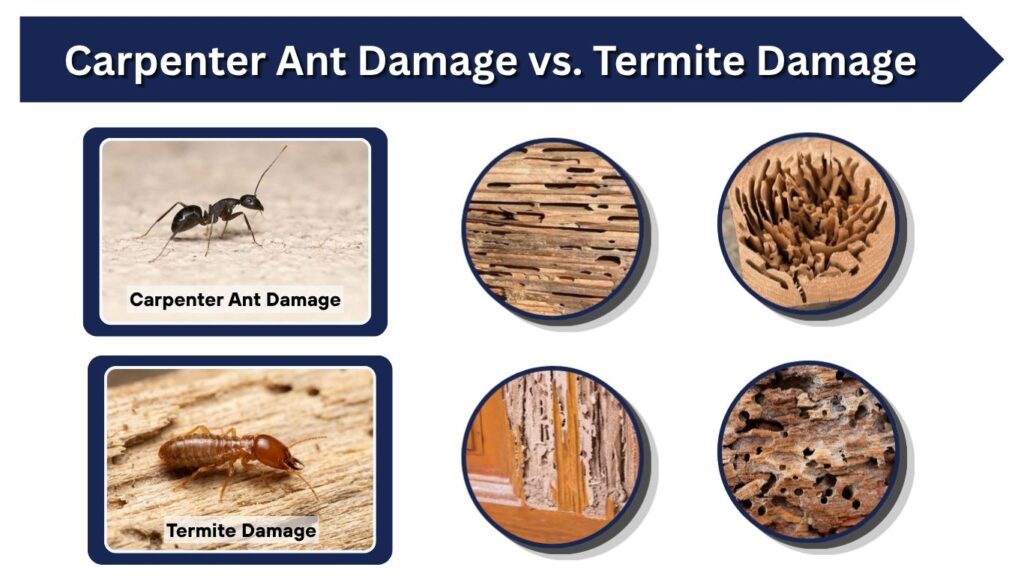
Both pests can damage wood, but they leave different evidence. Distinguishing subterranean termites from drywood termites makes the comparison more useful.
| Feature | Carpenter ants | Subterranean termites | Drywood termites |
| Relationship with wood | Excavate nesting spaces | Eat wood | Eat wood |
| Gallery appearance | Often smooth and relatively clean | Often contain soil or muddy material | Can be smooth and free of mud |
| Material outside openings | Coarse shavings, sometimes mixed with insect remains | Mud shelter tubes may be present | Small, hard fecal pellets with six sides |
| Useful caution | Nearby ants may only be foraging | Mud tubes are a clue, not a measure of damage | Pellets alone do not prove current activity |
Drywood termite galleries can resemble carpenter ant galleries, so “smooth tunnels mean ants” is an unreliable rule. Examine the debris and, where possible, have an insect specimen identified.
Where Does Carpenter Ant Damage Develop?
Moisture makes certain locations particularly attractive. Check accessible areas around leaking windows, doors, plumbing, roofs, and gutters, along with decks, porches, and wood touching soil. Carpenter ants can occupy dry wood too, so the absence of an obvious leak does not rule them out.
Damage behind drywall may involve concealed framing rather than the visible wall finish. Carpenter ants can also occupy existing wall voids, insulation, or hollow doors. An opening in drywall therefore does not establish how much timber has been excavated.
How Serious Can the Damage Become?
Damage usually develops gradually, often over years, but an established colony can substantially weaken wood. There is no dependable timetable for an individual house because the colony, affected materials, and existing deterioration vary.
A sagging floor, unstable deck, or visibly compromised beam warrants prompt assessment by a qualified building professional. Keep people away from potentially unsafe areas rather than relying on pest treatment alone.
Carpenter Ant Damage Repair: What to Do
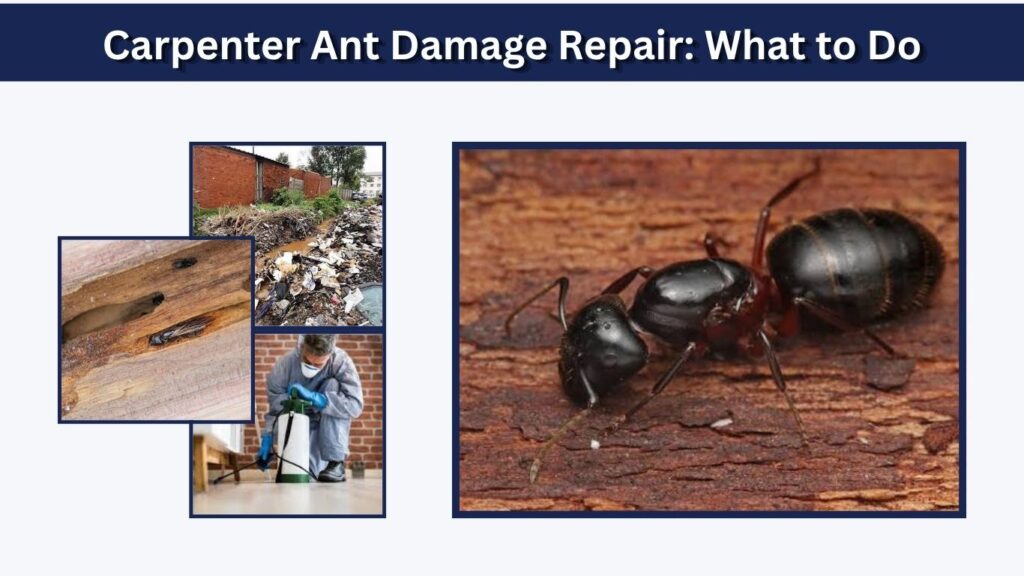
Repair planning should address the insects, moisture, and remaining strength of the affected materials.
- Document the evidence. Photograph ants, debris, openings, and visible damage. Record where and when you find activity.
- Arrange identification and inspection. Ask a pest professional to investigate nesting areas and distinguish ants from termites or other wood pests.
- Coordinate treatment and moisture repairs. Correct leaks or drainage problems and address the colony. Spraying visible workers alone may leave the nest untouched.
- Assess damaged wood. A qualified contractor should determine whether replacement or reinforcement is needed. Structural concerns may require an engineer.
- Restore finishes after the underlying work. Painting or filling openings cannot restore the strength of damaged framing.
Treatment and repair may need to happen together, especially where removing damaged material exposes a nest. Do not delay urgent safety work while waiting for routine pest treatment.
What Does Repair Cost?
A meaningful estimate requires inspection. Replacing a small piece of trim is a different job from accessing concealed damage and repairing structural framing.
Request an itemized estimate separating pest control, moisture correction, access work, timber repairs, and replacement finishes. Ask how additional damage discovered during the work will be priced.
Is Carpenter Ant Damage Covered by Homeowners Insurance?
In the United States, standard homeowners insurance generally excludes carpenter ant damage because insurers usually treat insect infestations as maintenance issues. Not knowing about the infestation does not automatically make the damage covered.
Your policy wording, circumstances, and state matter. Ask your insurer about the applicable exclusions and documentation requirements. Photograph damage before nonurgent repairs and keep receipts, without postponing necessary protective work.
How to Prevent Carpenter Ant Damage
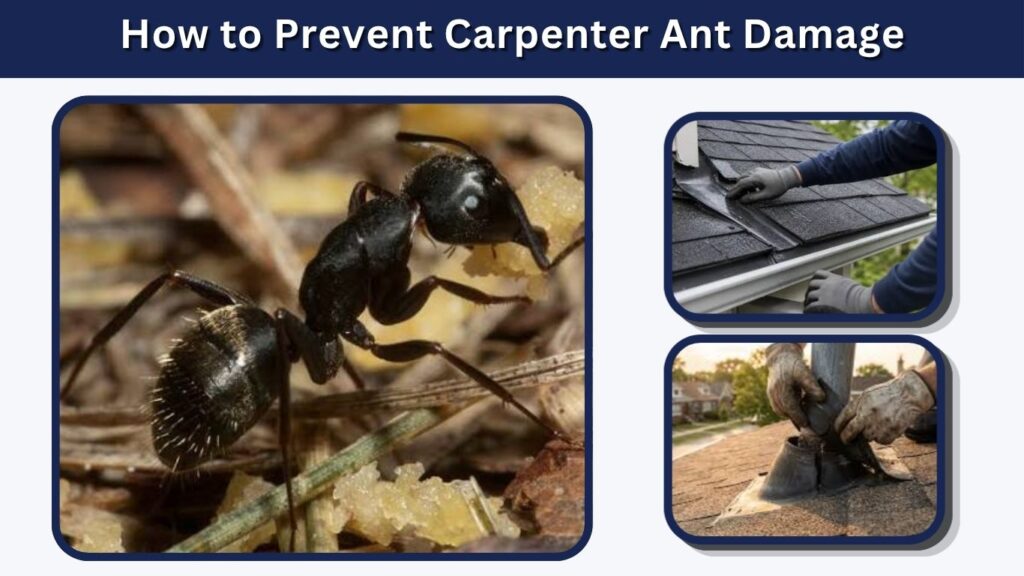
Reducing moisture and limiting access can make your home less attractive for nesting.
- Repair plumbing, roof, flashing, and gutter problems.
- Replace deteriorated wood after correcting its moisture source.
- Keep firewood and stored lumber away from the house.
- Trim branches that touch the building.
- Seal suitable gaps around pipes, cables, windows, and doors.
- Recheck previously affected areas for recurring ants or debris.
Prevention helps reduce risk, but it does not establish that an existing colony has been eliminated.
FAQs
Do Carpenter Ants Eat Wood?
No. They excavate it to create nesting spaces and obtain food elsewhere. Removing wood can still compromise its strength.
Can Carpenter Ant Damage Pictures Confirm an Infestation?
Photographs can help compare galleries and debris, but they cannot reliably confirm the species, current activity, or hidden extent. Identification and inspection provide stronger evidence.
Do Carpenter Ants Damage Healthy Trees?
Nesting carpenter ants usually occupy wood already affected by decay rather than directly harming a healthy tree. Their presence alone does not justify removal. If a tree has substantial cavities or unstable limbs, have an arborist assess its condition.
Does One Carpenter Ant Mean My House Is Damaged?
No. A worker may have entered while searching for food. Repeated activity near an opening, emerging swarmers, or recurring debris provides more reason to investigate.
Will Killing the Ants Fix Existing Damage?
No. Eliminating a colony does not replace excavated wood or correct decay. Pest control and building repairs address different parts of the problem; assess both before closing up affected areas.