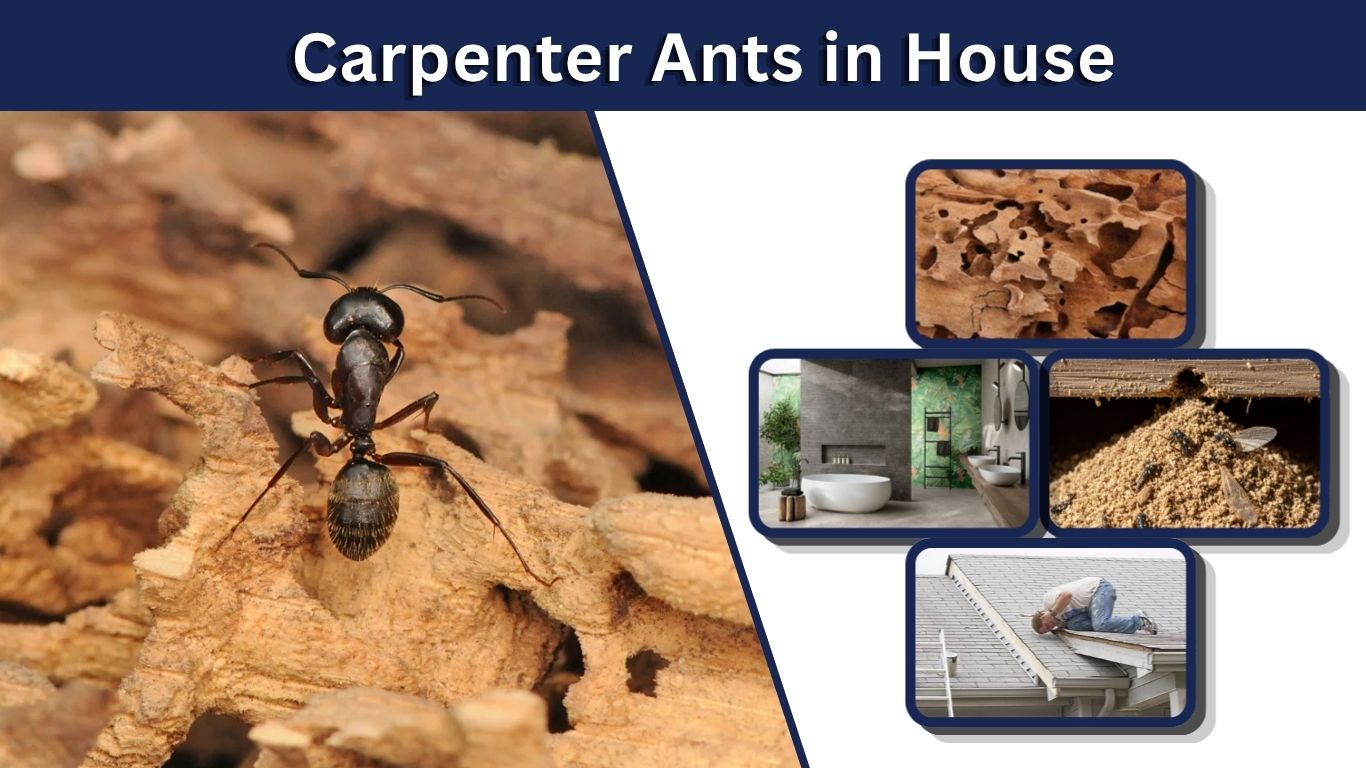
Carpenter ants in the house may be outdoor workers searching for food, or they may indicate a colony hidden inside walls, roofing, insulation, or moisture-damaged wood. Unlike termites, carpenter ants do not eat wood. They excavate it to build smooth tunnels and nesting chambers. Early warning signs include nighttime ant trails, coarse sawdust-like debris, faint rustling inside walls, and groups of winged ants indoors. Successful removal requires finding the nest, correcting moisture problems, eliminating the colony, and sealing its entry routes.
How to Identify Carpenter Ants
Carpenter ants belong to the genus Camponotus. Their color and size vary by species, so not every carpenter ant is large or completely black. Workers within the same colony may also have noticeably different sizes.
Carpenter Ant Appearance
Common identification features include:
- Black, reddish-brown, red-and-black, or dark brown coloring
- Workers approximately ¼ to ½ inch long
- Larger queens that may approach ¾ inch
- Elbowed antennae
- A narrow waist with one visible node
- A smoothly rounded upper thorax
- Strong jaws used to excavate wood
Large black ants are often carpenter ants, but size and color alone cannot provide a definite identification.
Carpenter Ants vs. House Ants
Odorous house ants are considerably smaller, usually about one-eighth inch long. When crushed, they produce an odor frequently compared to rotten coconut. They commonly form trails around kitchens but do not excavate structural wood.
Carpenter ants are larger and more likely to travel individually or in loose trails. Their presence near damp wood, along with coarse wood debris, increases the likelihood of an indoor nest.
Carpenter Ants vs. Termites
| Feature | Carpenter ants | Termites |
| Antennae | Elbowed | Straight or bead-like |
| Waist | Narrow and pinched | Broad and uniform |
| Wings | Front pair longer than rear pair | Both pairs similar in length |
| Galleries | Smooth and clean | Often contain soil or mud |
| Wood use | Excavated for nesting | Consumed as food |
| Visible workers | Often forage in open areas | Usually remain concealed |
Collect a specimen rather than relying entirely on damaged wood. Termites and carpenter ants require different treatments.
Signs of Carpenter Ants in the House
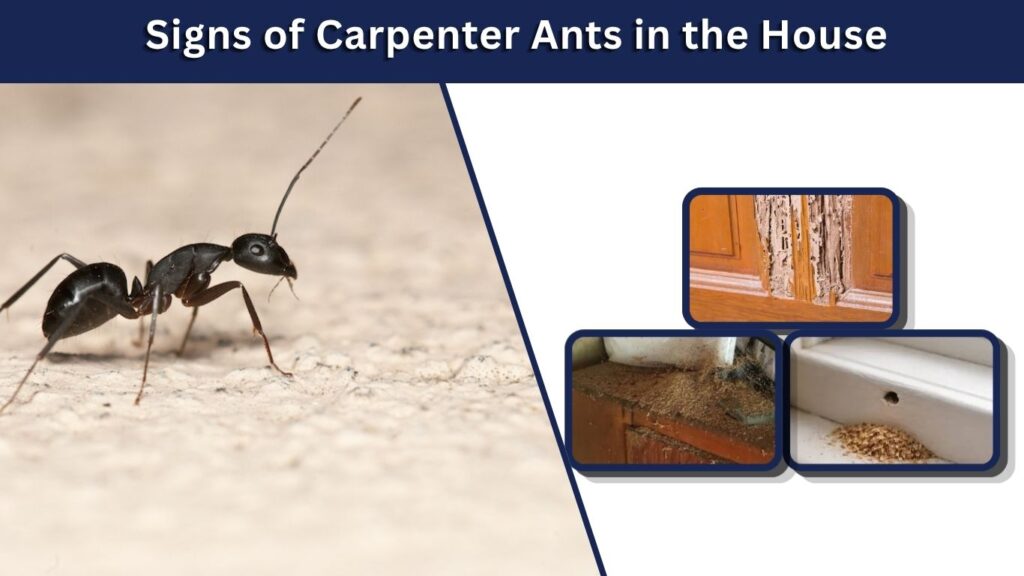
One ant does not prove that a colony is living inside the building. However, repeated activity combined with physical nesting evidence should be investigated promptly.
Early Warning Signs
Look for:
- Large ants appearing after sunset
- Ant trails leading beneath trim or into wall openings
- Workers around sinks, showers, or dishwashers
- Coarse sawdust collecting below a small opening
- Dead ants near windows
- Faint crackling or rustling inside walls
- Damaged wood around windows or rooflines
- Winged ants emerging indoors
- Regular wintertime activity
Carpenter ants are commonly active between sunset and midnight. Inspecting the house with a flashlight at night can reveal trails that remain hidden during the day.
Carpenter Ant Frass
Carpenter ants push nesting debris through small openings. This material, often called frass, may contain:
- Coarse wood shavings
- Sawdust-like particles
- Pieces of insulation
- Dead ants
- Shed body parts
- Remains of other insects
A fresh pile that repeatedly reappears after cleaning is strong evidence of activity above or behind that location.
Rustling Inside Walls
A large colony may produce a faint rustling or crackling sound. Place an ear or stethoscope against the wall near suspected moisture damage and gently tap the surface. Increased activity following the tapping may help identify the nest area.
Do not drill into walls, electrical boxes, or plumbing spaces without understanding what is behind them.
Winged Carpenter Ants Inside the House
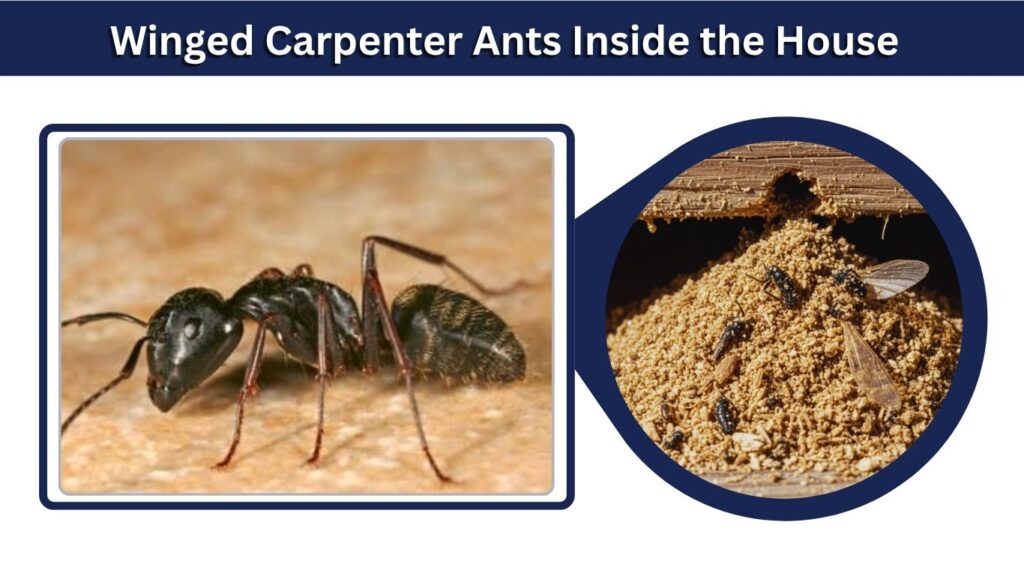
Winged carpenter ants are reproductive males and females produced by mature colonies. They normally emerge for mating flights during warm weather.
What Winged Ants Mean
A single winged queen may have entered from outdoors while searching for a nest site. However, numerous winged ants collecting around indoor windows strongly indicate that a mature colony is located somewhere within the building.
Large numbers emerging during winter are particularly concerning because outdoor colonies are usually inactive. The University of Minnesota Extension identifies numerous winged ants indoors as a reliable sign of an internal nest.
Winged carpenter ants have narrow waists, elbowed antennae, and front wings longer than their rear wings. Winged termites have broad waists, straight antennae, and four wings of nearly equal length.
Why Are Carpenter Ants in Your House?
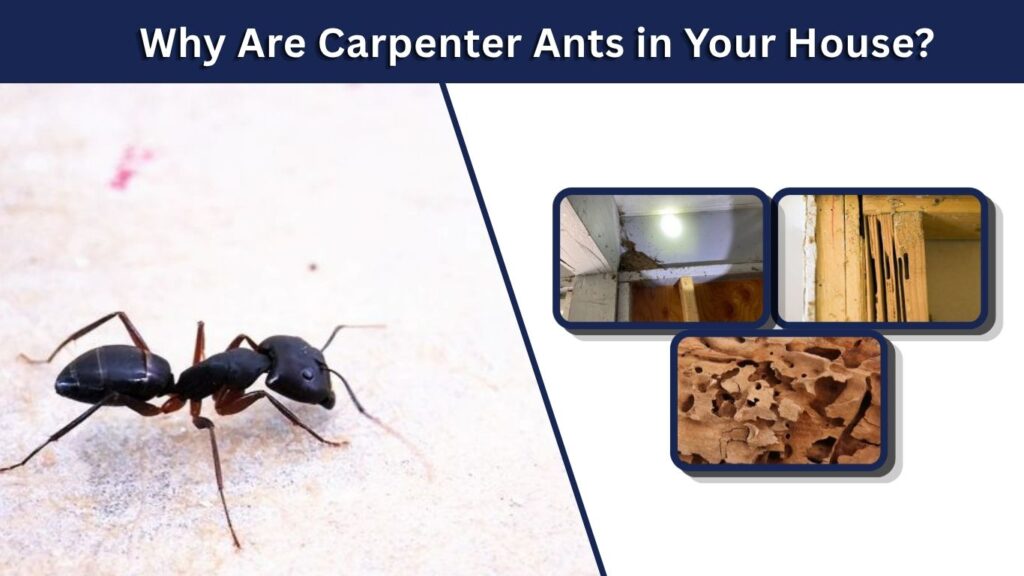
Carpenter ants usually begin nesting in wood affected by water, decay, or fungal damage. A moisture problem often exists before the ants arrive.
Conditions That Attract Carpenter Ants
Common causes include:
- Leaking roofs or plumbing
- Damaged window and door frames
- Condensation around pipes
- Poorly ventilated attics or crawl spaces
- Wet wood beneath bathrooms
- Clogged or leaking gutters
- Wood touching damp soil
- Tree branches touching the roof
- Firewood stored against the building
- Rotting stumps or trees near the foundation
Parent colonies are commonly located outdoors in trees, stumps, roots, logs, or buried wood. Workers may establish satellite nests inside a nearby building. These satellite nests can occupy relatively dry materials such as sound wood, foam insulation, hollow doors, and wall voids.
How Carpenter Ants Enter
Workers may enter through:
- Foundation cracks
- Openings around pipes and wires
- Gaps beneath siding
- Window and door frames
- Roof and soffit damage
- Utility lines
- Overhanging branches
- Firewood brought indoors
They enter buildings for shelter, moisture, or food. Indoor foods include meat, pet food, syrup, honey, sugar, and crumbs.
Where Carpenter Ants Nest Inside a House
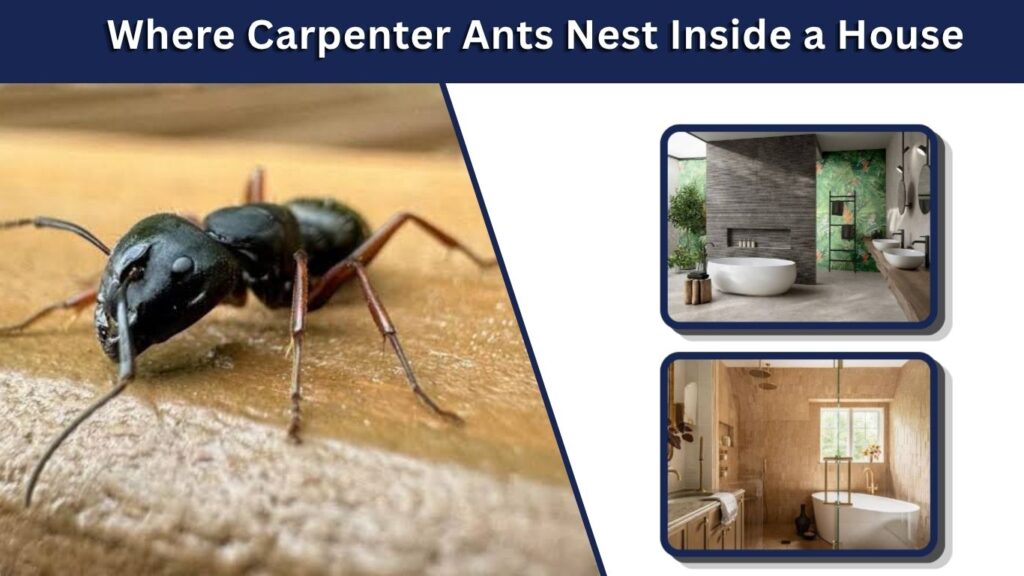
Nests are commonly associated with hidden moisture, but they can occur in dry wall voids when connected to a humid parent colony.
Common Nesting Locations
Inspect:
- Behind bathroom tiles
- Around bathtubs and showers
- Beneath sinks and dishwashers
- Around leaking windows
- Inside door frames
- Beneath roof damage
- In attic beams
- Under subfloor insulation
- In wall and ceiling voids
- Around chimneys
- Inside hollow doors
- Within foam insulation
- In basement or crawl-space timbers
Basement activity may originate from wood touching soil, foundation leaks, damaged sill plates, or nests outside near the foundation.
How to Find the Nest
Carpenter ants follow established chemical trails. Observing them after dark is one of the most useful ways to locate a colony.
- Turn off unnecessary lights and use a flashlight.
- Watch active ants without disturbing them.
- Follow workers carrying food toward the nest.
- Inspect where they disappear beneath trim or siding.
- Look above that area for frass or moisture damage.
- Check the corresponding location outdoors.
- Monitor several nights if the trail is unclear.
A small amount of sweet food or water-packed tuna placed near activity may encourage foragers to establish a visible trail. Remove the food after observing them.
Carpenter Ant Damage to a House
Carpenter ants excavate galleries rather than consuming wood. Their tunnels normally follow the grain and have smooth, clean surfaces resembling sanded wood.
Can Carpenter Ants Destroy a House?
A long-established colony can weaken wall framing, roof supports, floor joists, window frames, or other structural components. However, carpenter ant damage usually develops more slowly than termite damage.
The severity depends on:
- Colony size
- Length of infestation
- Number of satellite nests
- Wood moisture
- Existing rot
- Location of the galleries
- Whether structural members are affected
A few ants do not mean the house is in immediate danger. Extensive galleries, sagging wood, repeated swarms, or activity across multiple rooms requires professional inspection.
How to Get Rid of Carpenter Ants in the House
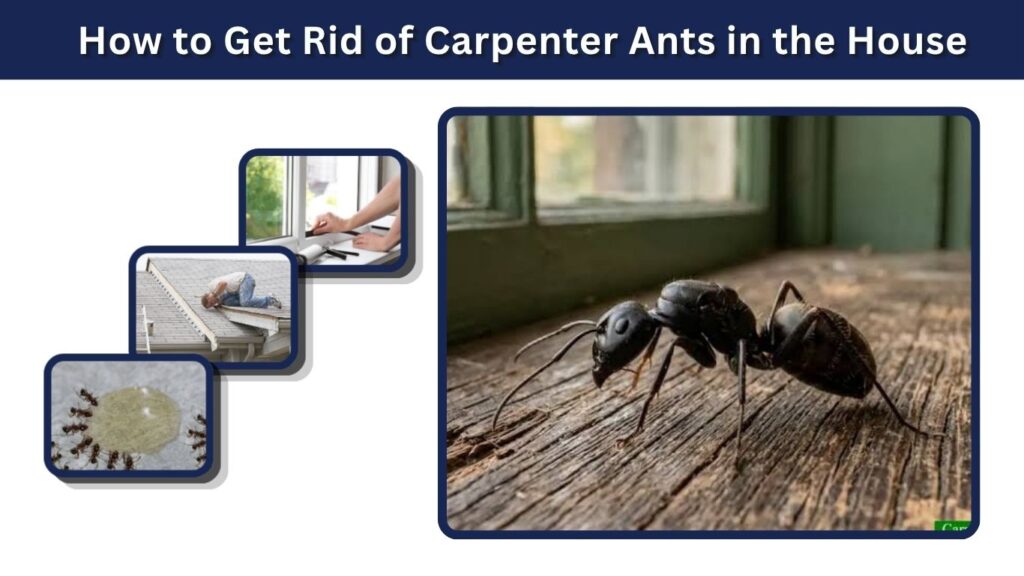
Killing visible workers provides only temporary relief. The queen and most colony members remain concealed, so effective treatment must reach the nest.
1. Confirm the Identification
Collect several ants in a sealed container or photograph them clearly. A pest-management professional or local extension service can help confirm the species.
2. Locate the Colony
Follow nighttime trails and inspect moisture-prone areas. Direct treatment of a confirmed nest is generally more effective than spraying visible workers throughout the house.
3. Repair Moisture Problems
Fix plumbing and roof leaks, improve ventilation, clear gutters, and replace badly decayed wood. Without moisture correction, the location can remain attractive to ants even after treatment.
4. Use a Carpenter-Ant Bait
Choose a bait whose label specifically lists carpenter ants; many ordinary household ant baits exclude them. Place it beside active trails according to the label and where children and pets cannot reach it.
Workers must carry slow-acting bait back to other colony members. Do not spray ants or apply repellent insecticide near the bait, as this may prevent them from collecting it.
5. Treat a Confirmed Nest
An accessible outdoor colony may sometimes be treated with a properly labeled product. Indoor nests inside walls often require dust, foam, or another targeted application by a licensed professional.
Do not inject household chemicals into electrical outlets or blindly drill wall cavities. Incorrect treatment can create fire, electrical, pesticide-exposure, or building-damage risks.
6. Seal Entry Points
After colony activity stops, seal cracks around foundations, windows, doors, pipes, wires, siding, and roof edges. Sealing too early may simply force active ants to create another route.
7. Remove Outdoor Conditions
- Trim branches away from the building.
- Store firewood well away from exterior walls.
- Remove rotting stumps and buried lumber.
- Keep mulch below siding and structural wood.
- Elevate stored lumber to improve airflow.
- Repair damaged exterior wood.
When to Call a Professional
Arrange a professional inspection when:
- Winged carpenter ants emerge indoors
- Ants remain active during winter
- Frass repeatedly appears
- Structural wood sounds hollow
- Several rooms contain ants
- The nest cannot be located
- Baiting fails to reduce activity
- Major moisture or wood damage is present
A professional can distinguish carpenter ants from termites, trace satellite nests, inspect inaccessible voids, and determine whether structural repairs are necessary.
FAQs
Does seeing one carpenter ant mean there is a nest?
Not necessarily. It may be an outdoor worker searching for food. Repeated nighttime activity, frass, winter sightings, or indoor swarmers provide stronger evidence.
Why do carpenter ants appear at night?
They commonly forage after sunset when temperatures and humidity are favorable. Nighttime inspection is therefore useful for following workers back to a nest.
Are carpenter ants in the house during winter serious?
Winter activity strongly suggests a heated indoor nest, unless the ants were recently carried inside with firewood.
Should I spray visible carpenter ants?
Spraying visible workers rarely eliminates the colony and may disrupt baiting. Locating the nest or using a carpenter-ant-labeled bait is usually more effective.
Are carpenter ants outside the house a problem?
Outdoor carpenter ants are common and beneficial decomposers. They become concerning when trails enter the building, nests occupy structural wood, or nearby colonies exploit moisture damage.