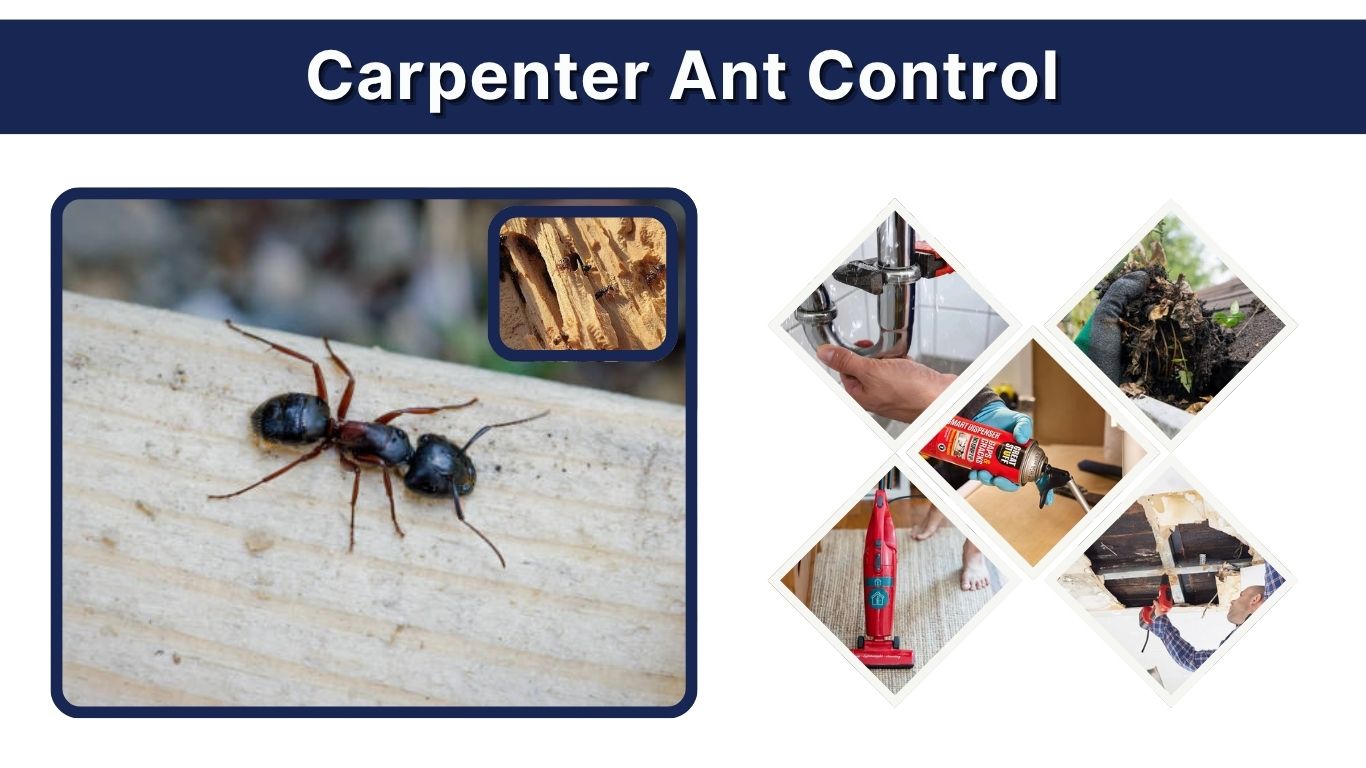
Carpenter ant control requires more than killing the ants you see crawling through your home. These large ants often build nests inside damp, damaged, or decaying wood and can gradually enlarge their galleries over time. Successful control means locating the colony, eliminating ants throughout the nest, correcting moisture problems, and preventing future entry. Some infestations can be managed with careful DIY methods, while nests hidden deep inside walls or structural wood may require professional pest control.
Why Carpenter Ant Control Is Important
Carpenter ants do not eat wood like termites. Instead, they excavate wood to create smooth tunnels and chambers for nesting. Their preference for moisture-damaged wood means an infestation may also indicate a leak, condensation problem, or other source of excess moisture.
Ignoring an established colony can allow nesting activity to expand into additional parts of a building.
Signs of a Carpenter Ant Infestation
Look for several common warning signs:
- Large black, reddish, or brown ants indoors
- Small piles of sawdust-like material called frass
- Ants appearing regularly at night
- Winged carpenter ants emerging indoors
- Rustling sounds inside walls or wood
- Ant trails leading toward windows, roofs, or foundations
- Damaged or hollow-sounding wood
- Activity around damp structural areas
Finding an occasional carpenter ant does not automatically mean there is a nest inside your house. Repeated indoor activity is more concerning.
Where Carpenter Ants Usually Nest
Carpenter ants prefer wood that has been softened by moisture or decay.
Common nesting locations include window frames, roof edges, wall voids, door frames, bathroom areas, decks, porches, crawl spaces, damaged siding, and wood around plumbing leaks.
They may also establish outdoor colonies inside dead trees, stumps, logs, landscape timbers, or firewood.
Best Carpenter Ant Control Methods
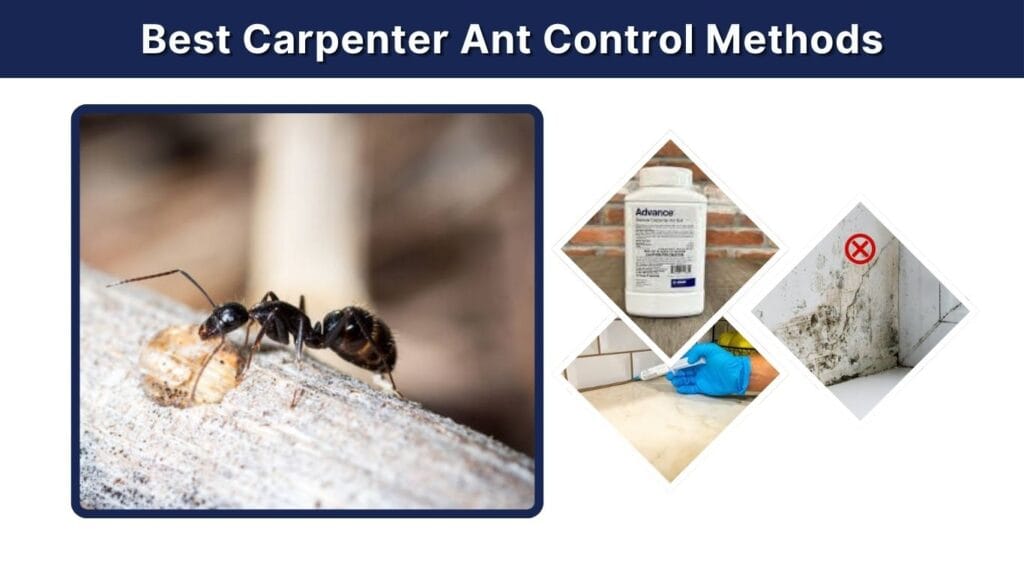
The most effective control program targets the colony rather than individual ants. Spraying visible workers may temporarily reduce activity without reaching the queen or developing ants inside the nest.
A combination of inspection, baiting, moisture correction, and exclusion usually produces better long-term results.
1. Locate the Carpenter Ant Nest
Watch active ants, especially after sunset when many carpenter ant species forage heavily.
Follow their trails to determine where they disappear into walls, floors, roofs, trees, or other structures. Frass near a small opening can also indicate a nest.
Outdoor trails may lead from a house to a parent colony in a nearby tree or stump.
2. Use Carpenter Ant Baits
Slow-acting ant baits can be useful because foraging workers carry food back toward other colony members.
Place appropriate labeled baits near active trails rather than directly disrupting the nest area.
For best results:
- Place bait where ants regularly travel.
- Follow the product label exactly.
- Keep bait away from children and pets.
- Avoid spraying repellent insecticides around bait stations.
- Replace depleted or contaminated bait as instructed.
Food preferences may change, so ants that ignore one type of bait may respond to another formulation.
3. Eliminate Moisture Problems
Moisture management is one of the most important parts of carpenter ant control.
Repair:
- Leaking pipes
- Roof leaks
- Damaged gutters
- Poor drainage
- Wet window frames
- Condensation problems
- Rotting exterior wood
Removing moisture makes the structure less attractive for future nesting and helps prevent additional wood deterioration.
4. Seal Entry Points
Once the main infestation is being controlled, reduce opportunities for ants to return.
Seal gaps around pipes, cables, doors, windows, siding, vents, and foundation openings. Replace damaged screens and repair cracks where practical.
Do not rely on sealing alone when an active colony is already inside a wall. Trapping ants within inaccessible spaces will not eliminate the nest.
DIY Carpenter Ant Control
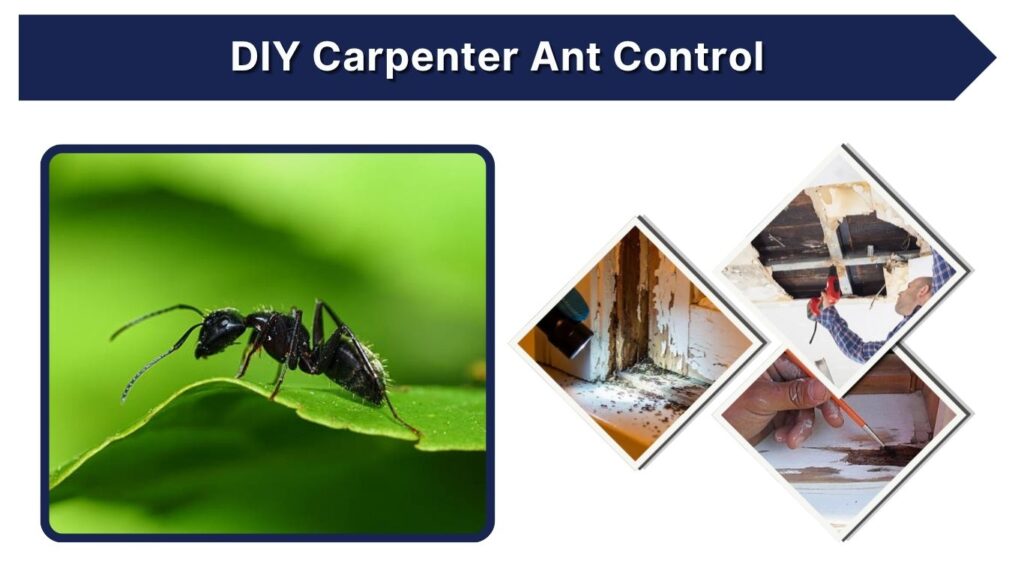
A small infestation with an accessible nesting area may be manageable without immediately hiring a professional. DIY carpenter ant control works best when you can determine where the ants are coming from and correct the environmental conditions supporting them.
Random spraying throughout the house is usually less effective.
DIY Control Steps
A practical approach includes:
- Identify carpenter ants correctly.
- Track foraging trails.
- Look for frass and nesting openings.
- Place labeled carpenter ant bait along active routes.
- Repair leaks and moisture damage.
- Remove rotting wood.
- Trim vegetation touching the building.
- Seal exterior entry points after activity declines.
- Continue monitoring for new ants.
If activity continues despite these measures, the main colony may be hidden or located somewhere else.
Carpenter Ant Control With Borax
Borax or borate ingredients are found in some ant bait products, but homemade mixtures can be unreliable. If the concentration is too strong, ants may die before returning to the colony. If it is too weak, control may be ineffective.
A commercially prepared bait labeled for carpenter ants provides clearer instructions and more consistent formulation.
Keep all pesticide products away from food preparation surfaces, children, and pets.
Carpenter Ant Control Inside the House
Indoor carpenter ants may simply be workers searching for food, or they may indicate an interior satellite colony.
Repeated activity during cold weather, piles of frass indoors, or winged ants emerging from the building increases the likelihood that a nest is located within the structure.
Carpenter Ants in Walls
Wall nests are challenging because the visible ants represent only part of the population.
Ants may nest around:
- Leaking plumbing
- Window frames
- Door frames
- Damp insulation
- Roof leaks
- Bathroom walls
- Kitchen plumbing
- Exterior siding
Treating a wall effectively often requires determining the exact nest location.
If substantial drilling or insecticide application inside wall voids would be necessary, professional treatment is usually safer and more effective.
Black Carpenter Ant Control
Black carpenter ants are controlled using the same basic principles as other carpenter ants.
Species such as the black carpenter ant may establish large colonies with workers ranging noticeably in size. Focus on nest location, baiting, moisture correction, exclusion, and removal of deteriorated wood rather than relying only on visible-ant treatments.
Carpenter Ant Control for Trees and Log Homes
Carpenter ants commonly use natural wood outdoors, so their presence in a tree does not always mean the ants caused the original damage. They often take advantage of wood that was already weakened by rot, injury, or moisture.
Log homes require particular attention because large amounts of exposed wood can provide potential nesting and travel areas.
Carpenter Ants in Trees
If carpenter ants are nesting in a tree, inspect the tree for cavities, dead sections, rot, or structural weakness.
Do not automatically destroy a healthy tree solely because ants are present. The colony may simply be occupying an existing cavity.
If the tree is close to your home, trim branches that provide direct contact with the roof or siding.
Carpenter Ant Control for Log Homes
Log homes benefit from regular inspection.
Important preventive measures include keeping logs dry, maintaining protective finishes, repairing cracks, controlling roof and gutter leaks, maintaining ventilation, and removing vegetation that stays against exterior wood.
Pay particular attention to lower logs and joints where water can accumulate.
Non-Toxic and Organic Carpenter Ant Control
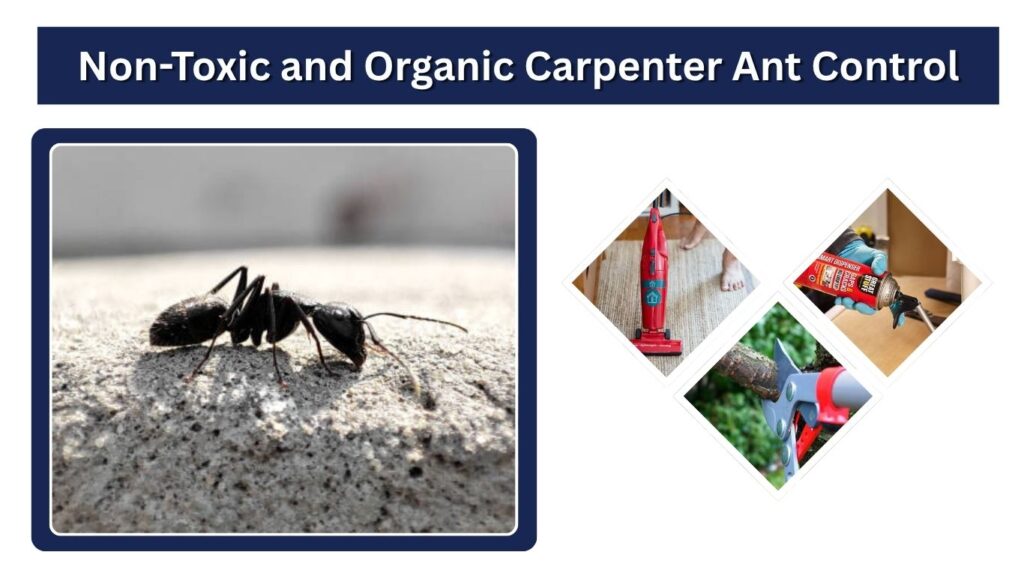
People searching for non-toxic carpenter ant control should focus first on habitat modification and physical exclusion.
Removing nesting conditions can substantially reduce the risk of reinfestation without relying entirely on insecticides.
Lower-Chemical Control Options
Useful measures include:
- Repair moisture problems.
- Replace rotting wood.
- Vacuum individual indoor ants.
- Remove nearby stumps and decaying wood when appropriate.
- Store firewood away from the house.
- Seal cracks and gaps.
- Trim branches away from the structure.
- Maintain good ventilation.
These methods are particularly valuable for prevention, although an established colony inside structural wood may still require targeted treatment.
Carpenter Ant Control: DIY vs Professional
DIY treatment is reasonable when the infestation is small, the nest location is reasonably clear, and no significant structural damage is present.
Professional carpenter ant control becomes more valuable when the infestation is widespread or inaccessible.
When DIY Control May Work
DIY methods may be appropriate when:
- Only a few ants are present.
- Trails can be followed.
- The nest appears accessible.
- Moisture damage is minor.
- Baiting noticeably reduces activity.
Continue monitoring afterward because carpenter ants may maintain several related nesting sites.
When to Call Pest Control
Consider professional help when:
- Winged carpenter ants emerge indoors.
- Frass repeatedly appears from walls.
- Several rooms have activity.
- The nest cannot be located.
- Ants return after repeated treatments.
- Structural wood appears damaged.
- The home has multiple hidden moisture problems.
A pest professional can inspect the building, identify nesting areas, and choose targeted treatments rather than broadly applying pesticides.
Carpenter Ant Pest Control Cost
The cost of professional carpenter ant control varies considerably. A simple localized treatment generally costs less than controlling several colonies hidden throughout a large house.
Pricing can depend on the property size, severity of infestation, nest accessibility, treatment method, location, and whether repeat visits are required.
What Can Increase the Cost?
Expenses may increase when:
- Multiple nests exist.
- Wall void treatment is required.
- Infestation covers several floors.
- Structural repairs are necessary.
- Moisture damage is extensive.
- Follow-up treatments are needed.
The price of pest treatment also does not normally include major carpentry, roofing, or plumbing repairs needed to correct the underlying moisture problem.
How to Prevent Carpenter Ants
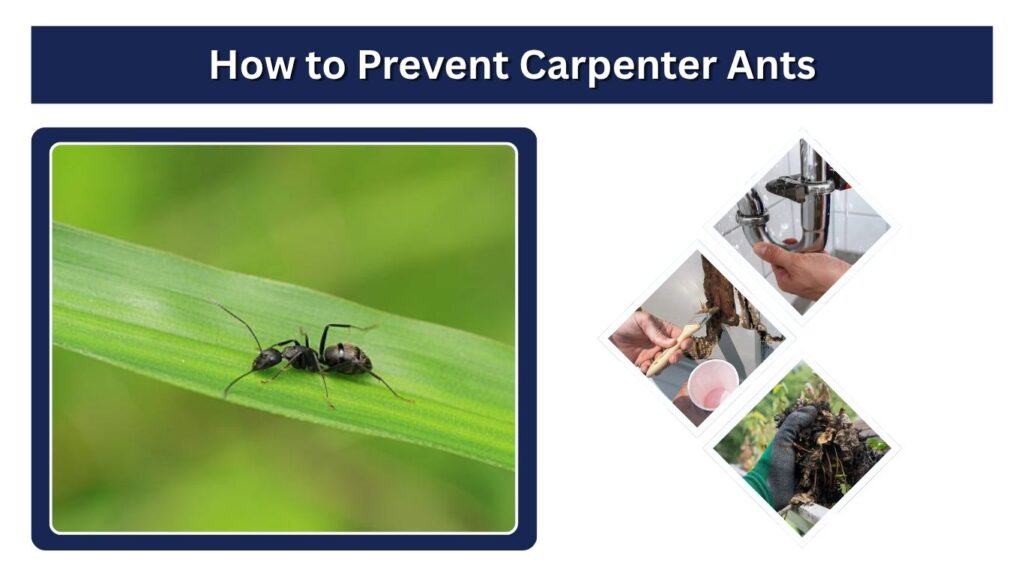
Prevention focuses on keeping structural wood dry and making it difficult for ants to enter the building.
Regular exterior inspections can often reveal problems before a large indoor colony becomes established.
Carpenter Ant Prevention Tips
- Fix water leaks promptly.
- Replace severely rotted wood.
- Keep gutters functioning properly.
- Store firewood away from exterior walls.
- Trim branches touching the roof.
- Seal foundation and siding gaps.
- Maintain ventilation in crawl spaces and attics.
- Remove food crumbs and spills.
- Inspect damp areas periodically.
- Monitor previously infested locations.
These measures reduce both nesting opportunities and access to the home.
FAQs
What is the best carpenter ant control?
The best approach combines locating the colony, using appropriately labeled bait or targeted treatment, repairing moisture problems, removing deteriorated wood, and sealing entry points.
Can I control carpenter ants myself?
Yes, small infestations may respond to baiting, moisture correction, sanitation, and exclusion. Hidden or extensive structural infestations are usually better handled professionally.
Does killing visible carpenter ants eliminate the colony?
Usually not. Foraging workers represent only part of the colony. Successful treatment needs to affect ants inside the nest, including the reproductive individuals.
How long does carpenter ant control take?
Results vary with colony size, nest location, and treatment. Baits are intentionally slow acting and may require days or longer to substantially reduce colony activity.
When should I call a carpenter ant pest control company?
Call a professional when ants repeatedly emerge from walls, winged ants appear indoors, structural damage is suspected, several areas are affected, or DIY treatment has failed.