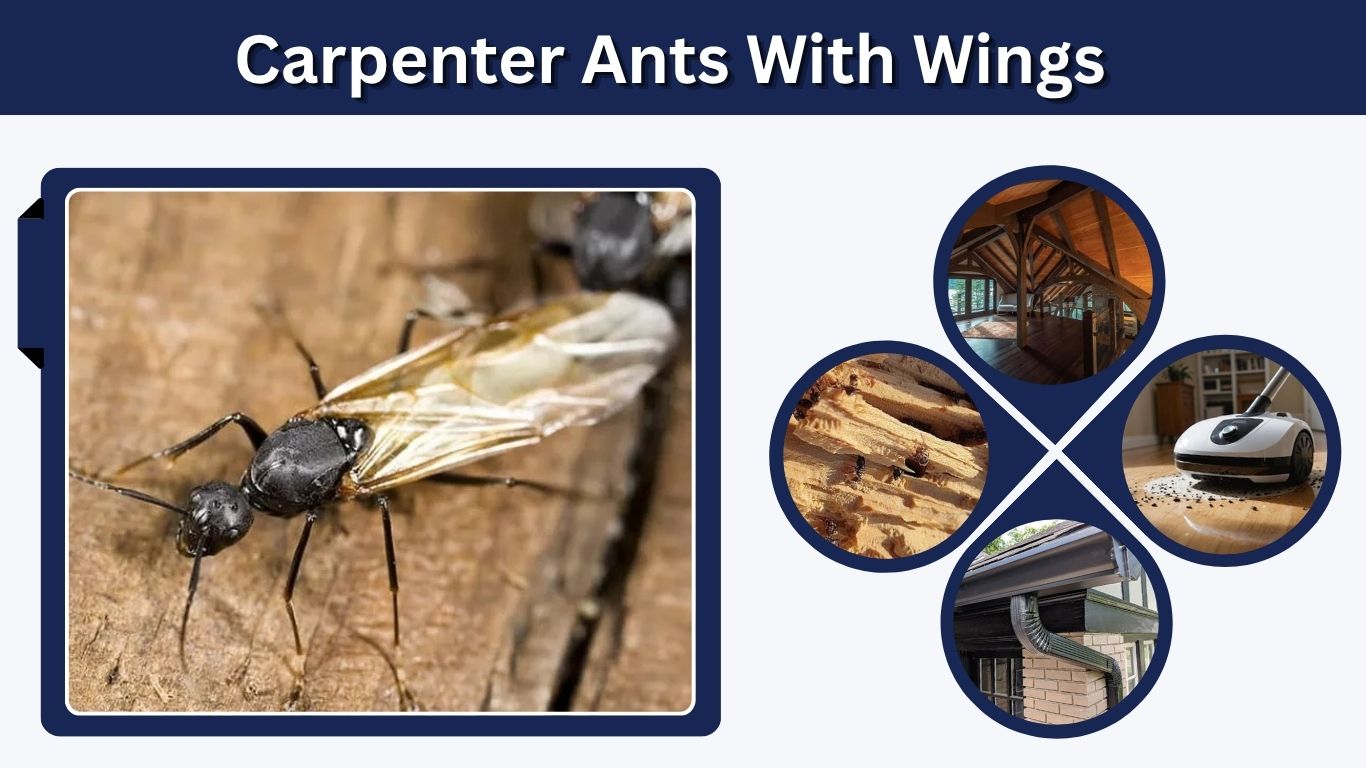
Carpenter ants with wings are reproductive members of an established colony, not a separate species or baby ants. They usually appear during seasonal mating flights and may be found near windows, doors, bathrooms, or outdoor nesting sites. A few winged ants outside may be normal, but repeated indoor sightings can indicate a mature colony within the building. Identifying them correctly is important because carpenter ants differ from termites in appearance, nesting behavior, and treatment requirements, even though both may signal problems with damp or damaged wood.
What Are Carpenter Ants With Wings?
Winged carpenter ants are sexually mature males and females known as alates. They leave an established nest to mate and start the next generation of colonies. Their appearance generally indicates that the parent colony is mature enough to produce reproductive ants.
Why Carpenter Ants Develop Wings
Workers remain wingless throughout their lives, but reproductive males and young queens develop wings before emerging from the nest. During favorable weather, these ants gather and fly together in an event commonly called a swarm or nuptial flight.
After mating, the males die. Fertilized queens land, remove their wings, and search for a protected place to establish new colonies. The queen then lays eggs and raises her first workers inside a small nesting chamber.
Winged ants are therefore adults rather than “baby carpenter ants.” Young carpenter ants pass through egg, larval, and pupal stages inside the nest and do not resemble small winged adults.
Male Carpenter Ants vs. Winged Queens
Young queens are generally larger and more heavily built than males. Their broad thorax contains the muscles needed for flight, while their enlarged abdomen supports egg production.
Males usually have smaller heads, narrower bodies, and proportionally longer-looking wings. Both sexes may occur during a swarm, but only mated queens establish new colonies.
Carpenter Ants With Wings Identification
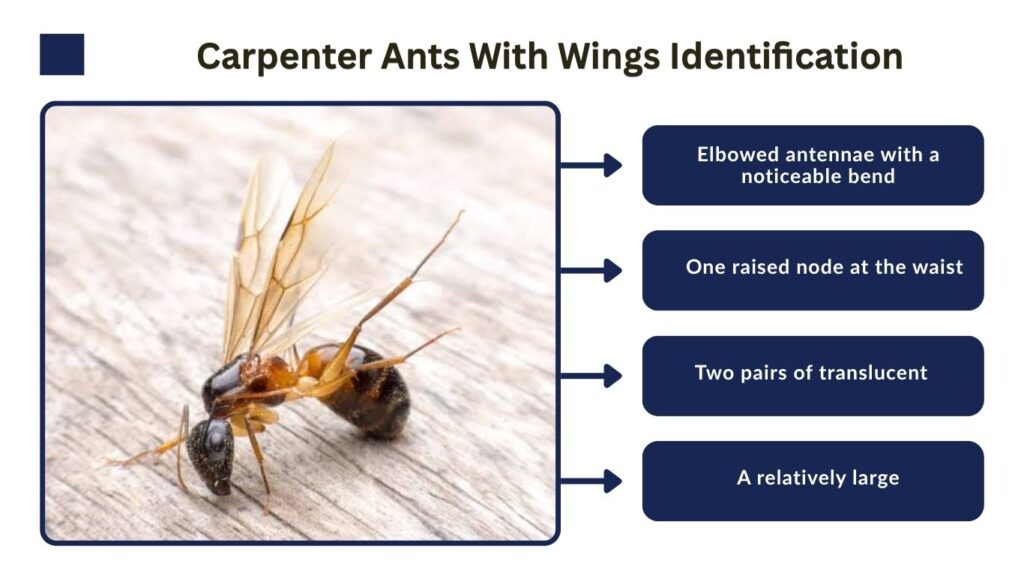
Winged carpenter ants can be black, dark brown, reddish, orange, or red-and-black. Color varies among species, so body structure provides more reliable identification.
Key Identification Features
Look for the following combination of characteristics:
- Elbowed antennae with a noticeable bend
- A narrow, pinched waist between the thorax and abdomen
- One raised node at the waist
- Two pairs of translucent or slightly whitish wings
- Front wings that are longer than the rear wings
- An evenly rounded upper thorax when viewed from the side
- A relatively large, robust body compared with many household ants
- Black, red, brown, orange, or mixed coloration
Carpenter ants have six legs, and their wings attach to the enlarged thorax. Wing scars may be visible on queens that recently removed their wings.
Size and Color
Winged carpenter ants commonly measure about ⅜ to ¾ inch long, although a large queen can approach one inch. Males may appear smaller and more slender.
Black carpenter ants are widespread in many regions, but red carpenter ants with wings are also normal. Florida carpenter ants, for example, may have reddish or orange sections combined with a darker abdomen. A large red-and-black winged ant is not automatically a wasp or a stinging species.
Wings may look white under indoor lighting because they are thin and reflective. Wing color alone should not be used for identification.
Carpenter Ants With Wings vs. Termites
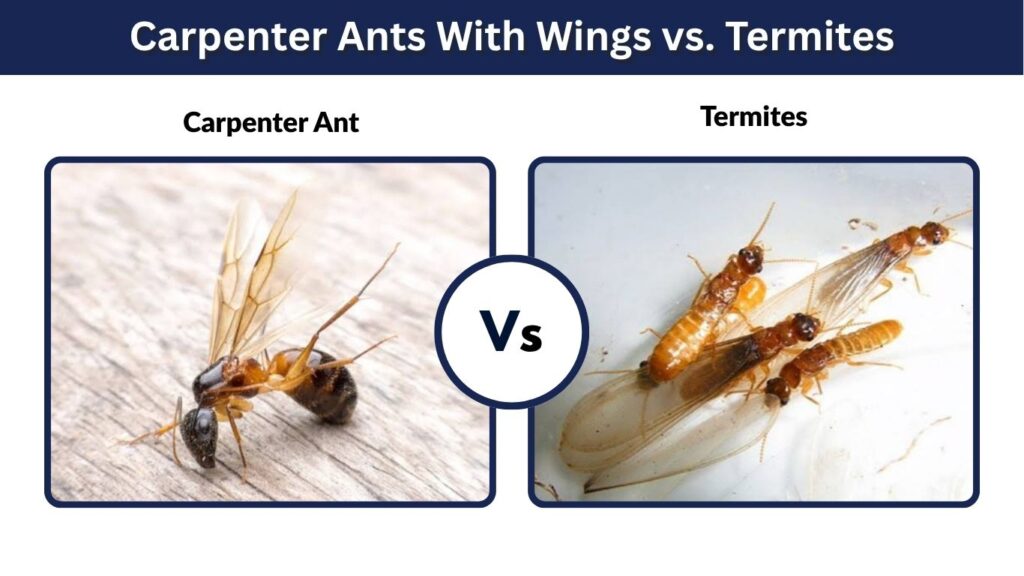
Carpenter ant and termite swarms can occur around similar times and locations. Both insects may gather near windows or lights, but several visible differences make them distinguishable.
Important Physical Differences
Compare these identifying features:
- Antennae: Carpenter ants have elbowed antennae; termites have straight or gently curved antennae.
- Waist: Carpenter ants have a narrow waist; termites have a broad, almost uniformly thick body.
- Wings: A carpenter ant’s front wings are longer than its rear wings; a termite has four wings of nearly equal length.
- Wing strength: Carpenter ant wings remain attached more firmly; termite wings detach easily and may collect near windows.
- Body shape: Carpenter ants have clearly defined body sections; termites have a softer, less constricted appearance.
- Color: Carpenter ant alates are frequently black, brown, or reddish; termite swarmers are often dark-bodied but may appear lighter depending on the species.
Carpenter Ants vs. Other Flying Ants
Not all ants with wings are carpenter ants. Many ant species produce winged reproductive adults during mating season. Small black ants with wings, for example, may belong to pavement ants, little black ants, field ants, or other species.
Carpenter ants are generally larger, but size alone is not conclusive. Their smoothly rounded thorax, single waist node, and nesting association with wood provide stronger evidence. A clear photograph from above and from the side can help with professional identification.
Carpenter Ants With Wings in the House
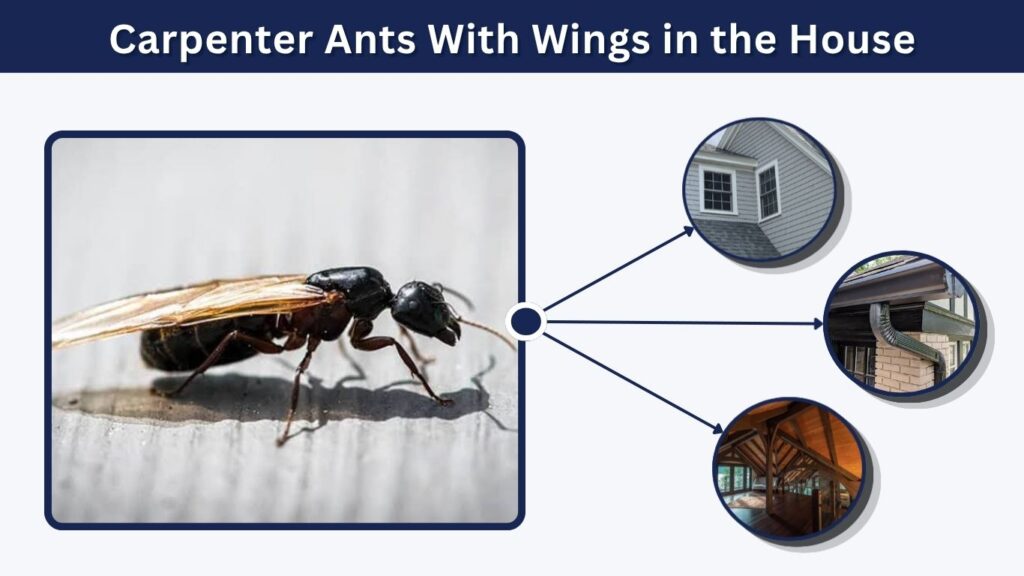
A single winged carpenter ant can enter through an open door or window. Finding numerous ants emerging from the same indoor location is more concerning because it suggests a mature colony may be nesting within or near the structure.
What Indoor Swarming Means
Winged carpenter ants are attracted to light and often collect near windows after leaving a nest. If the swarm originates outdoors, the ants may simply have flown inside. However, ants repeatedly appearing from wall gaps, ceilings, baseboards, vents, or window frames may be emerging from an indoor satellite or parent nest.
Dead winged carpenter ants near windows can also indicate an indoor swarm. The ants may become trapped while attempting to fly toward daylight.
Carpenter ants frequently nest in wood affected by leaks, condensation, or poor ventilation. They do not eat wood like termites. Instead, they excavate it to create smooth galleries.
Places to Inspect
Check these areas for ants, moisture, wood shavings, or nesting sounds:
- Bathroom walls and areas surrounding plumbing
- Window and door frames damaged by water
- Rooflines, gutters, soffits, and attic timbers
- Spaces beneath sinks or behind dishwashers
- Wall voids near leaking pipes
- Decks, porches, and wooden support posts
- Firewood stored against the building
- Tree stumps, hollow trees, and damaged branches
- Foam insulation and other protected voids
Carpenter ants may travel a considerable distance from their nest. The location where you see a winged or worker ant is not necessarily where the main colony is situated.
Winged Carpenter Ants Outside
Seeing a few winged ants outside during spring or early summer is usually part of natural reproductive activity. Swarms may occur around trees, logs, fences, or buildings.
An outdoor swarm becomes more relevant when it repeatedly occurs beside damaged exterior wood or when ants follow trails into the house. Outdoor parent colonies can also establish satellite nests inside buildings.
Are Winged Carpenter Ants Dangerous?
Winged carpenter ants are not poisonous and do not sting. Their main concern is the possibility of a wood-excavating colony inside the home.
Do Carpenter Ants With Wings Bite?
Carpenter ants have jaws and can bite when trapped or handled. A large ant may produce a noticeable pinch and can release formic acid into the irritated area. However, bites are uncommon and usually cause only temporary discomfort.
Wash the area with soap and water and avoid scratching it. Seek medical advice if unusual swelling, breathing difficulty, or another severe reaction develops.
Can They Damage a House?
The winged ants themselves do not cause most structural damage. Workers excavate galleries where the colony nests. Over time, a large colony can weaken wood, particularly when moisture problems have already caused decay.
Repeated indoor swarms suggest that the colony is mature. Other warning signs include coarse sawdust-like material, rustling noises in walls, persistent nighttime trails, and workers emerging from cracks.
How to Get Rid of Carpenter Ants With Wings
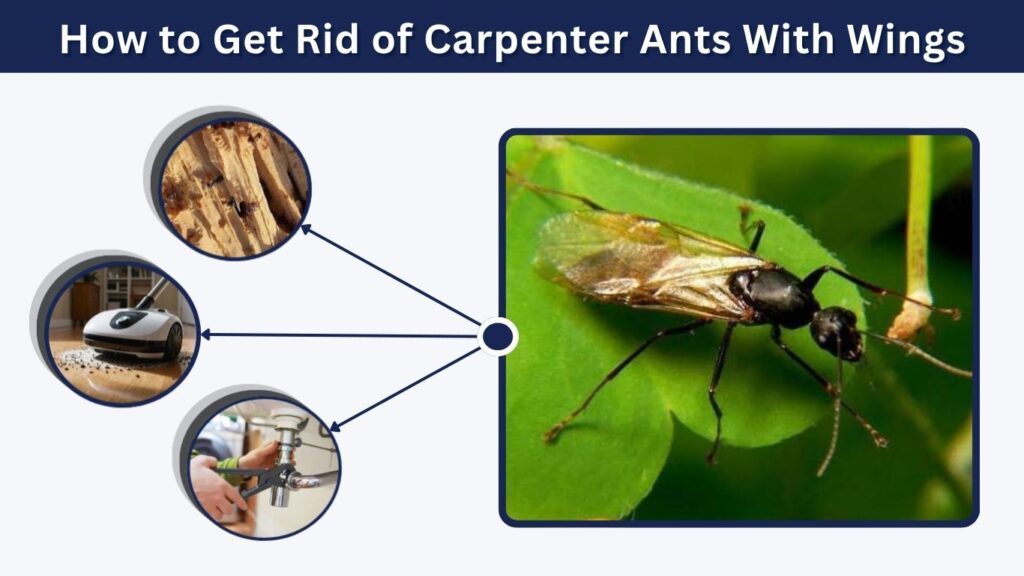
Killing the visible winged ants may provide temporary relief, but it does not eliminate the workers, brood, or queen remaining in the nest. Effective treatment must reach the colony.
Immediate Steps
When winged carpenter ants appear indoors:
- Vacuum visible ants and discard the vacuum contents outside.
- Save one or two specimens for identification.
- Photograph the antennae, waist, body, and wings.
- Watch where ants enter or emerge without disturbing their trail.
- Inspect nearby wood for moisture damage and coarse debris.
- Repair plumbing, roof, gutter, or window leaks.
- Avoid sealing an active opening until the colony has been treated.
- Do not spray insecticide around an active bait station.
Treating the Colony
A slow-acting bait labeled for carpenter ants may allow workers to carry the active ingredient back to nestmates. Place it near active trails according to the label, but keep it away from children and pets. Carpenter ants may change their food preferences, so a bait that is ignored may need to be replaced with another labeled formulation.
Direct nest treatment can work when the nesting location is confirmed, but hidden wall voids and multiple satellite nests make treatment difficult. A pest control professional may be necessary when swarms emerge indoors, structural damage is visible, or activity continues despite baiting.
Moisture correction is essential. Replace badly damaged wood, improve ventilation, move firewood away from the house, trim branches touching the roof, and seal exterior entry points after the infestation has been controlled.
FAQs
Winged carpenter ants frequently raise questions because they resemble termites and other flying insects. These brief answers cover their most common characteristics.
Are All Ants With Wings Carpenter Ants?
No. Many ant species produce winged males and queens. Body size, thorax shape, waist nodes, color, and nesting evidence are needed for accurate identification.
Are Carpenter Ants With Wings Bad?
A few outside are usually normal. Numerous winged carpenter ants emerging indoors can indicate a mature colony and possible damage within nearby wood.
Why Are Winged Carpenter Ants in My Bathroom?
Bathrooms provide moisture and protected wall spaces. The ants may be emerging from water-damaged wood near plumbing, although they can also enter through windows or vents.
Do Winged Carpenter Ants Sting?
No. Carpenter ants do not have stingers, but they can bite defensively and release formic acid that may increase irritation.
When Do Carpenter Ants Swarm?
Swarming most often occurs during warm weather in spring or early summer, although timing varies by species, climate, and location. Indoor colonies may produce winged ants earlier than outdoor colonies.