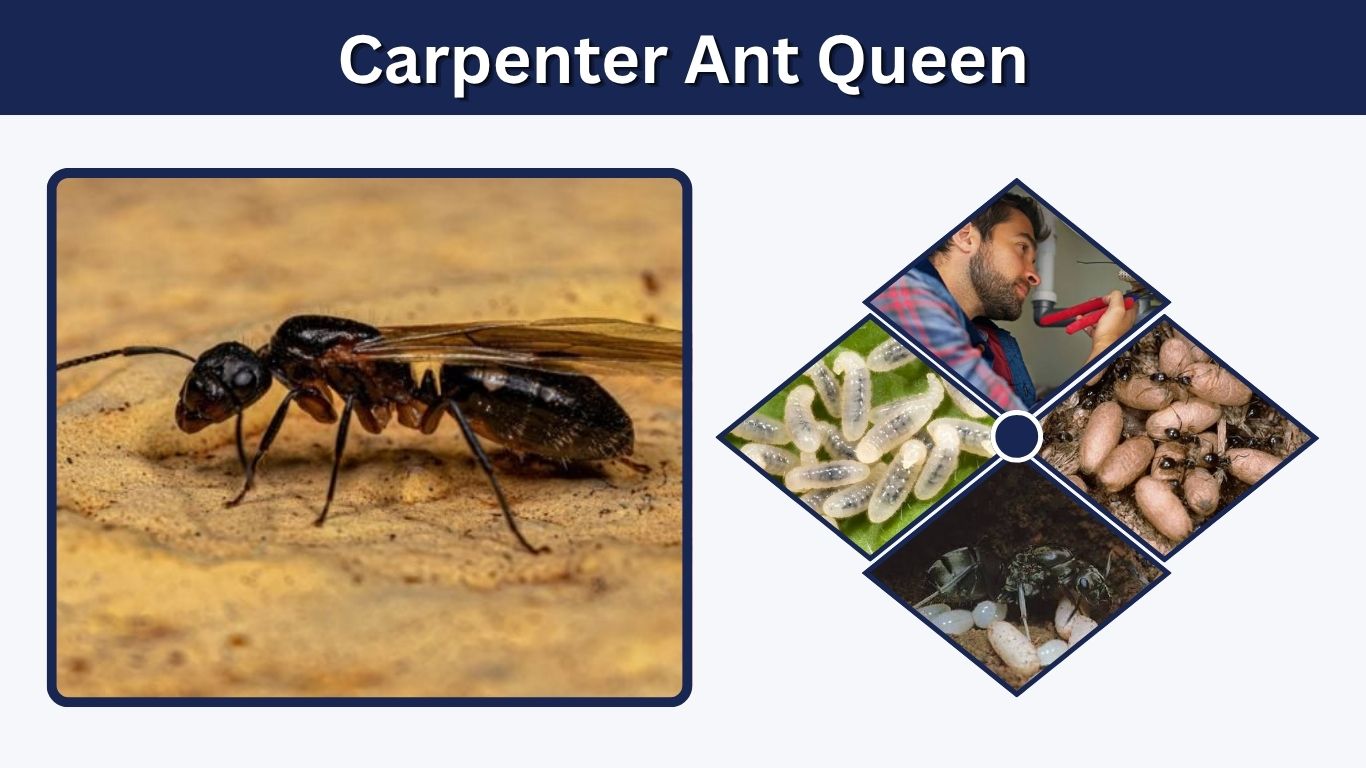
A carpenter ant queen is the reproductive center and usually the largest member of her colony. Depending on the species, she may be black, red-and-black, chestnut, or orange and can approach one inch in length. Young queens possess wings for mating flights but shed them before establishing nests. Because the queen normally remains hidden and workers may occupy separate satellite nests, eliminating visible ants alone rarely solves an infestation. Understanding her appearance, lifecycle, and behavior can help you identify and control a carpenter ant colony.
What Is a Carpenter Ant Queen?
The queen carpenter ant is the colony’s primary egg-laying female. While workers collect food, maintain galleries, and care for young, the queen remains protected inside the main nest. Most common structural carpenter ant colonies have one primary queen, although colony arrangements may vary among species.
Role Within the Colony
After mating, a queen establishes a nest and produces the colony’s first workers. These workers eventually take over food gathering and brood care, allowing her to concentrate on laying eggs.
A mature colony may contain several thousand ants and produce winged males and new queens. Development to this stage usually takes several years. The colony depends on its queen for long-term worker replacement and continued growth.
Carpenter Ant Queen Identification
Look for a combination of characteristics rather than relying only on color:
- A body commonly measuring approximately ½ to 1 inch long
- An enlarged, muscular middle section called the thorax
- A broad abdomen adapted for egg production
- Elbowed antennae and a narrow waist
- One raised node between the thorax and abdomen
- An evenly rounded upper thorax when viewed from the side
- Wings or visible wing scars, depending on her reproductive stage
What Does a Carpenter Ant Queen Look Like?
A queen may resemble an unusually large worker, making identification difficult without close inspection. Her expanded thorax is usually the most dependable feature because it once supported the muscles required for flight.
Size and Color
Carpenter ant queen size varies by species, but many queens measure approximately 13–25 millimeters long. Some can approach one inch. Workers are usually smaller, although large major workers may be similar in overall length.
Black carpenter ant queens are predominantly dark brown or black. Other species may have reddish, orange, chestnut, or red-and-black bodies. Therefore, color alone cannot confirm that an ant is a queen or even a carpenter ant.
Carpenter Ant Queen With Wings
A winged carpenter ant queen is called an alate. She uses her wings during a seasonal mating flight, generally in spring or early summer. Her front wings are longer than her rear wings.
After mating, the queen lands, removes her wings, and searches for a protected nesting location. A wingless reproductive queen is called a delate. Small scars where the wings were attached usually remain visible on her thorax.
Carpenter Ant Queen vs. Worker
Several features separate queens from workers:
- Queen: Enlarged thorax, fuller abdomen, wing scars or wings, and reproductive function
- Major worker: Large head and powerful jaws but no wing scars or flight-related thorax
- Minor worker: Smaller body and narrower proportions
- Male: Winged, usually more slender, with a smaller head and reproductive rather than colony-maintenance duties
Carpenter Ant Queen Lifecycle
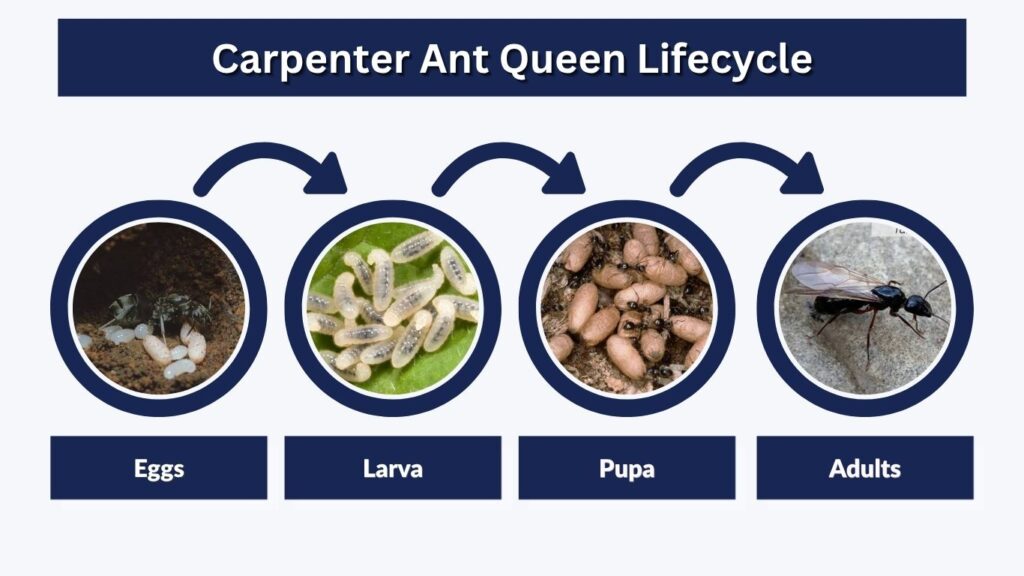
The queen passes through complete metamorphosis: egg, larva, pupa, and adult. However, her journey begins as a winged reproductive system raised inside an established colony.
Mating and Nest Foundation
During a mating flight, a young queen mates with a winged male. She then sheds her wings and searches for damp or decaying wood, a hollow space, or another sheltered site.
The queen seals herself inside a small chamber and lays her first eggs. During this founding period, she survives partly on energy stored in her body and broken-down flight muscles. She feeds and cares for the first larvae without help.
Egg Laying and Colony Growth
Colony development normally follows these stages:
- The newly mated queen lays a small initial batch of eggs.
- Eggs hatch into legless larvae that require feeding.
- Larvae develop into pupae and later emerge as workers.
- The first workers begin collecting food and caring for new brood.
- The queen increases egg production as the workforce grows.
- A mature colony eventually produces winged queens and males.
The phrase “pregnant queen carpenter ant” is commonly used, but “mated” or “fertilized queen” is more accurate. A swollen abdomen may indicate active egg production, although appearance alone cannot prove that a queen has mated.
Carpenter Ant Queen Lifespan
A carpenter ant queen can live for many years, with some surviving as long as approximately 15 years under favorable conditions. Workers have considerably shorter lives. The queen’s longevity allows a colony to expand gradually and remain active for years when its nest is not disturbed.
Finding a Carpenter Ant Queen in the House
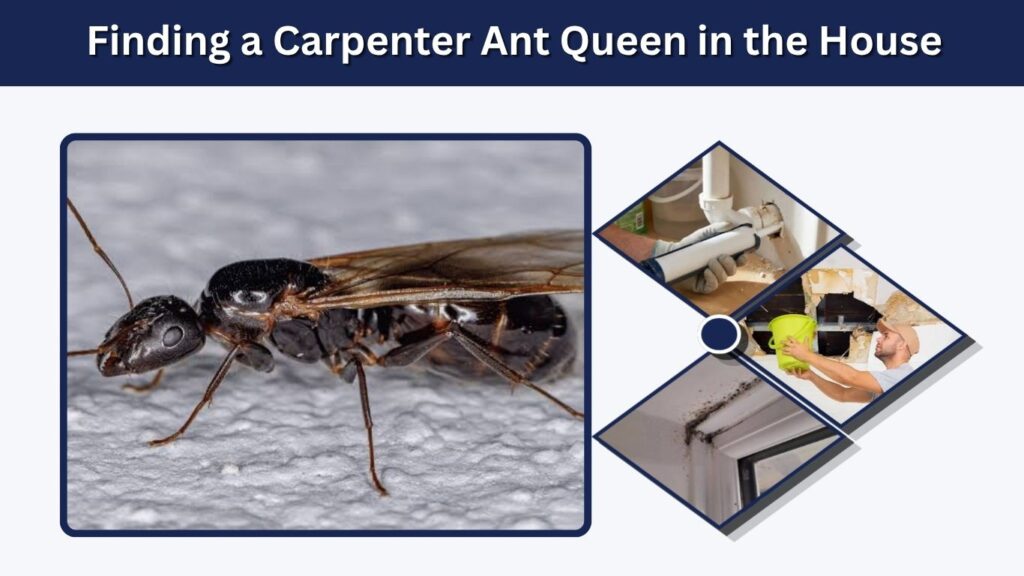
A single carpenter ant indoors may have entered while foraging. However, repeated sightings, year-round activity, sawdust-like debris, or winged ants emerging inside can indicate a nest within the structure.
What an Indoor Queen May Mean
Finding a wingless queen indoors may indicate that she is attempting to establish a new colony. A group of winged ants emerging from a wall, ceiling, or window area is more concerning because it can indicate a mature indoor colony.
Carpenter ants often establish a humid parent nest and one or more satellite nests. The parent nest contains the queen, eggs, and young larvae, while satellite nests may contain workers and older brood. Consequently, the queen may not be in the wall where activity is most noticeable.
How to Locate the Nest
Signs that can help trace the colony include:
- Workers following consistent trails after sunset
- Ants traveling near plumbing, roof leaks, or damp window frames
- Coarse wood shavings pushed from cracks or small openings
- Faint rustling sounds inside wood or wall voids
- Activity around tree stumps, firewood, decks, or damaged exterior timber
- Winged ants appearing from the same indoor location
Carpenter ants excavate wood to create galleries but do not eat it. Moisture-damaged wood is especially attractive, although established colonies can extend into sound wood.
What Happens if You Kill the Queen?
Removing the queen stops the colony from producing replacement workers. However, the colony does not disappear immediately because existing workers and developing brood may survive for weeks or months.
Will the Entire Colony Die?
A colony with one queen will gradually collapse after she dies. Nevertheless, killing one large ant does not prove that the colony’s queen has been eliminated. It may have been a major worker, an unmated winged queen, or a queen starting a separate colony.
Satellite nests can also remain active temporarily after the parent queen is killed. Continued activity may indicate surviving workers, another nearby colony, or an undiscovered parent nest.
How to Get Rid of a Carpenter Ant Queen
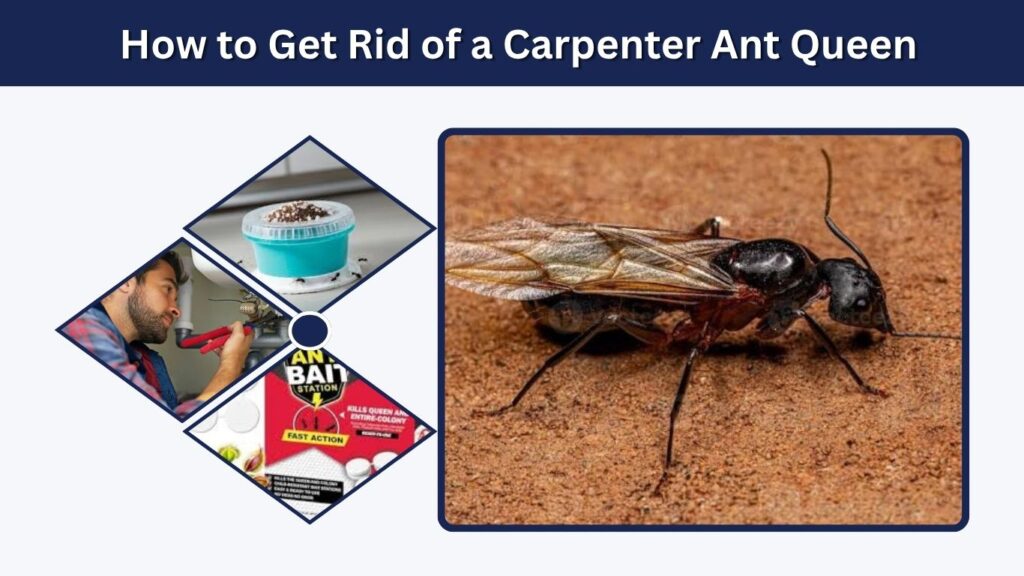
Directly finding the queen is difficult because she remains deep inside the protected parent nest. Effective control targets the entire colony rather than individual ants traveling through the house.
Use Colony-Targeting Bait
Place a carpenter-ant bait labeled for indoor use near active trails, following all product directions. Slow-acting bait allows workers to carry food back to nestmates and the queen.
Avoid spraying insecticide directly around a bait station. Sprays may kill or repel workers before they transport the bait into the colony. Bait preferences can also change between sugary and protein-rich foods, so monitoring activity is important.
Correct Moisture and Wood Problems
Repair leaking pipes, roof damage, overflowing gutters, and poorly sealed windows. Replace severely decayed wood and keep firewood away from the building. Trim branches that provide access to the roof and seal exterior gaps after activity has been controlled.
Consider professional pest control when ants emerge from walls, multiple satellite nests are suspected, structural damage is visible, or baiting does not reduce activity.
FAQs
Carpenter ant queens are rarely seen once their colonies are established. The following answers address common questions about their appearance and behavior.
Does a Queen Carpenter Ant Have Wings?
A young queen has wings during her mating flight. After mating, she normally removes them and retains small wing scars on her enlarged thorax.
How Big Is a Carpenter Ant Queen?
Most measure approximately ½ to 1 inch long, depending on the species. Queens are generally larger and heavier-bodied than workers.
Does the Carpenter Ant Queen Leave the Nest?
An established queen usually remains inside the parent nest. She leaves her original colony for a mating flight but becomes largely nest-bound after founding a new colony.
Will a Winged Queen Lay Eggs Immediately?
Not necessarily. She must mate successfully, shed her wings, find a suitable nesting chamber, and become physiologically ready. Egg laying may begin within days or take several weeks.
How Can I Distinguish a Winged Queen From a Termite?
A carpenter ant queen has elbowed antennae, a narrow waist, and front wings longer than her rear wings. A termite reproductive has straight antennae, a broad waist, and two pairs of similarly sized wings.