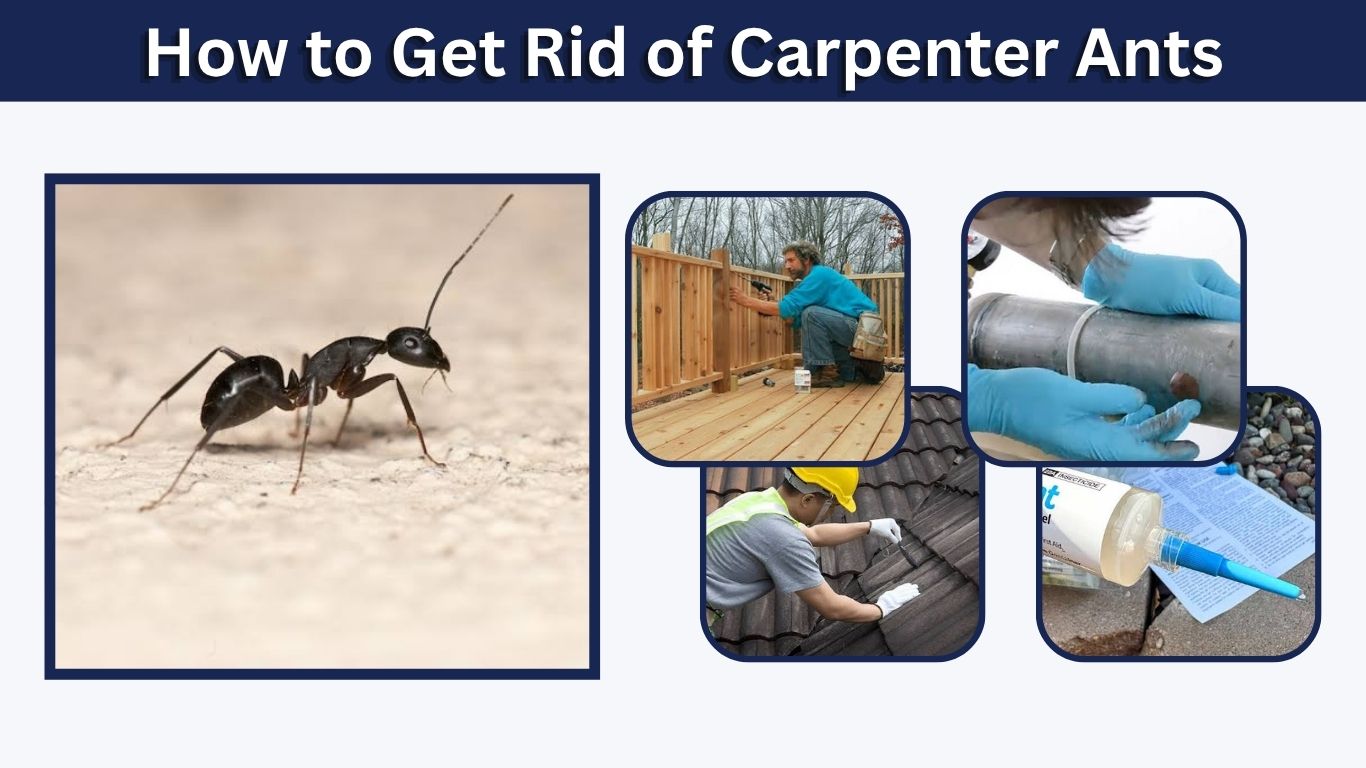
Carpenter ants can damage damp or weakened wood as they expand their nests. Unlike termites, they do not eat wood; they excavate it to create smooth tunnels and nesting chambers. Eliminating the ants you see is rarely enough because the main colony may remain hidden inside a wall, attic, tree, deck, or other wooden structure. The most effective approach is to locate the nest, use slow-acting bait, correct moisture problems, and seal entry points.
How to Identify Carpenter Ants
Carpenter ants are often large and black, although some species are reddish, brown, or a combination of colors. Workers can vary considerably in size within the same colony.
Common signs include:
- Large ants measuring approximately ¼ to ½ inch long
- A smoothly rounded upper body behind the head
- Ant activity at night, especially near sinks and windows
- Small piles of sawdust-like material called frass
- Rustling noises coming from walls or ceilings
- Winged ants appearing indoors
- Ant trails leading toward trees, decks, roofs, or utility lines
Finding a few ants does not always mean the nest is inside your home. Workers can travel considerable distances while searching for food.
How to Get Rid of Carpenter Ants in the House
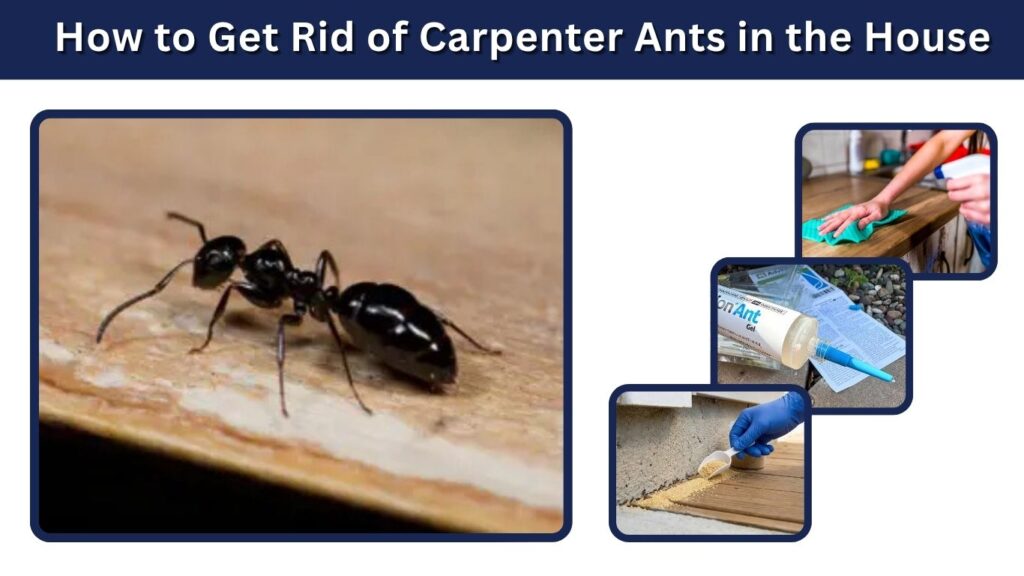
Follow the Ant Trail
Inspect your home after sunset, when carpenter ants are most active. Use a flashlight to follow workers rather than immediately spraying them. Their trail may lead to a wall opening, window frame, damaged roof area, plumbing penetration, or outdoor tree.
You can place a small amount of sweet food, such as diluted honey, near the trail to make the ants easier to follow. Remove the food once you identify their route.
Use Slow-Acting Carpenter Ant Bait
Place carpenter-ant bait near active trails and suspected entry points. Slow-acting bait allows workers to carry the treatment back to the colony and share it with other ants.
Carpenter ants may prefer either sweet or protein-based foods depending on the season. If they ignore one type of bait, try another product formulated specifically for ants. Do not spray insecticide near bait stations because repellent sprays can prevent ants from feeding on them.
Always follow the product label and keep bait inaccessible to children and pets.
Remove Food and Water Sources
Clean countertops, floors, cabinets, and areas beneath appliances. Store sugar, pet food, and other attractive foods in sealed containers. Repair dripping faucets and pipes, and empty pet bowls overnight when practical.
Sanitation will not destroy an established colony, but it reduces alternative food sources and can make bait more attractive.
How to Get Rid of Carpenter Ants in Walls
Carpenter ants commonly establish satellite nests inside damp wall voids, window frames, door frames, foam insulation, and spaces around plumbing.
Look for frass below small openings, moisture stains, hollow-sounding wood, or ants entering cracks. If the nest location is confirmed, an insecticidal dust or foam labeled for carpenter ants and wall voids may be applied according to its directions. Avoid drilling into a wall unless you understand the location of electrical wiring, plumbing, and structural components.
Repeated swarms, widespread activity, or an inaccessible nest usually requires a licensed pest-control professional. Treating only the exposed ants may cause the colony to relocate without solving the infestation.
How to Get Rid of Carpenter Ants Naturally
Natural measures work best for prevention or a minor problem. They may not eliminate a mature colony hidden inside a structure.
Correct Moisture Problems
Repair roof leaks, plumbing leaks, damaged gutters, and poor drainage. Replace water-damaged wood and improve ventilation in attics, bathrooms, crawl spaces, and basements. Carpenter ants strongly favor damp or decaying wood.
Vacuum Visible Ants and Frass
Vacuum ants, discarded wings, and frass around suspected nesting sites. Immediately empty the vacuum outside in a sealed bag. This provides quick removal but must be combined with nest control.
Use Food-Grade Diatomaceous Earth Carefully
A thin layer of food-grade diatomaceous earth can be applied in dry, inaccessible cracks where ants travel. It loses effectiveness when wet and should not be inhaled. Never use pool-grade diatomaceous earth for pest control.
Be Cautious With Borax Remedies
Homemade borax bait may kill ants, but an incorrect concentration can kill workers before they return to the colony or fail to control the nest. It can also present a risk to children and pets. A labeled, enclosed commercial bait station is generally easier and safer to use correctly.
How to Get Rid of Carpenter Ants Outside
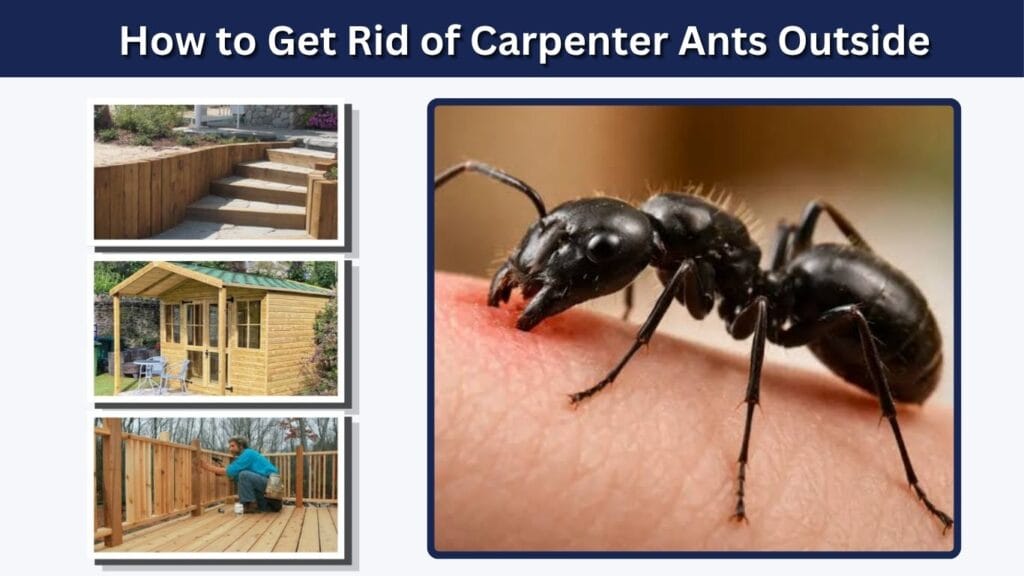
Inspect the exterior of your house for ant trails and possible nesting sites. Common locations include:
- Rotting logs and tree stumps
- Firewood piles
- Landscape timbers
- Wooden fences and sheds
- Deck supports and railings
- Damp mulch beside the foundation
- Dead branches and hollow trees
Remove decaying wood when possible and store firewood off the ground and away from the house. Trim branches that touch the roof or siding. Maintain a dry gap between mulch and the foundation, and seal openings around cables, pipes, windows, and doors.
An exterior treatment labeled for carpenter ants may be applied to active nesting or entry areas. Follow all label restrictions, especially near gardens, water, pets, and pollinating insects.
How to Get Rid of Carpenter Ants in Trees
Carpenter ants often occupy cavities in trees that already contain decay. Their presence does not necessarily mean they caused the original damage.
Follow trails to determine whether the ants are nesting in the tree or merely traveling across it. Remove dead branches and nearby rotting stumps when safe to do so. Avoid pouring boiling water, fuel, bleach, or household chemicals into a tree because these methods can injure the tree and contaminate the surrounding soil.
If the tree is mature, valuable, or close to a building, consult a certified arborist. A large cavity may indicate structural weakness that requires professional assessment.
How to Handle Winged or Flying Carpenter Ants
Winged carpenter ants are reproductive adults produced by a mature colony. A few winged ants outdoors can be normal, but numerous winged ants emerging inside the house strongly suggest an indoor nest.
Vacuum the swarm and inspect window frames, attic spaces, ceilings, and moisture-damaged wood. Winged carpenter ants have elbowed antennae, narrow waists, and front wings longer than their hind wings. Termite swarmers have straight antennae, broad waists, and wings of roughly equal length.
Correct identification is important because carpenter ants and termites require different treatment plans.
Getting Rid of Carpenter Ants in an RV or Camper
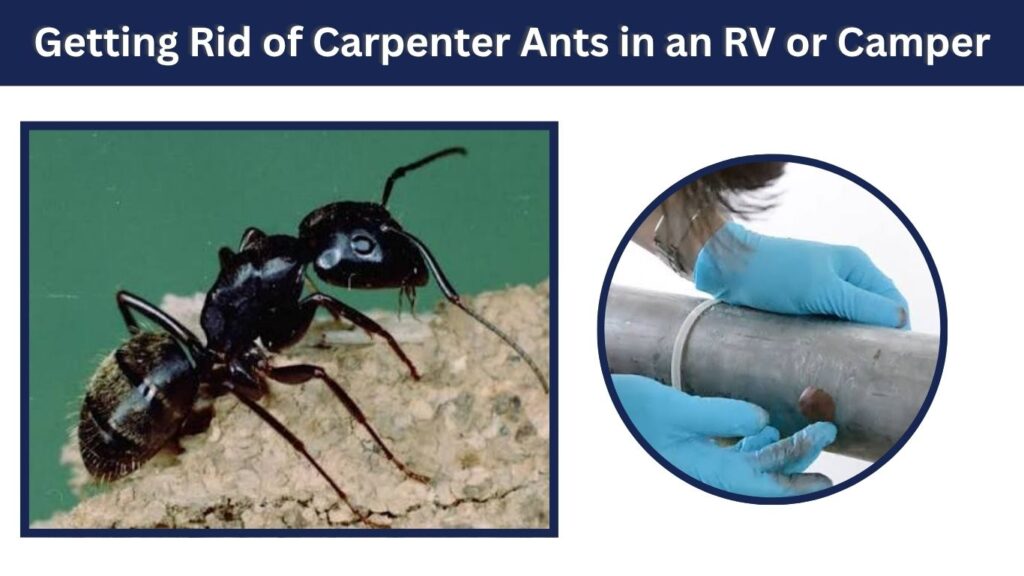
Inspect the roof, window seals, plumbing areas, storage compartments, and any damp or softened wood. Remove food residue, repair leaks, and allow wet materials to dry completely. Place enclosed ant bait near active trails without spraying around it.
Check trees or branches touching the RV, as ants may use them as bridges. Significant water damage may require removal and replacement of affected panels or framing.
How Long Does Carpenter Ant Control Take?
Visible activity may decline within several days after the ants begin feeding on an effective bait, but complete control can take a few weeks. Large colonies, multiple satellite nests, and continuing moisture problems can extend the process.
Reinspect treated areas regularly. If activity remains unchanged, ants repeatedly swarm indoors, or structural damage is visible, arrange a professional inspection.
How to Prevent Carpenter Ants From Returning
Keep wooden portions of the building dry and well maintained. Repair leaks quickly, replace rotten wood, clean gutters, improve ventilation, and direct water away from the foundation. Seal exterior gaps and trim vegetation touching the structure.
Keep firewood, stumps, and untreated lumber away from the house. Regularly inspect decks, window sills, roof edges, and plumbing areas for moisture damage, frass, or new ant trails.
FAQs
What is the fastest way to get rid of carpenter ants?
Locate the nest or active trail, place slow-acting carpenter-ant bait nearby, and correct any moisture problem supporting the colony. Killing only visible workers provides temporary relief.
Do carpenter ants eat wood?
No. They remove damaged or damp wood to create nesting galleries. The excavated material is often deposited outside the nest as frass.
Can carpenter ants damage a house?
Yes. A colony can enlarge existing cavities and weaken wooden components over time, particularly when moisture damage is already present.
Why are large black carpenter ants appearing indoors?
They may be foraging from an outdoor colony or living in damp wood inside the building. Frequent nighttime activity, frass, or indoor swarmers makes an internal nest more likely.
When should I call a professional?
Contact a pest-control professional if you cannot locate the nest, ants are emerging from walls or ceilings, winged ants repeatedly appear indoors, or you notice extensive wood and moisture damage.