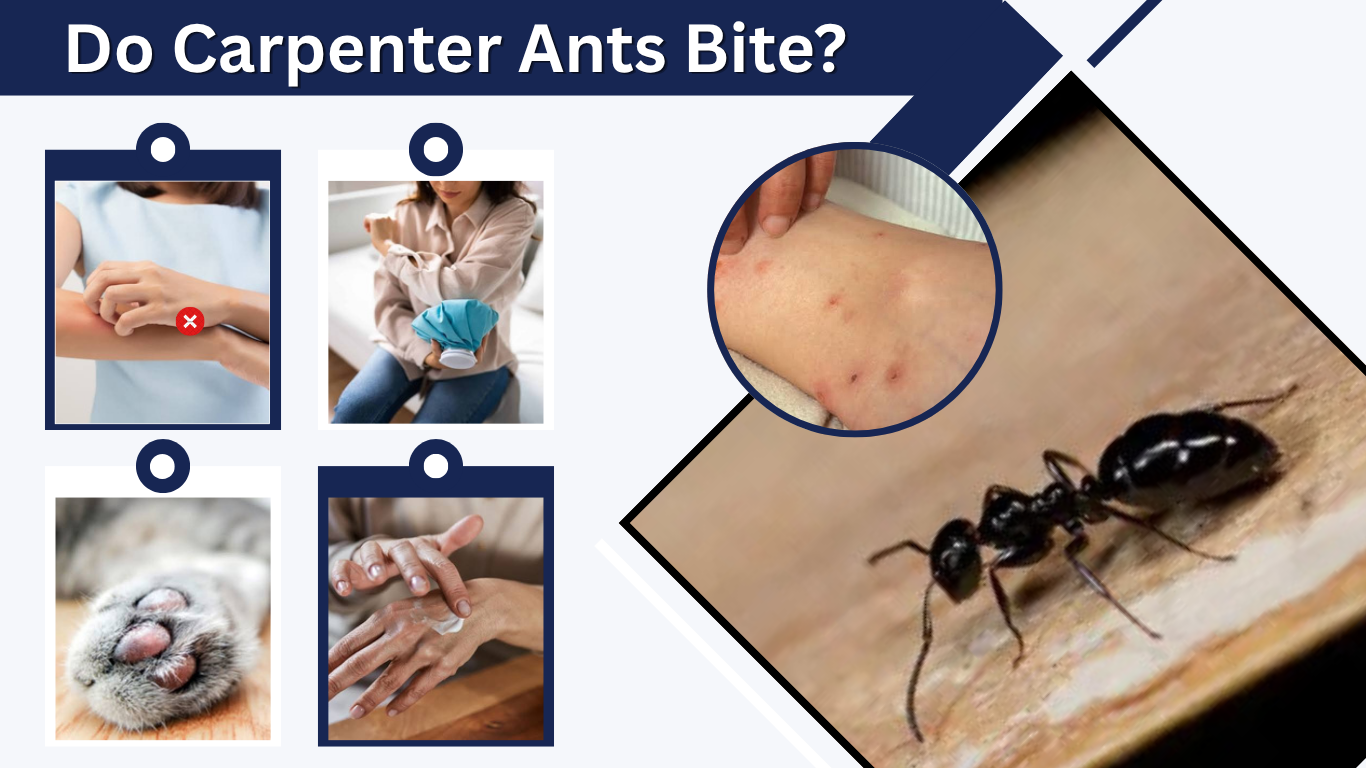
Yes, carpenter ants can bite humans, but they rarely do so without being disturbed. They are not blood-feeding insects and do not actively hunt people. Most bites happen when someone handles an ant, crushes it against the skin, or disturbs its nest. Large workers have powerful jaws capable of pinching or occasionally breaking the skin. They can also release formic acid into the wound, producing a brief burning sensation. Although uncomfortable, most carpenter ant bites are mild and improve with simple first aid.
Why Do Carpenter Ants Bite?
Carpenter ants bite mainly to defend themselves and their colony. You are more likely to be bitten if you:
- Pick up or handle an ant
- Place a hand near an active nest
- Disturb rotten wood containing a colony
- Crush an ant against your skin
- Move infested firewood, mulch, or building materials
Carpenter ants do not bite people for food. They normally consume insects, sweet substances, plant juices, and honeydew produced by aphids.
What Does a Carpenter Ant Bite Feel Like?
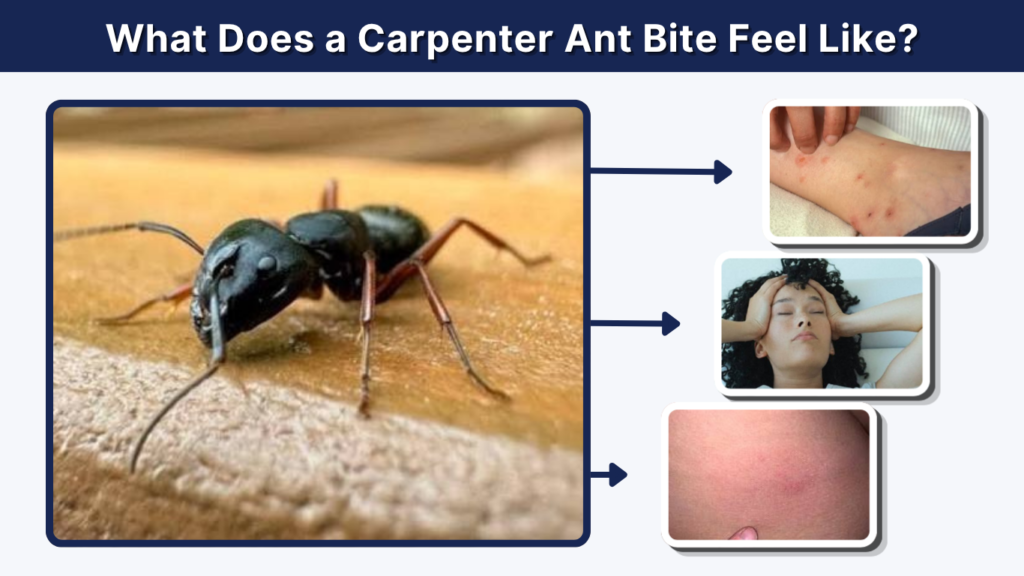
A bite from a carpenter ant may feel like a sharp pinch. Larger workers can produce more noticeable discomfort because of their strong mandibles. If the ant releases formic acid onto the fresh wound, you may experience a short-lived burning or stinging sensation.
Possible symptoms include:
- Immediate pinching or burning
- A small red spot
- Mild swelling around the bite
- Temporary tenderness
- Minor itching or irritation
- A tiny break in the skin
The reaction is usually limited to the bite area and improves without medical treatment. Carpenter ant bites are not known for creating the pus-filled blisters commonly associated with fire-ant stings.
Do Carpenter Ants Bite or Sting?
Carpenter ants bite, but they do not have a functional stinger. They defend themselves with their jaws and can spray or release formic acid into a bite wound. This chemical may make the bite feel as though the ant has stung you, but the burning is not caused by an actual stinger.
The distinction is important because fire ants can both bite to secure themselves and sting repeatedly. Carpenter ants generally produce a milder local reaction. University extension guidance confirms that carpenter ants are stingless, although workers can bite when handled or when their nest is disturbed.
Do Black, Red, and Brown Carpenter Ants Bite?
Black, red, brown, and red-and-black carpenter ants are all capable of biting. Color does not determine whether an individual can defend itself.
The size of the worker can affect how noticeable the bite feels. A major worker, sometimes called a soldier, has a relatively large head and powerful jaws. Its bite may be more painful than that of a smaller worker, especially if it catches a thin or sensitive area of skin.
Florida carpenter ants can also bite when threatened. Some are more defensive around their colonies, but they do not normally pursue humans.
Do Flying Carpenter Ants Bite?
Winged carpenter ants are reproductive males and females that leave mature colonies to mate and establish new nests. They are not searching for humans and generally focus on flying, mating, and finding suitable nesting locations.
A winged carpenter ant may potentially bite if it is trapped, squeezed, or handled, but this is uncommon. Finding many winged carpenter ants indoors is more concerning as evidence of a mature colony than as a biting risk.
Carpenter-ant swarmers can be distinguished from termites by their narrow waists, bent antennae, and front wings that are longer than the rear wings.
Do Carpenter Ants Bite at Night?
Carpenter ants are frequently active at night, but they do not normally crawl into beds to feed on sleeping people. They may enter bedrooms while foraging, particularly when food, moisture, or an entry route is available.
A mysterious series of itchy marks appearing overnight is unlikely to have been caused by carpenter ants. Bedbugs, fleas, mosquitoes, or other insects are more plausible possibilities. Carpenter ant bites usually occur when the insect is handled, trapped in clothing, or pressed against the skin.
Nighttime ant activity can still signal a nearby nest. Follow the ants with a flashlight to identify where they enter a wall, window frame, ceiling, or other wooden area.
Do Carpenter Ants Bite Dogs and Cats?
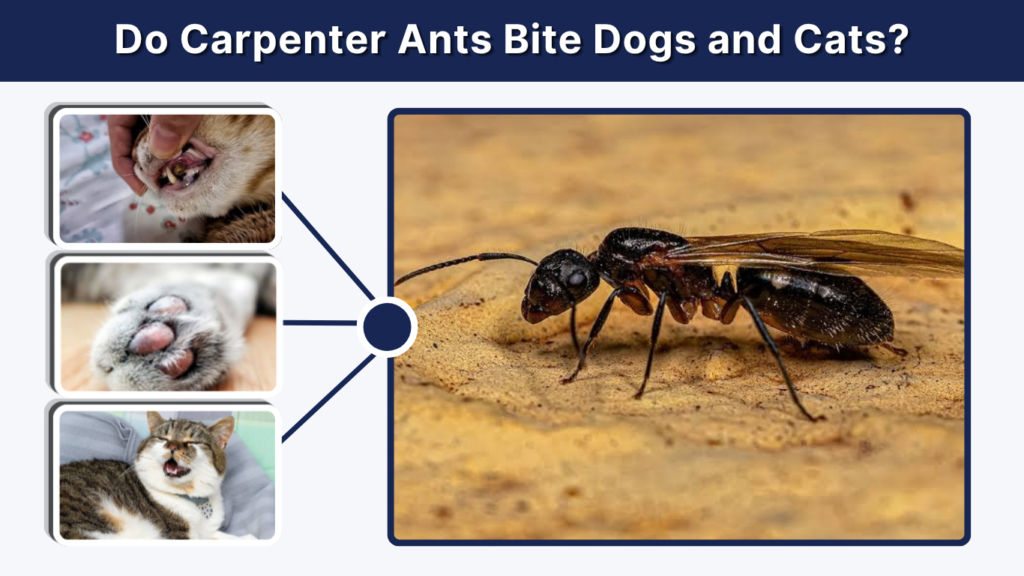
Carpenter ants can bite dogs, cats, and other animals in self-defense. A pet might be bitten after pawing at a nest, lying near an active trail, or attempting to eat the ants.
Most pets will experience only mild, temporary irritation. Possible signs include licking, pawing at the face, minor redness, or localized swelling.
Contact a veterinarian if your pet develops:
- Significant facial or mouth swelling
- Breathing difficulty
- Persistent vomiting
- Severe pain or weakness
- Numerous bites
- Eye or mouth exposure
- Symptoms that continue to worsen
Prevent pets from investigating infested wood, ant trails, or pesticide-treated areas.
How to Treat a Carpenter Ant Bite
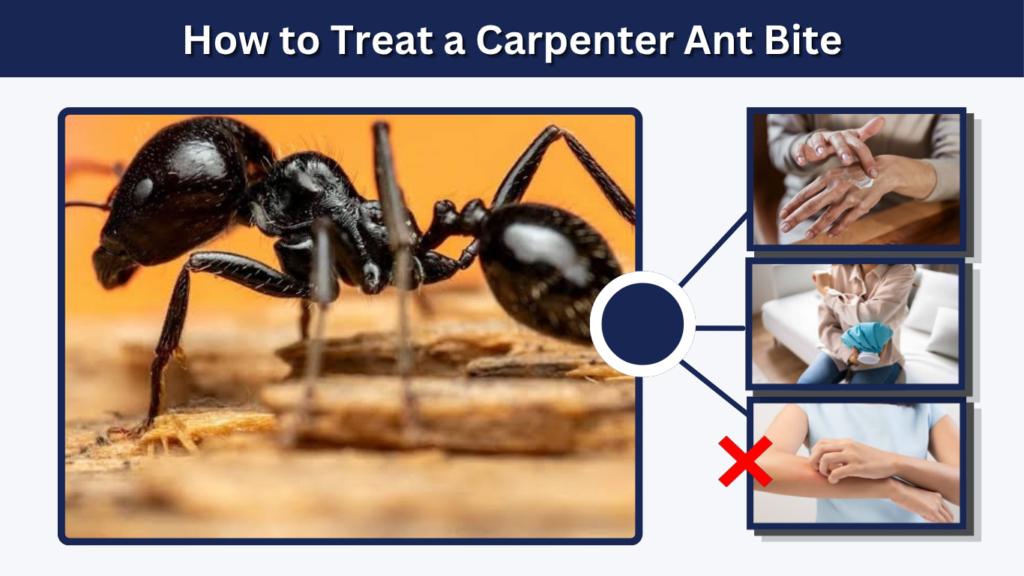
Most bites can be managed at home with the following steps:
- Remove the ant: Brush it away instead of crushing it against your skin.
- Wash the bite: Gently clean the area with soap and water to remove debris and defensive chemicals.
- Apply a cold compress: Hold a cool cloth or wrapped cold pack against the area for approximately 10 minutes to reduce discomfort and swelling.
- Avoid scratching: Scratching can damage the skin and increase the possibility of infection.
- Monitor the area: Mild redness or irritation should gradually improve.
For persistent itching, ask a pharmacist or healthcare professional whether an appropriate nonprescription antihistamine, calamine lotion, or hydrocortisone cream is suitable for you. General insect-bite first aid includes washing the skin and applying a cool compress.
When Should You Seek Medical Help?
Serious reactions to carpenter ant bites are unusual, but any insect exposure can occasionally produce unexpected symptoms.
Seek urgent medical attention if you develop:
- Trouble breathing or swallowing
- Swelling of the tongue, lips, face, or throat
- Widespread hives
- Dizziness, faintness, or confusion
- Rapidly increasing swelling
- Repeated vomiting
- Numerous painful bites
Consult a healthcare professional if the affected area becomes increasingly warm, painful, swollen, or filled with pus. These changes may indicate a secondary skin infection rather than a normal bite reaction.
How to Prevent Carpenter Ant Bites
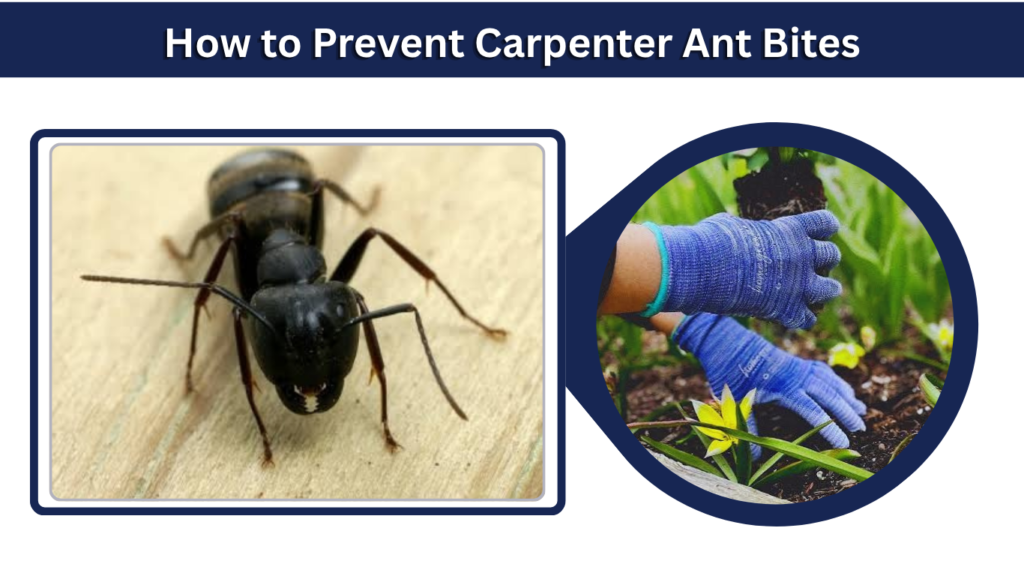
Avoid touching carpenter ants with bare hands or disturbing suspected colonies. Wear gloves, long sleeves, and closed shoes when moving firewood, rotten logs, old lumber, or landscape timbers.
Inside the house, repair leaking pipes and replace moisture-damaged wood. Seal cracks around windows, doors, siding, utility lines, and plumbing. Keep tree branches away from the roof and store firewood off the ground and away from the building.
If large numbers of ants or winged swarmers repeatedly appear indoors, locate and treat the colony instead of relying only on contact sprays. A pest-control professional may be needed when ants are nesting inside walls, ceilings, or structural wood.
FAQs
Do carpenter ant bites hurt?
A bite can feel like a strong pinch followed by temporary burning. Larger workers may cause more discomfort, but the symptoms are usually mild.
Are carpenter ant bites dangerous?
Most are not dangerous and cause only temporary local irritation. Severe symptoms or signs of infection require medical evaluation.
Do carpenter ants leave an itchy mark?
They may leave a small red or mildly itchy spot, but bites do not have one distinctive appearance that reliably identifies the responsible insect.
How long does a carpenter ant bite last?
Minor pain and burning often improve quickly. Mild redness, tenderness, or itching may remain for a short period, depending on individual sensitivity.
Will carpenter ants bite you in your house?
They can bite indoors if handled, trapped against the skin, or disturbed near a nest. They do not normally seek out people or bite them for a blood meal.