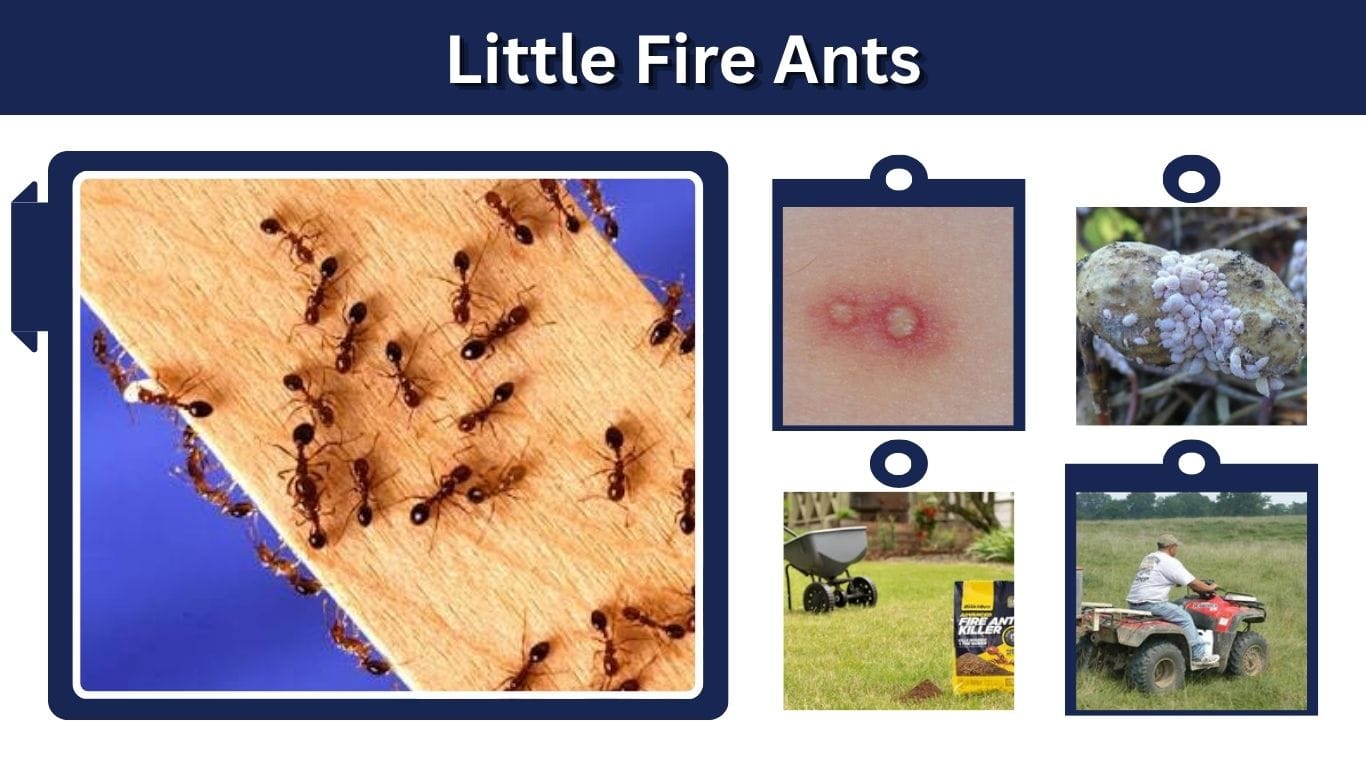
Little fire ants are tiny invasive insects with a sting far more noticeable than their size suggests. Also called electric ants, they can inhabit gardens, farms, trees, homes, and outdoor furniture. They are especially concerning in Hawaii, where established or localized populations threaten people, pets, agriculture, and native ecosystems. Because several harmless ants look similar, proper identification should come before treatment. This guide explains how to recognize little fire ants, where they live, what they eat, how to treat their stings, and how to control an infestation safely.
What Are Little Fire Ants?
The little fire ant, Wasmannia auropunctata, is a very small invasive ant native to tropical areas of Central and South America. Workers are approximately 1.5 millimeters long—roughly the thickness of a penny—and generally appear orange-red, golden, or light brown.
Although commonly called “little red fire ants,” they are not simply young versions of larger fire ants. They are a separate species with different nesting habits and control requirements.
Little Fire Ant Identification
Look for the following characteristics:
- Workers measuring about 1.5 millimeters
- Pale orange, reddish-gold, or light-brown bodies
- Workers of nearly uniform size
- Slow, deliberate movement
- Colonies in both vegetation and ground-level sites
- Ants that fall easily from leaves and branches
- Painful stings after landing on skin or becoming trapped in clothing
Field identification is difficult because several small orange ants resemble this species. Hawaii Ant Lab notes that reliable confirmation may require a qualified specialist and microscope magnification of at least 40×.
| Feature | Little fire ant | Tropical fire ant |
| Worker size | About 1.5 mm | Commonly 3–5 mm |
| Color | Pale orange to light brown | Orange to darker brown |
| Movement | Slow and deliberate | Generally more active |
| Preferred habitat | Moist, shady vegetation and soil | Open, sunny, drier ground |
| Nest location | Ground, trees, shrubs, buildings | Primarily soil |
Where Do Little Fire Ants Live?
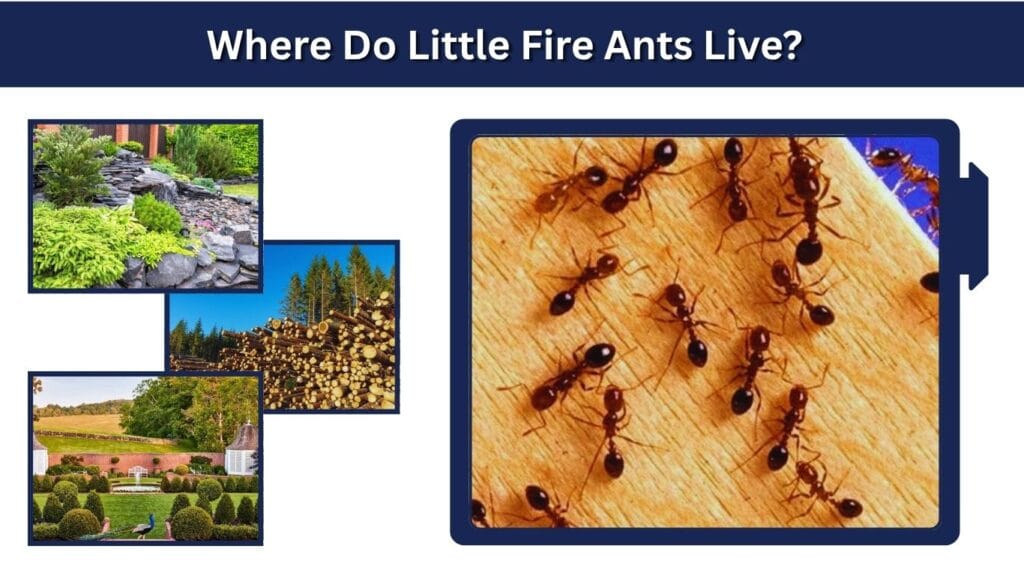
Little fire ants prefer warm, moist environments. They can nest under rocks, inside decaying wood, beneath bark, among plant debris, in leaf bases, inside potted plants, and in trees. They may also enter houses, furniture, vehicles, electrical equipment, and stored materials.
Unlike many ground-nesting ants, little fire ants readily establish colonies above ground. People may therefore be stung when ants fall from trees into their hair, clothing, beds, or outdoor seating.
Little Fire Ants in Hawaii
Little fire ants were first detected on Hawaii Island in 1999 and are now well established there. Oahu has localized detections but the species is not considered widely established across the island. Kauai continues to manage multiple active sites, while Maui has experienced an increase in newly detected infestations and treatment areas since 2024.
These ants spread primarily as hidden hitchhikers. Entire colonies can travel in:
- Potted plants and soil
- Landscaping materials
- Cut vegetation
- Logs and lumber
- Agricultural products
- Vehicles, tools, and machinery
- Building supplies and other cargo
Residents should inspect plants and materials before moving them between properties or islands. Early detection is particularly important on Oahu, Maui, and Kauai, where small populations may still be controlled or eradicated.
Do Little Fire Ants Bite?
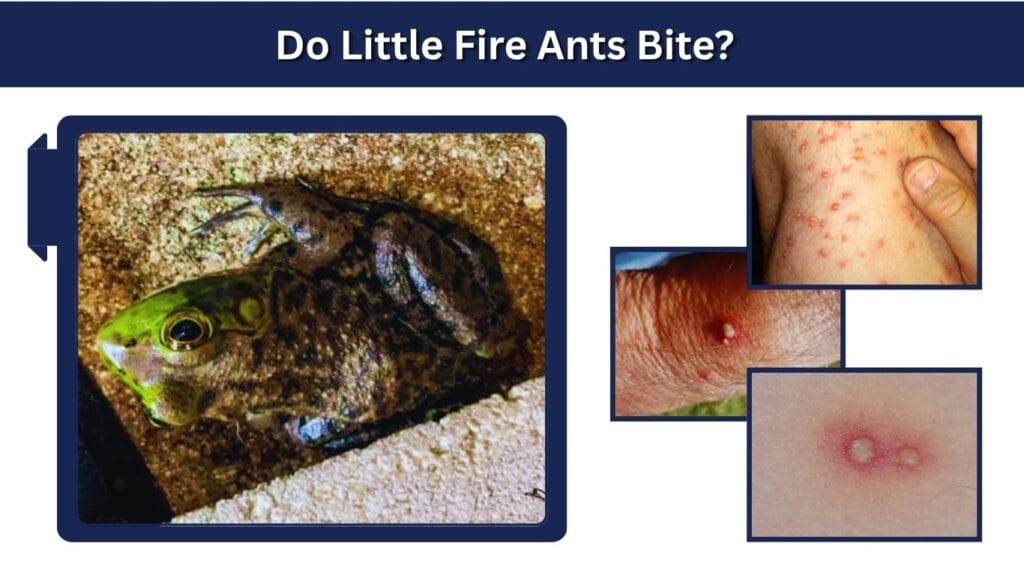
Little fire ants can grip the skin with their jaws, but the painful sensation comes primarily from their sting. People commonly call the resulting marks “little fire ant bites.”
The sting may produce:
- Immediate burning or sharp pain
- Itching
- Red bumps or welts
- Localized swelling
- Groups of rash-like marks
- Irritation that persists for days or longer
Multiple ants can become trapped beneath clothing and sting repeatedly. Because they fall easily from plants, a person may experience stings around the neck, shoulders, waist, arms, or scalp without initially seeing the ants.
Little Fire Ant Bite Treatment
For a mild local reaction:
- Move away from the infested area and brush away any remaining ants.
- Wash the affected skin gently with soap and water.
- Apply a cold compress for approximately 10–20 minutes.
- Avoid scratching the bumps.
- Ask a pharmacist about an appropriate antihistamine or anti-itch cream when needed.
Seek emergency help for difficulty breathing, throat tightness, facial or mouth swelling, faintness, severe dizziness, or widespread hives. These symptoms may indicate a serious allergic reaction.
Increasing redness, warmth, pain, drainage, or fever may indicate infection and should be assessed by a healthcare professional.
Are Little Fire Ants Dangerous to Pets?
Little fire ants may repeatedly sting dogs, cats, livestock, wildlife, and other animals. Pets can be exposed while resting outside, walking beneath infested vegetation, or eating from bowls visited by ants.
Repeated stinging around an animal’s eyes has been associated with corneal clouding and possible blindness. Warning signs include excessive blinking, watery eyes, redness, pawing at the face, light sensitivity, or a cloudy appearance to the eye. Veterinary assessment is important when eye irritation is present.
What Do Little Fire Ants Eat?
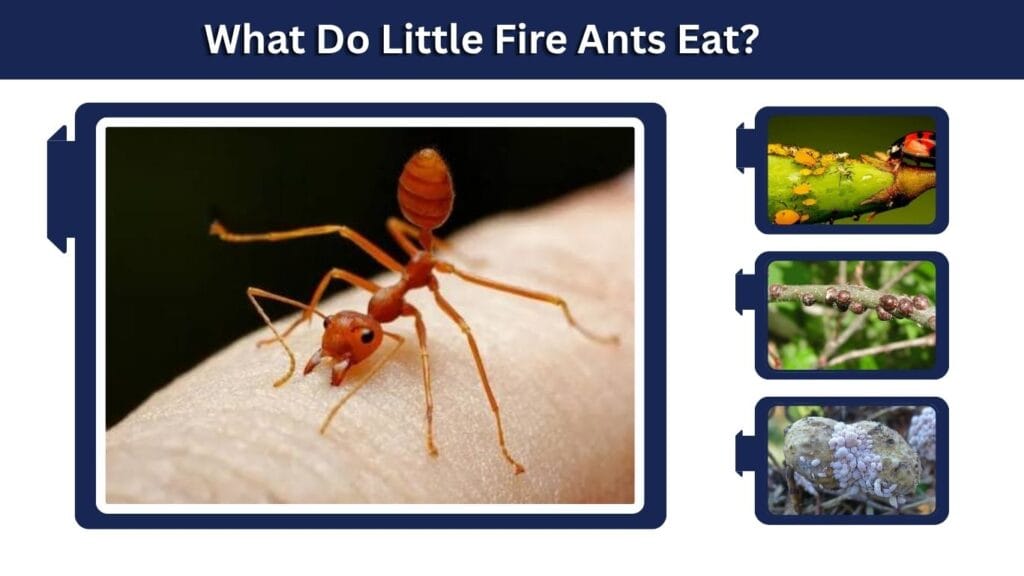
Little fire ants have a varied diet. They consume small insects, other arthropods, dead animals, oils, proteins, and sugary foods.
They also form close relationships with sap-feeding pests such as:
- Aphids
- Scale insects
- Mealybugs
- Whiteflies
These insects produce sugary honeydew, which the ants consume. In exchange, little fire ants protect them from predators and parasites. This can allow plant pests to multiply, weakening crops and ornamental plants.
How to Check for Little Fire Ants
A bait-stick survey can help detect small ants around a property:
- Spread a thin layer of peanut butter on one end of several disposable chopsticks.
- Place the sticks in shaded locations, including beneath and inside plants.
- Leave them for approximately 45–60 minutes.
- Pick them up carefully without knocking off the ants.
- Seal the sticks in a labeled plastic bag.
- Freeze the sample for 24 hours.
- Submit it to the appropriate local authority for identification.
People with peanut allergies can use small pieces of luncheon meat and handle them with tongs. Treatment should not begin until the species has been confirmed because similar-looking ants may require different management.
How to Get Rid of Little Fire Ants
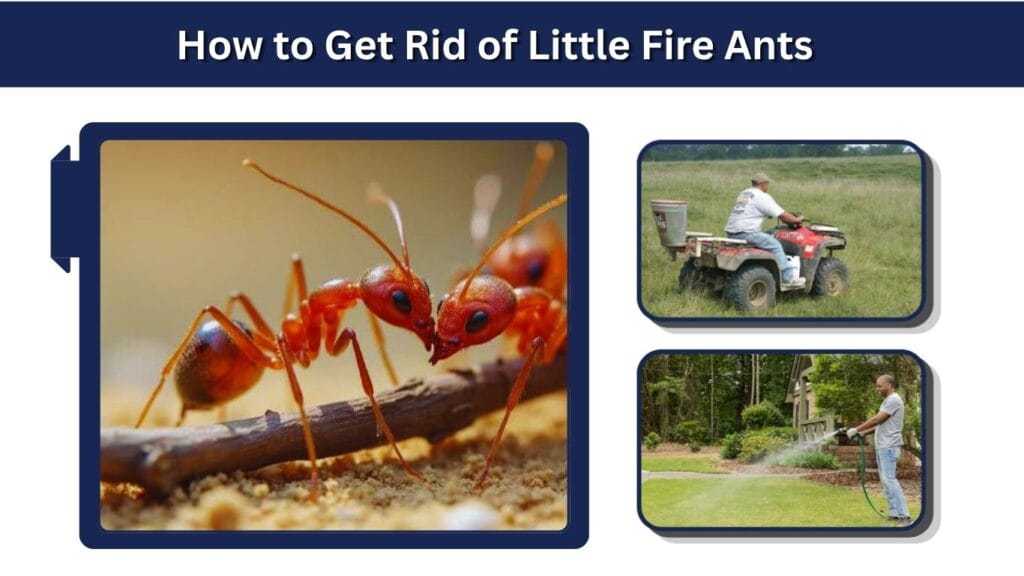
Little fire ants are difficult to eliminate because colonies contain many connected nests on the ground and in vegetation. Killing only visible workers rarely solves the problem.
Use Slow-Acting Bait
Bait is generally more effective than spraying visible trails. Worker ants collect slow-acting bait, carry it into their nests, and share it with other colony members. Properly selected bait can therefore reach ants hidden inside vegetation or nesting material.
Only use products whose labels permit treatment for the intended location and pest. Application requirements may differ around food crops, homes, livestock, waterways, and ornamental plants.
Treat the Entire Infested Area
Apply bait across the full foraging area rather than placing it only where ants are visible. Little fire ants may maintain separate nests in trees and at ground level, so both zones may require treatment.
Hawaii guidance commonly recommends repeating bait treatment every four to six weeks until follow-up surveys find no ants. Apply during suitable dry weather—often early morning or late afternoon—and do not apply granular bait immediately before or during rain.
Avoid Unverified Homemade Mixtures
Homemade borax or boric-acid recipes can be too weak to affect the colony or strong enough to kill workers before they distribute the bait. Poorly placed mixtures may also expose children, pets, wildlife, or food crops.
Follow an approved label or a local ant-control program rather than improvising pesticide concentrations. Large, persistent, or environmentally sensitive infestations should be handled with assistance from invasive-species authorities or a licensed pest professional.
FAQs
Are little fire ants nocturnal?
They may forage during both day and night when temperature and moisture are suitable. Activity is often easier to observe during cooler, humid periods. Their presence should be confirmed through a bait survey rather than relying only on the time ants appear.
Can little fire ants be black?
Typical workers are pale orange, golden-red, or light brown rather than truly black. A dark ant may be another species, while winged males and queens can look darker than workers. Professional identification is recommended because color alone is unreliable.
What is the best bait for little fire ants?
The best option is a slow-acting bait specifically labeled for ants and permitted for the treatment site. Product suitability depends on whether the area contains food crops, pets, livestock, homes, or waterways. Follow local Hawaii Ant Lab guidance and the product label.
Can I treat little fire ants when it is raining?
Granular bait should not normally be applied during rain or when rain is expected soon because moisture can spoil or wash away the bait. Choose a dry treatment window and follow the product’s weather instructions.
How often should little fire ants be treated?
Hawaii guidance commonly recommends baiting every four to six weeks, followed by surveys to measure success. Control may require many months because colonies are widespread and contain multiple nests. Continue according to the product label and local management plan.