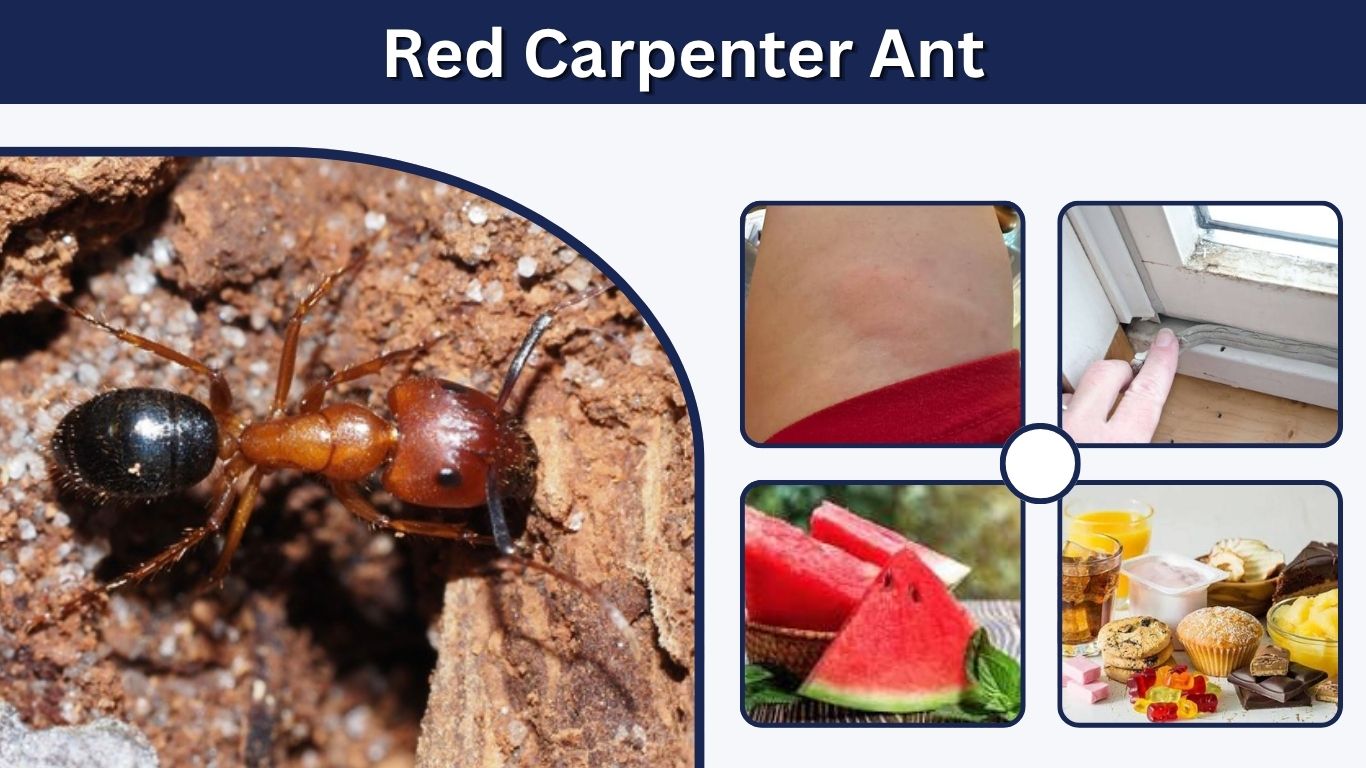
The red carpenter ant is a large ant commonly recognized by reddish, reddish-brown, or red-and-black coloration. Unlike termites, carpenter ants do not eat wood. Instead, they excavate galleries in wood to create nesting areas, which can become a concern when colonies develop inside homes. Some species have a red thorax with a black abdomen, while others may appear mostly reddish. Although red carpenter ants can bite, their greater household importance is often the structural damage caused by long-term nesting.
What Is a Red Carpenter Ant?
“Red carpenter ant” is a general term used for reddish species in the genus Camponotus. Carpenter ants occur in many colors, including black, brown, yellowish, red, and combinations of red and black.
Red Carpenter Ant Identification
Common identification features include:
- Large ant, often noticeably bigger than common household ants
- Reddish, reddish-brown, or red-and-black body
- Smoothly rounded upper thorax
- Narrow waist with a single node
- Large head and strong mandibles
- Elbowed antennae
- Workers of noticeably different sizes within one colony
Large workers are sometimes called major workers, while smaller individuals are minor workers.
Are Carpenter Ants Red or Black?
They can be either.
Some carpenter ants are almost completely black, while others have red, brown, yellow, or mixed coloration. A common red-and-black appearance consists of a reddish head and thorax with a dark abdomen.
Therefore, color alone is not enough to confirm that an ant is a carpenter ant.
Red and Black Carpenter Ants
Red-and-black carpenter ants are among the most recognizable members of the group. Their contrasting coloration often causes homeowners to confuse them with other large ants.
What Do Red and Black Carpenter Ants Look Like?
The exact appearance varies by species, but many have a reddish or reddish-brown thorax combined with a darker abdomen.
They are generally larger and more robust than many household ant species.
Some workers in the same colony may differ substantially in size, which is normal for carpenter ants.
Are All Red and Black Ants Carpenter Ants?
No.
Several ant species can display red-and-black coloration. Identification should also consider body shape, size, antennae, nesting habits, and other physical characteristics.
If ants are emerging from wooden walls, window frames, roof areas, or damaged timber, carpenter ants become a stronger possibility.
How Big Are Red Carpenter Ants?
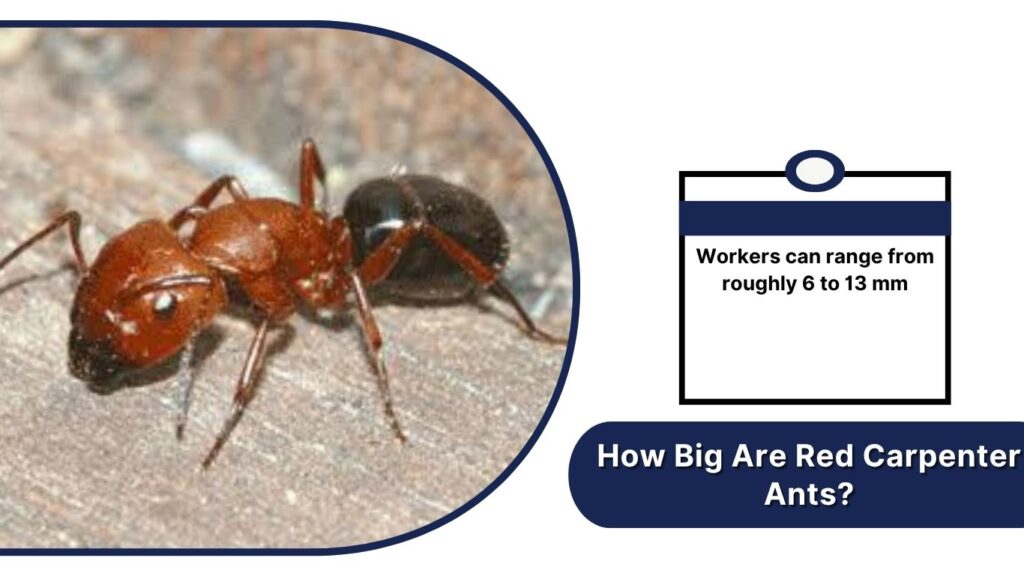
Carpenter ants are among the larger ants commonly encountered around houses.
Red Carpenter Ant Size
Workers can range from roughly 6 to 13 mm depending on species and their role within the colony. Queens can be considerably larger.
This variation means you may see both relatively small and surprisingly large red carpenter ants coming from the same nest.
Large workers have especially prominent heads and powerful jaws.
Red Carpenter Ant Queen
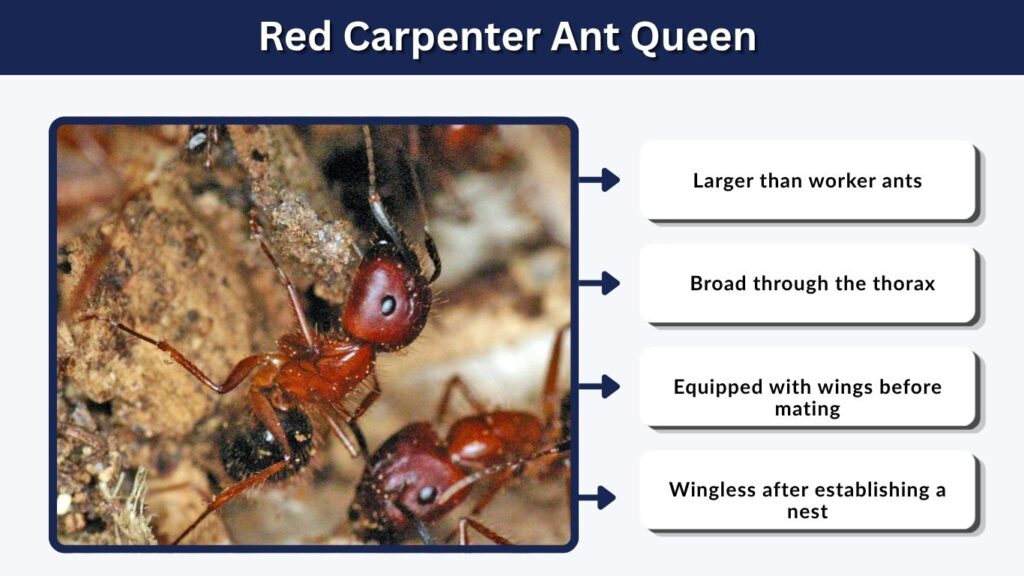
The queen is responsible for establishing the colony and producing most of its eggs.
What Does a Red Carpenter Ant Queen Look Like?
A queen is usually:
- Larger than worker ants
- Broad through the thorax
- Equipped with wings before mating
- Wingless after establishing a nest
- Heavier-bodied than ordinary workers
After mating, a queen typically sheds her wings and searches for a suitable protected location to begin a colony.
As the colony grows, workers take over foraging, nest maintenance, and care of developing larvae.
How Many Red and Black Carpenter Ants Are in a Colony?
Carpenter ant colonies start very small but may eventually contain thousands of ants.
Carpenter Ant Colony Size
A mature colony may include:
- One reproductive queen in many species
- Hundreds or thousands of workers
- Developing eggs, larvae, and pupae
- Winged males and females during reproductive periods
Large colonies may establish additional satellite nests away from the main colony.
Satellite nests inside houses are particularly important because they may occur in walls, roofs, doors, insulation, or wooden structural components.
Red Carpenter Ants With Wings
Seeing large red flying ants often causes concern, especially when they appear indoors.
Why Do Red Carpenter Ants Have Wings?
Winged carpenter ants are reproductive individuals known as alates.
Mature colonies produce winged males and females that leave the nest to mate and potentially establish new colonies.
Finding several winged carpenter ants indoors can indicate that a mature nest is located somewhere within or very close to the building.
Carpenter Ant or Termite?
Winged carpenter ants and termite swarmers can be distinguished by several features.
Carpenter ants have elbowed antennae, a narrow waist, and front wings that are noticeably longer than the rear wings.
Termites generally have straight antennae, a broad waist, and two pairs of wings that are approximately equal in length.
Do Red Carpenter Ants Bite?
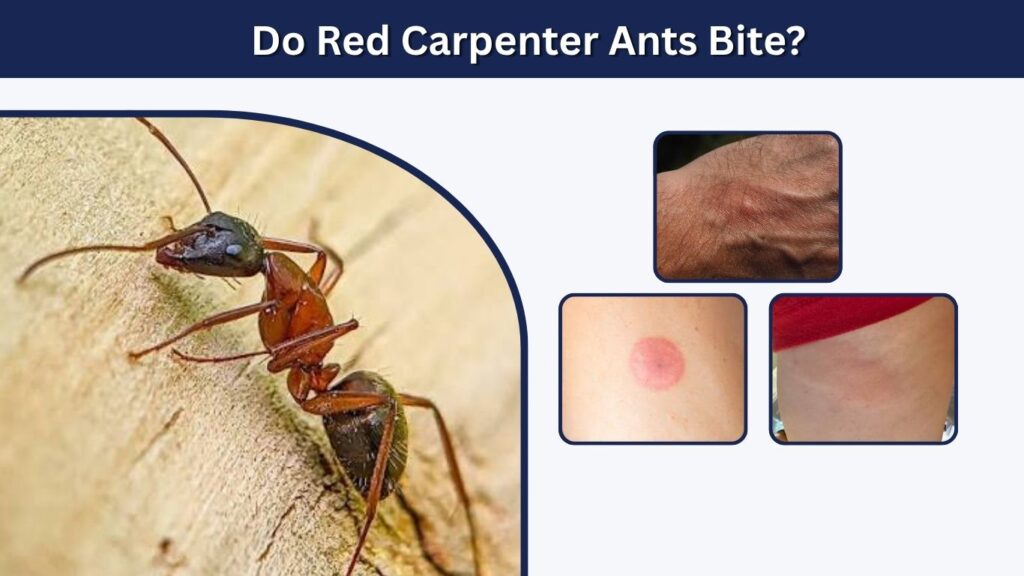
Yes. Red carpenter ants can bite when threatened or handled.
Their relatively large mandibles can create a noticeable pinching sensation.
What Does a Red Carpenter Ant Bite Feel Like?
A bite may cause:
- Sharp or pinching pain
- Mild redness
- Temporary swelling
- Burning or irritation
- Itching in some people
Some carpenter ants may also introduce formic acid into the irritated area, making the sensation more uncomfortable.
Carpenter ants normally bite defensively rather than actively hunting people.
Are Red Carpenter Ants Dangerous?
They are generally not considered highly dangerous to humans.
Severe medical problems from carpenter ant bites are uncommon. However, any bite showing significant swelling, spreading redness, infection, or an unusual allergic reaction should receive appropriate medical attention.
The more important concern around homes is usually nesting in structural wood.
Red Carpenter Ants vs Fire Ants
Red carpenter ants and fire ants may share reddish coloration, but they differ significantly in appearance and behavior.
Carpenter Ant vs Fire Ant
Carpenter ants are generally much larger and frequently nest in wood, especially wood affected by moisture.
Fire ants usually build colonies in soil and can form noticeable outdoor mounds.
Another major difference is their defense.
Carpenter ants primarily defend themselves by biting. Fire ants can bite to grip the skin and then repeatedly sting, often producing painful burning sensations and small pustules.
Red Carpenter Ants in the House
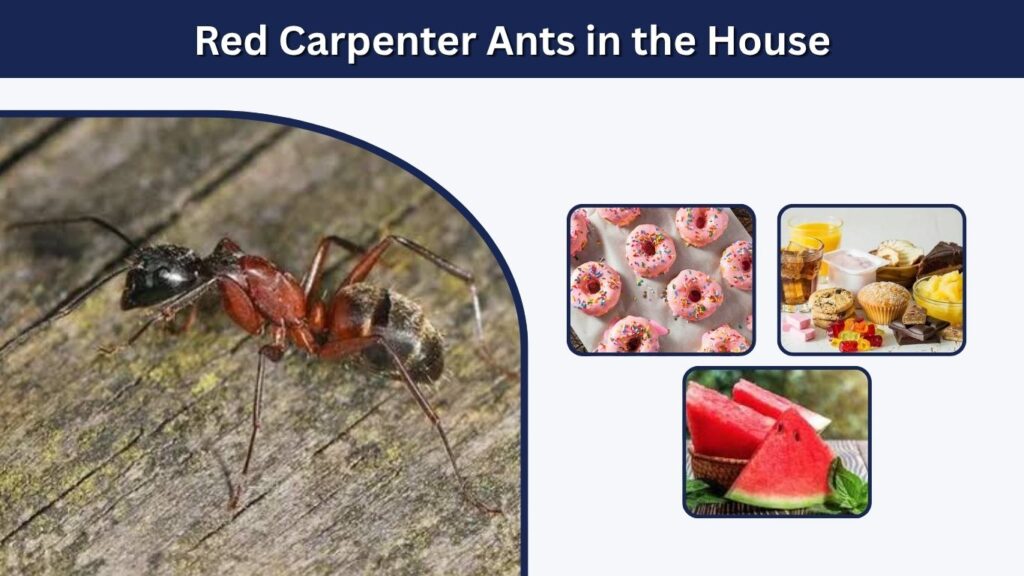
Seeing one carpenter ant indoors does not automatically mean your home contains a colony. Foragers can travel considerable distances in search of food.
Repeated sightings are more concerning.
Why Are Red Carpenter Ants Inside?
They may enter homes looking for:
- Sugary food
- Protein-rich food
- Water
- Moisture
- Suitable nesting wood
- Warm protected spaces
Carpenter ants frequently favor wood that has been softened or damaged by moisture.
Leaks around roofs, windows, bathrooms, plumbing, and exterior walls can therefore make certain areas more attractive.
Signs of a Carpenter Ant Nest
Watch for:
- Large ants appearing repeatedly indoors
- Winged ants emerging inside
- Ants traveling along consistent trails
- Rustling sounds inside walls
- Small piles of sawdust-like material
- Ant activity around damp wood
The debris created while excavating galleries is often called frass.
Do Red Carpenter Ants Eat Wood?
No. This is one of the most common misconceptions about carpenter ants.
Why Do They Damage Wood?
Carpenter ants excavate wood to create nesting galleries.
Unlike termites, they do not digest the wood for nutrition.
They remove material and carry it away, producing smooth internal tunnels.
A large colony that remains unnoticed for years can potentially weaken wooden components, particularly when moisture problems already exist.
How to Get Rid of Red Carpenter Ants
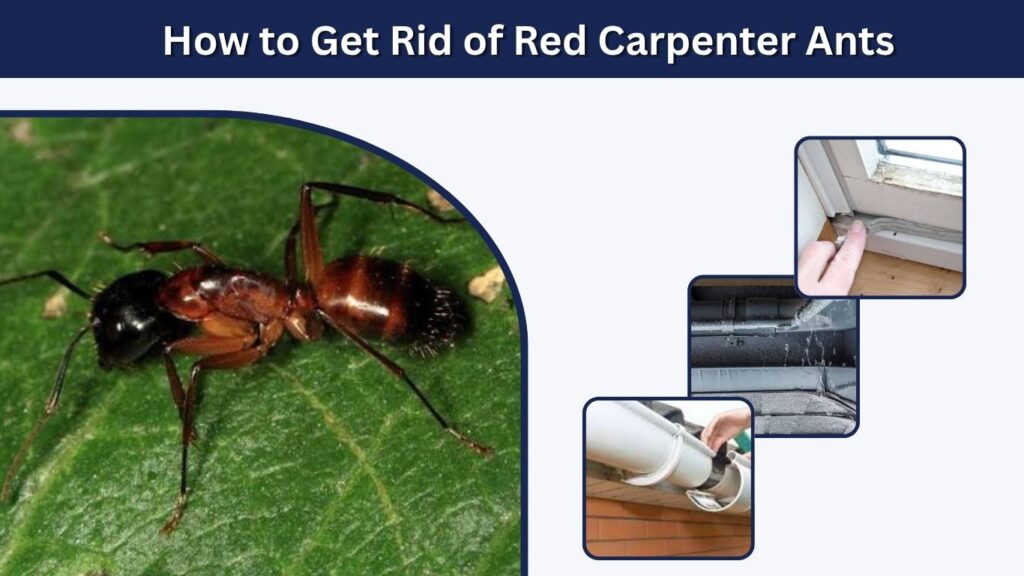
Successful carpenter ant control requires finding the colony rather than simply killing visible workers.
Find Their Trail
Observe ants when they are active and determine where they travel.
Trails may lead toward wall gaps, trees, rooflines, plumbing penetrations, window frames, or other nesting locations.
Correct Moisture Problems
Repair:
- Plumbing leaks
- Roof leaks
- Damaged gutters
- Wet window frames
- Poor drainage
- Persistent wood moisture
Removing moisture makes buildings less favorable for carpenter ant nesting.
Remove Food Sources
Keep food sealed, clean spills promptly, and avoid leaving pet food or sweet liquids accessible overnight.
Use Appropriate Ant Control
Baits can sometimes be useful because workers carry food back toward the colony.
Avoid randomly spraying every visible ant, since this may kill only foragers without eliminating the nest.
For persistent indoor colonies or suspected structural infestation, professional pest control may be the most effective approach.
FAQs
Are there really red carpenter ants?
Yes. Carpenter ants occur in several colors, including red, reddish-brown, black, and red-and-black combinations.
Do red carpenter ants bite?
Yes. They can bite with their mandibles when disturbed, although they generally do not seek out humans to bite.
Are red carpenter ants the same as fire ants?
No. Carpenter ants and fire ants belong to different groups. Carpenter ants are generally larger and nest in wood, while fire ants typically nest in soil and can deliver painful stings.
Why are red carpenter ants in my house?
They may be searching for food and moisture, or a colony may be nesting in damp or damaged wood within the structure.
How do I get rid of red carpenter ants?
Locate their trails and nesting area, correct moisture problems, eliminate accessible food, and use an appropriate carpenter ant bait or treatment. Large or persistent indoor infestations may require professional pest control.