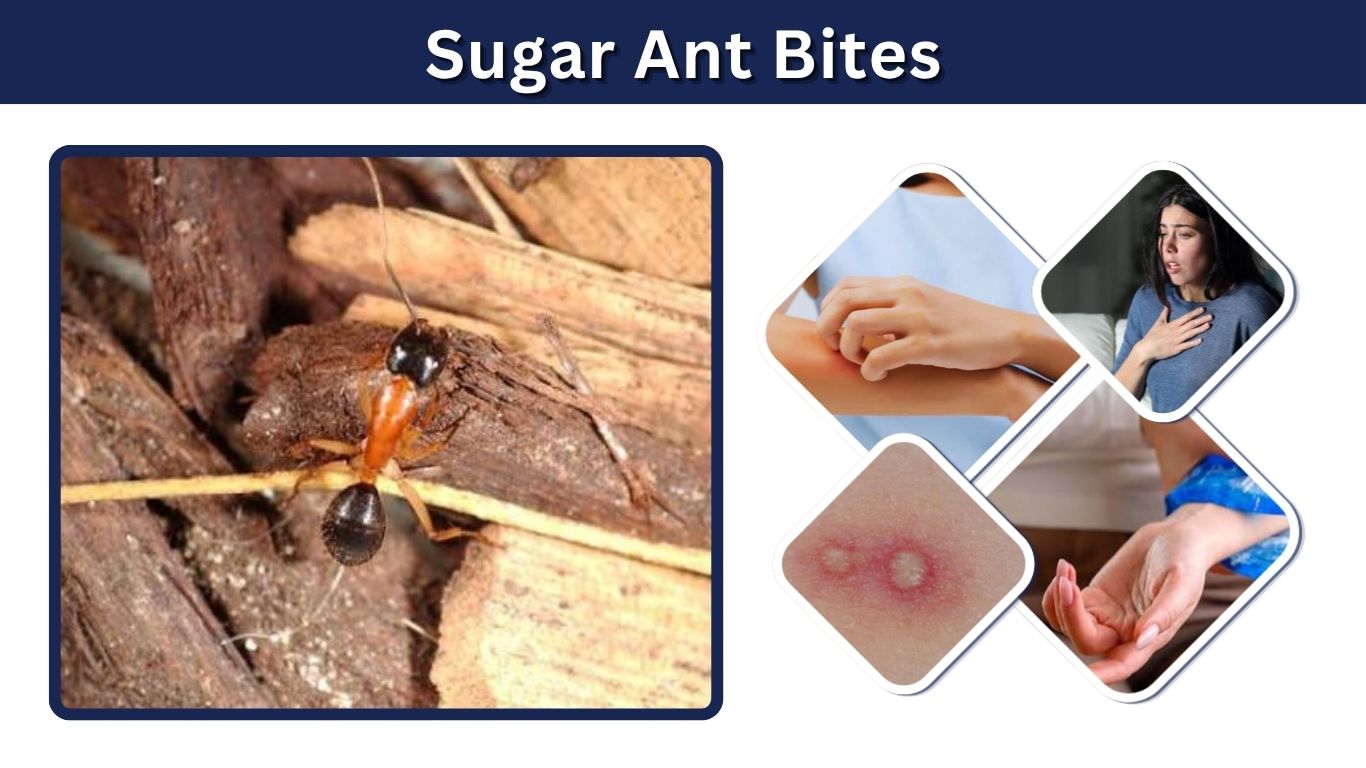
Sugar ant bites are usually mild, but the reaction depends on which ant is actually involved. The name “sugar ant” is used for different species in different places. In the United States, it may refer to small sweet-loving household ants such as the odorous house ant, while in Australia it commonly refers to larger Camponotus species such as the banded sugar ant. Some can bite when disturbed, while others rarely cause problems. Knowing what a sugar ant bite looks like, how long symptoms last, and when an allergic reaction requires medical attention can help you respond safely.
Do Sugar Ants Bite Humans?
Yes, some ants commonly called sugar ants can bite, although they generally do not seek out humans. The term “sugar ant” is not a precise scientific name, so bite risk varies significantly depending on the species.
In the United States, the odorous house ant (Tapinoma sessile) is sometimes called a sugar ant. This small household species may bite if provoked but cannot sting.
Banded Sugar Ant Bites
The Australian banded sugar ant, Camponotus consobrinus, is much larger and can deliver a noticeable bite.
Banded sugar ants:
- Have strong mandibles
- Cannot sting
- Can deliver a painful bite
- May spray formic acid defensively
- Usually bite when disturbed or threatened
- Are commonly active at night
Their defensive acid can make a bite feel more painful or irritating.
Do Tiny Sugar Ants Bite?
Tiny household ants attracted to sweets are less likely to cause noticeable bites.
For example, odorous house ants are only about 1/16 to 1/8 inch long and primarily enter homes looking for food and moisture. They do not have stingers, and biting is generally associated with provocation rather than normal feeding behavior.
What Do Sugar Ant Bites Look Like?
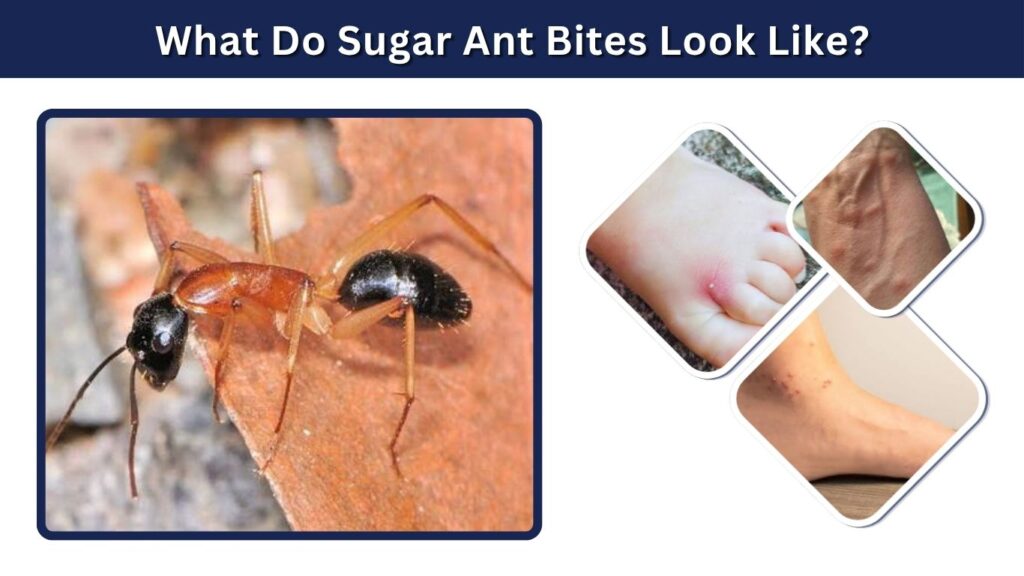
A sugar ant bite does not have one distinctive appearance because several different species may be called sugar ants. A mild ant bite may produce a small area of redness, itching, swelling, tenderness, or warmth.
Appearance alone is therefore not enough to identify which insect caused a skin mark.
Common Sugar Ant Bite Symptoms
A local reaction may include:
- Small red spot or bump
- Mild swelling
- Itching
- Tenderness
- Burning sensation
- Warmth around the affected area
- Brief pain
Ant bites and stings commonly produce localized redness, itching, swelling, and warmth.
Pictures of Sugar Ant Bites
Photos found online can be useful for comparing general appearances, but they cannot reliably confirm that a mark came from a sugar ant.
Mosquitoes, fleas, bed bugs, mites, other ants, and skin irritation can all produce red or itchy bumps that look similar.
If you did not actually see an ant biting you, identification based only on a skin mark can be difficult.
Can Sugar Ant Bites Cause a Bump?
Yes. A local immune response can cause a small raised bump or area of swelling.
Mild local reactions generally remain concentrated around the bite site and improve without complications. Larger swelling extending well beyond the bite deserves closer attention, particularly if it continues to increase.
Do Sugar Ant Bites Itch?
Sugar ant bites can itch because the skin reacts to mechanical injury and, depending on the species, defensive chemicals deposited around the bite.
The amount of itching varies considerably between individuals.
Why Does a Sugar Ant Bite Itch?
Itching develops as part of the body’s inflammatory response.
Possible symptoms include:
- Itching around the bite
- Redness
- Minor swelling
- Burning
- Skin sensitivity
Scratching can make the irritation worse and may damage the skin, increasing the chance of secondary infection.
How Long Does the Itching Last?
Minor insect bite reactions often improve within a few days. Some localized reactions resolve more quickly, while larger reactions can persist considerably longer.
Healthdirect notes that large local allergic reactions to ant bites or stings may continue for several days and sometimes take 7–10 days to improve.
How to Treat Sugar Ant Bites
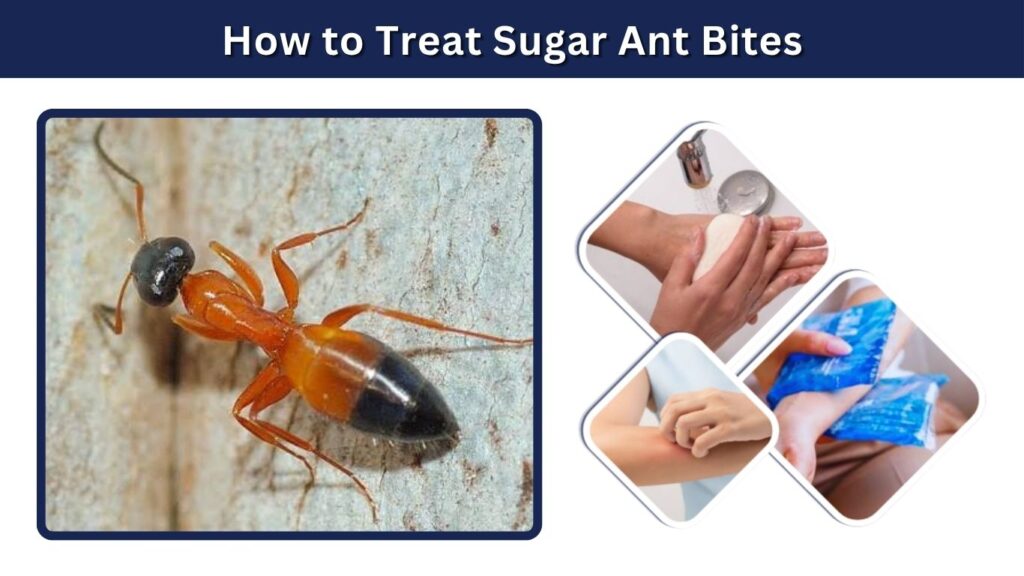
Most mild sugar ant bites can be managed at home. The goal is to clean the skin, reduce discomfort, and prevent excessive scratching.
Treatment should be based on the severity of symptoms rather than simply on the ant’s common name.
Wash the Bite
Wash the affected area gently with soap and water.
This helps remove dirt and any substances remaining on the skin while reducing the risk of infection if the skin has been broken.
Apply a Cold Pack
Place a cold pack wrapped in cloth over the affected area.
A cold compress can help reduce:
- Pain
- Swelling
- Itching
- Burning sensations
Health guidance recommends placing wrapped ice or a cold pack on insect bites and stings rather than applying ice directly to the skin.
Avoid Scratching
Try not to scratch an itchy bite.
Scratching can break the skin and create an opportunity for bacteria to enter. Keep the area clean and monitor it for increasing redness, warmth, pain, drainage, or other signs of infection.
Medicines for Itching
An antihistamine may help reduce itching in some insect-bite reactions. Certain anti-itch treatments may also provide relief.
Follow medicine labels carefully and consult a pharmacist or healthcare professional if you are unsure whether a medication is appropriate for you or a child.
How Long Do Sugar Ant Bites Last?
A simple sugar ant bite usually improves relatively quickly, although there is no fixed healing time.
The length of the reaction depends on the ant species, how strongly the person reacts, whether the skin was significantly damaged, and whether the area is repeatedly scratched.
Mild Reactions
Typical mild symptoms include localized redness, itching, or swelling.
These often begin improving within hours or a few days. General insect-bite guidance indicates that most uncomplicated bites and stings improve within several days.
Larger Local Reactions
Some people develop much larger swelling around the affected area.
Large local allergic reactions may remain swollen for at least 24 hours and can take approximately 7–10 days to settle.
When a Bite Is Not Improving
Consider medical advice if:
- Redness continues spreading
- Swelling keeps increasing
- Pain becomes severe
- The skin becomes increasingly hot
- Pus or drainage appears
- Symptoms worsen after several days
- You develop fever or feel unwell
Increasing redness, swelling, or pain can indicate infection or another problem requiring evaluation.
Allergic Reaction to Sugar Ant Bites
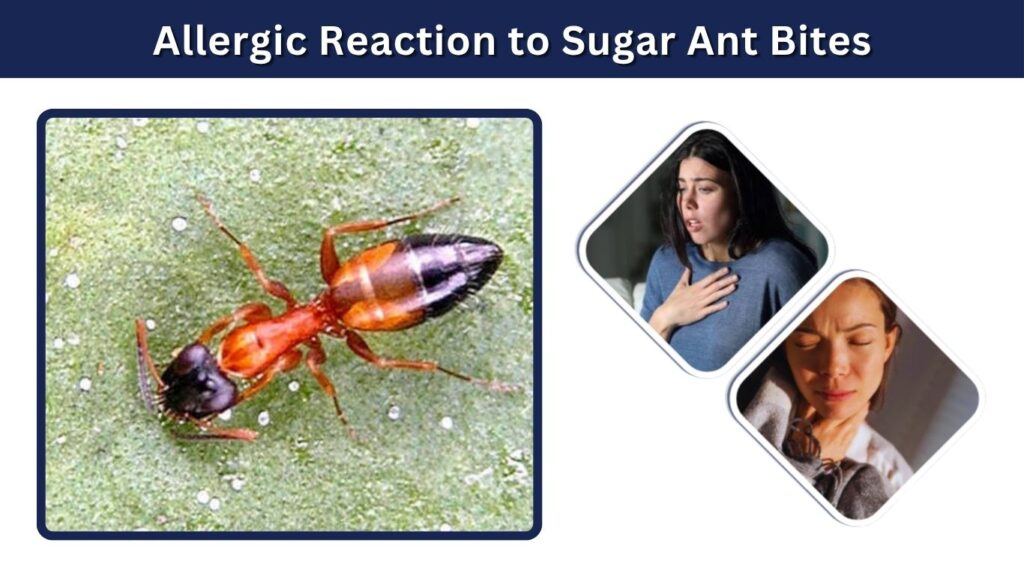
Most sugar ant bites cause only local symptoms. However, allergic reactions to insect bites or stings can occasionally become serious.
Anaphylaxis is a severe allergic reaction that requires immediate emergency treatment.
Signs of an Allergic Reaction
Watch for symptoms such as:
- Hives away from the bite
- Widespread itching
- Extensive swelling
- Swelling of the lips or tongue
- Throat tightness
- Difficulty swallowing
- Wheezing
- Difficulty breathing
- Dizziness
- Fainting
- Vomiting or abdominal symptoms
Difficulty breathing, throat or tongue swelling, dizziness, or collapse after an insect bite or sting can indicate anaphylaxis.
What to Do During a Severe Reaction
A suspected anaphylactic reaction is a medical emergency.
If the affected person has a prescribed epinephrine/adrenaline auto-injector, use it according to their emergency allergy plan and seek emergency medical assistance immediately.
Sugar Ant Bites vs Fire Ant Bites
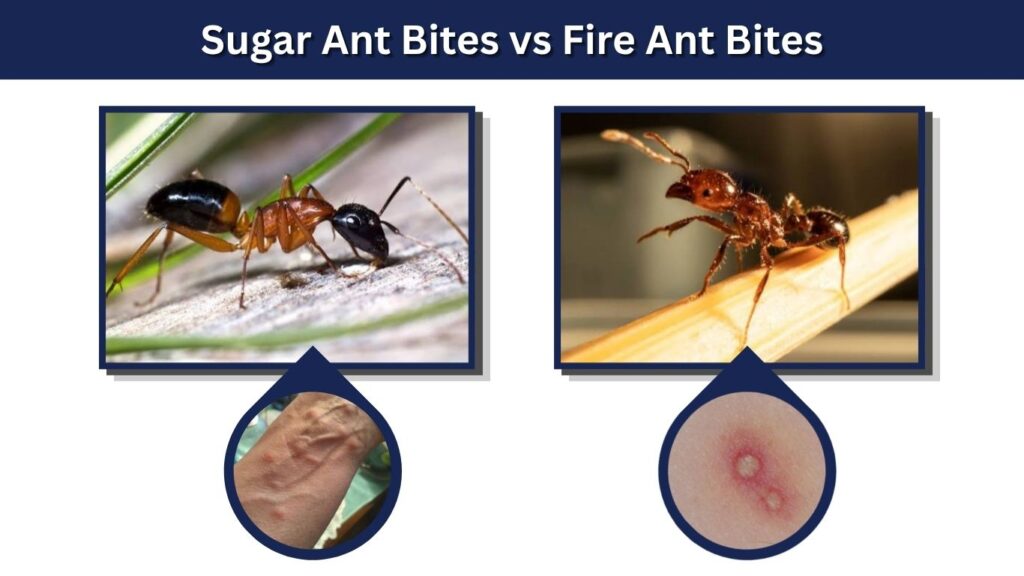
Sugar ants and fire ants are often confused, but their effects on humans can be very different.
Fire ants are capable of stinging, while many ants called sugar ants do not possess functional stingers.
Main Differences
Sugar ants:
- Usually bite rather than sting
- Commonly cause mild local irritation
- Are generally not aggressive toward humans
- Often enter homes searching for sweets
- Symptoms vary according to the actual species
Fire ants:
- Can sting repeatedly
- Frequently cause immediate burning pain
- May produce characteristic pustules
- Can trigger severe allergic reactions
- Often actively defend their nests
Fire ant reactions can be considerably more painful than those associated with common household sugar ants.
Banded Sugar Ant Bite
The banded sugar ant deserves special attention because it is one of the larger ants commonly referred to specifically as a sugar ant.
Camponotus consobrinus occurs throughout Australia and can range from about 5 to 15 mm long.
Why Can Its Bite Hurt?
Its large mandibles can grip or break the skin.
The ant cannot sting, but it can spray formic acid from the end of its abdomen into the bite area as a defense mechanism. This combination can produce noticeable pain or burning.
What Should You Do?
Use the same basic first-aid approach:
- Move away from the ants.
- Wash the area with soap and water.
- Apply a wrapped cold pack.
- Avoid scratching.
- Monitor swelling and other symptoms.
- Seek medical help for concerning or severe reactions.
Sugar Ant Bites on Children and Pets
Children may scratch bites more aggressively, which can irritate the skin. Keep the area clean and watch for spreading redness or swelling.
For babies or very young children, seek professional medical advice if you are uncertain about the cause of a skin reaction or symptoms appear significant.
Pets can also encounter ants while exploring food bowls, gardens, or nests. A dog or cat with facial swelling, breathing difficulty, severe pain, weakness, or other concerning symptoms should receive prompt veterinary attention.
How to Prevent Sugar Ant Bites
The easiest way to avoid bites is to avoid handling or disturbing ants and their nests.
Around the home:
- Store sweet foods in sealed containers.
- Wipe up sugary spills.
- Keep counters clean.
- Empty garbage regularly.
- Seal cracks around doors and windows.
- Avoid touching unidentified ants.
- Wear footwear near outdoor nests.
- Keep children’s play areas away from active nests.
If ants repeatedly invade the home, proper identification is useful because different ant species respond differently to control methods.
FAQs
Do sugar ants bite humans?
Some do. Species called sugar ants vary by region. Odorous house ants may bite when provoked but cannot sting, while Australian banded sugar ants can deliver painful bites with their mandibles.
What does a sugar ant bite look like?
It may appear as a small red, itchy, or slightly swollen spot. However, appearance alone cannot reliably identify an ant bite because many insect bites and skin reactions look similar.
How long do sugar ant bites last?
Mild reactions often improve within a few days. Larger local reactions may remain swollen for several days and can sometimes take about a week or longer to fully improve.
How do you treat a sugar ant bite?
Wash the area with soap and water and apply a wrapped cold pack to reduce pain, itching, and swelling. Avoid scratching the area.
Can sugar ant bites cause an allergic reaction?
Yes, allergic reactions to ant bites or stings are possible. Seek emergency medical assistance for breathing difficulty, throat or tongue swelling, severe dizziness, fainting, or other signs of anaphylaxis.