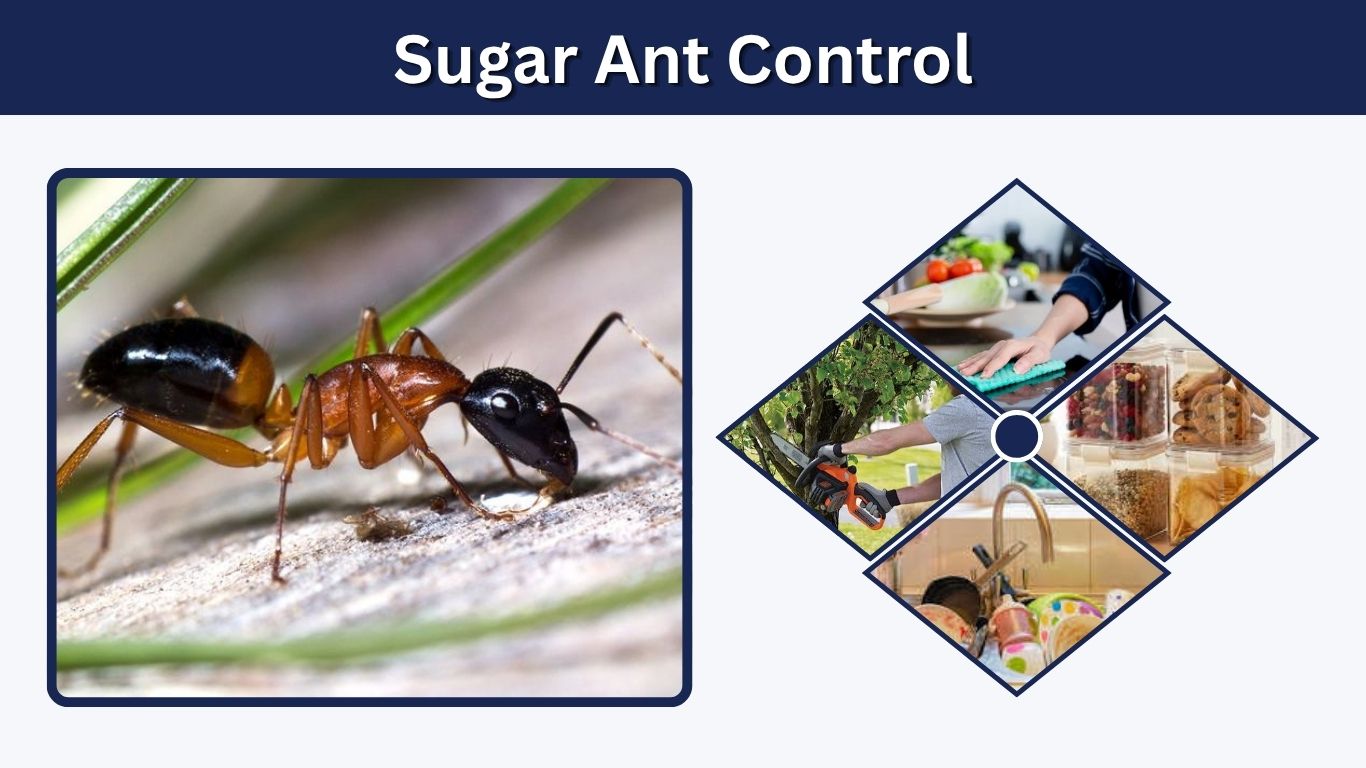
Sugar ants can quickly become a frustrating household problem, especially when they discover sweets, crumbs, pet food, or other easy food sources. Effective sugar ant control requires more than simply killing the ants you can see. The colony, entry points, moisture sources, and food supply must also be addressed. Fortunately, several indoor, outdoor, DIY, and low-toxicity methods can help. This guide explains how to control sugar ants, which treatments work best, and how to prevent future infestations.
How to Identify a Sugar Ant Problem
Before choosing a sugar ant control method, determine where the ants are traveling and what is attracting them. The term “sugar ant” is commonly used for several small ant species attracted to sweet foods. Indoors, they often appear around kitchens, sinks, cabinets, windows, and food storage areas. Following their trails can help reveal entry points and nesting locations.
Common Signs of Sugar Ants
- Long trails of ants traveling toward food or water.
- Ants gathering around sugar, fruit, syrup, juice, or sweets.
- Small ants appearing around kitchen counters and cabinets.
- Activity around sinks, plumbing fixtures, and damp areas.
- Ants entering through cracks around doors and windows.
- Increased activity during warm or humid weather.
Why Sugar Ants Come Inside
Sugar ants usually enter homes because food, water, and shelter are readily available. Even tiny amounts of spilled juice or crumbs can attract workers.
Once one ant discovers food, it can leave a chemical trail that guides other workers toward the same location. This is why a small ant problem can quickly turn into a noticeable trail across the kitchen.
Moisture is another major attraction. Leaking pipes, wet sinks, damp wood, and condensation can create conditions that encourage ants to remain inside.
Best Sugar Ant Control Methods Indoors
Indoor sugar ant control should focus on eliminating the colony rather than spraying every ant that appears. Fast-killing sprays may remove visible workers but can leave the nest untouched. Baits are often more useful because workers carry food back toward the colony, potentially exposing many additional ants to the treatment.
Use Ant Bait
Ant bait is one of the most practical methods for controlling indoor sugar ants.
- Place bait near active ant trails.
- Position stations close to suspected entry points.
- Keep bait away from children and pets according to label directions.
- Avoid spraying insecticide directly around bait stations.
- Replace dried or empty bait when necessary.
You may initially notice more ants around the bait. This can happen because workers have discovered a new food source and are recruiting additional ants.
Clean Food Sources
Reducing available food makes your home less attractive to ants.
- Wipe counters after preparing meals.
- Store sugar, cereal, cookies, and snacks in sealed containers.
- Wash dirty dishes instead of leaving them overnight.
- Clean sticky drink spills immediately.
- Empty garbage regularly.
- Clean underneath appliances where crumbs accumulate.
- Store pet food in airtight containers.
Seal Entry Points
Watch ant trails carefully to determine where the insects are entering. Common locations include cracks around windows, door frames, utility lines, baseboards, and plumbing penetrations.
Small openings can be sealed using suitable caulk or another appropriate building sealant. However, it is often better to allow ants to feed on bait first before disrupting an active trail.
DIY Sugar Ant Control
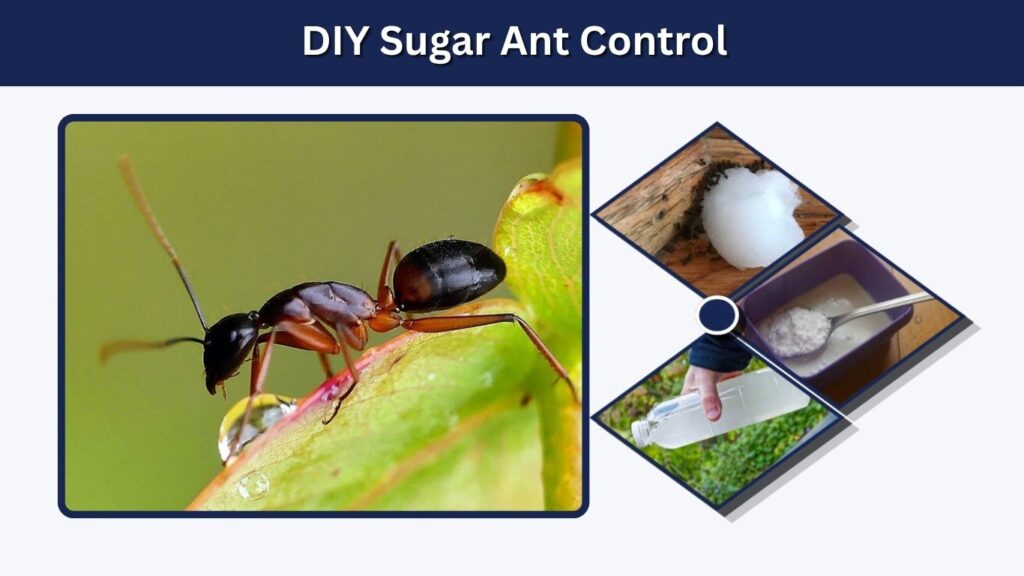
Several household ingredients are commonly used for DIY sugar ant control. Results can vary depending on the ant species, colony size, and treatment method. Homemade approaches are generally better suited to small infestations rather than widespread ant colonies throughout a building.
Borax and Sugar Ant Bait
Borax mixed with a sweet food source is a traditional DIY ant-control approach because sugar attracts workers while borax acts as the active ingredient.
The mixture should not be made excessively strong. If workers die immediately before returning to the colony, the bait may be less effective.
Any borax bait should be positioned where children and pets cannot reach it. Never place homemade bait on food-preparation surfaces or inside containers that could be mistaken for food.
Boric Acid for Sugar Ant Control
Boric acid is also used in some ant-control products and homemade treatments. It works best when ants consume or contact an appropriate concentration and carry contaminated material back toward the colony.
More chemical does not necessarily produce better results. Excessive concentrations may make bait unattractive or kill workers too quickly.
For greater consistency and safety, commercially prepared ant baits containing boric acid or similar active ingredients may be preferable to homemade formulas.
Baking Soda and Powdered Sugar
A mixture of baking soda and powdered sugar is frequently recommended online as a natural sugar ant remedy. Powdered sugar may attract ants, but the effectiveness of baking soda as a dependable colony-control treatment is inconsistent.
It may kill or discourage some ants under certain circumstances, but it should not be considered as reliable as a properly formulated ant bait.
For persistent infestations, use proven ant-control products instead of relying entirely on baking soda.
Sugar Ant Control Outdoors
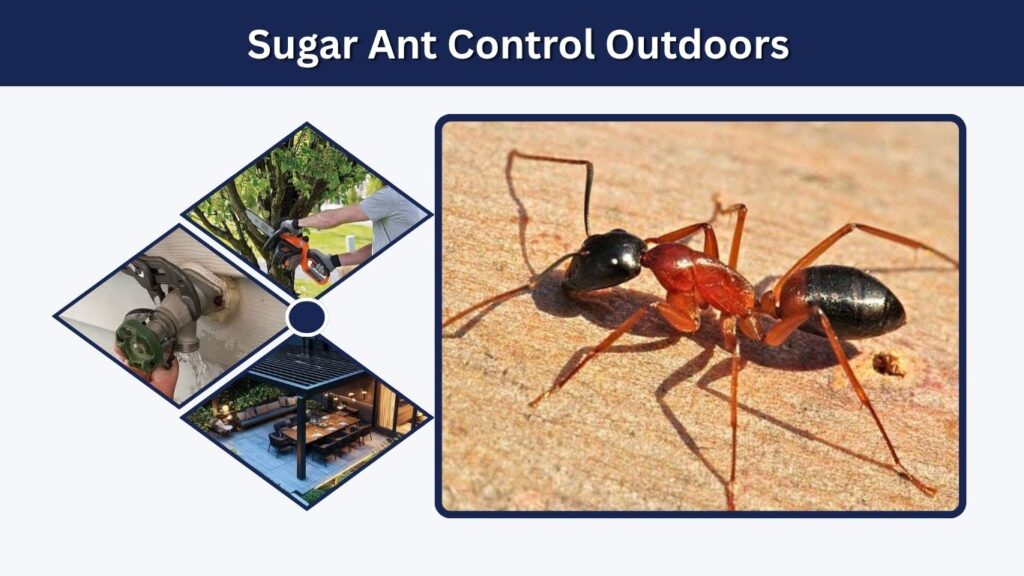
Outdoor colonies can continuously send workers into the house, making indoor treatments less effective if the exterior problem is ignored. Inspect around foundations, patios, garden beds, trash areas, trees, and structures where ants are active. Outdoor management works best when combined with sanitation and sealing practices around the building.
Reduce Outdoor Attractants
- Keep garbage containers tightly closed.
- Rinse recyclable bottles and cans.
- Remove fallen fruit from around trees.
- Clean outdoor eating areas.
- Avoid leaving pet food outdoors overnight.
- Trim vegetation touching exterior walls.
- Repair dripping outdoor faucets.
- Remove unnecessary moisture near foundations.
Use Outdoor Ant Baits
Outdoor ant bait can target colonies that are sending workers toward the home. Place approved bait near trails or areas where ants regularly forage.
Always follow the product label regarding placement, weather conditions, frequency of application, and required safety precautions.
Avoid randomly applying large amounts of pesticide throughout the yard when you can identify specific areas of ant activity.
Treat Entry Areas Carefully
Exterior cracks around doors, windows, utility openings, and foundations can provide convenient access into a building.
Once colony activity has been reduced, seal these openings where practical. Weather stripping can also help close gaps underneath exterior doors.
Non-Toxic and Organic Sugar Ant Control
People with children, pets, vegetable gardens, or concerns about pesticides may prefer lower-toxicity approaches. These methods focus heavily on sanitation, exclusion, moisture management, and physical removal. They can work very well for minor infestations, although large colonies may still require targeted bait treatments.
Remove Ant Trails
Clean ant trails using soap and water. This helps remove both ants and some of the chemical trail they use to navigate.
Simply wiping ants away without cleaning the surface may allow other workers to continue following the established route.
Remove Food and Water
Good sanitation is one of the safest forms of long-term sugar ant prevention. Keep surfaces clean, store food securely, repair leaks, and eliminate standing water.
A colony is much less likely to continue sending workers into an area where food and moisture are difficult to find.
Use Diatomaceous Earth Carefully
Food-grade diatomaceous earth is sometimes used around cracks and dry locations where ants travel. The fine particles damage the protective outer layer of insects, causing dehydration.
Apply only a thin layer and avoid breathing airborne dust. It should also remain dry to work effectively.
When Professional Sugar Ant Control Is Needed
Small infestations can often be managed with sanitation, bait, and exclusion. However, recurring ant activity may indicate that colonies are nesting somewhere difficult to access. Apartments, wall voids, foundations, landscaping, and neighboring properties can all make ant infestations more complicated.
Signs You May Need Professional Treatment
Consider professional pest control when ants continue returning despite consistent baiting and cleaning, when several rooms are affected, or when large numbers of ants suddenly appear from walls or structural gaps.
A pest-control professional can identify the ant species, locate likely nesting areas, and choose an appropriate treatment strategy.
This is especially useful when incorrect treatments could cause colonies to move or divide, making the infestation harder to manage.
How to Prevent Sugar Ants From Returning
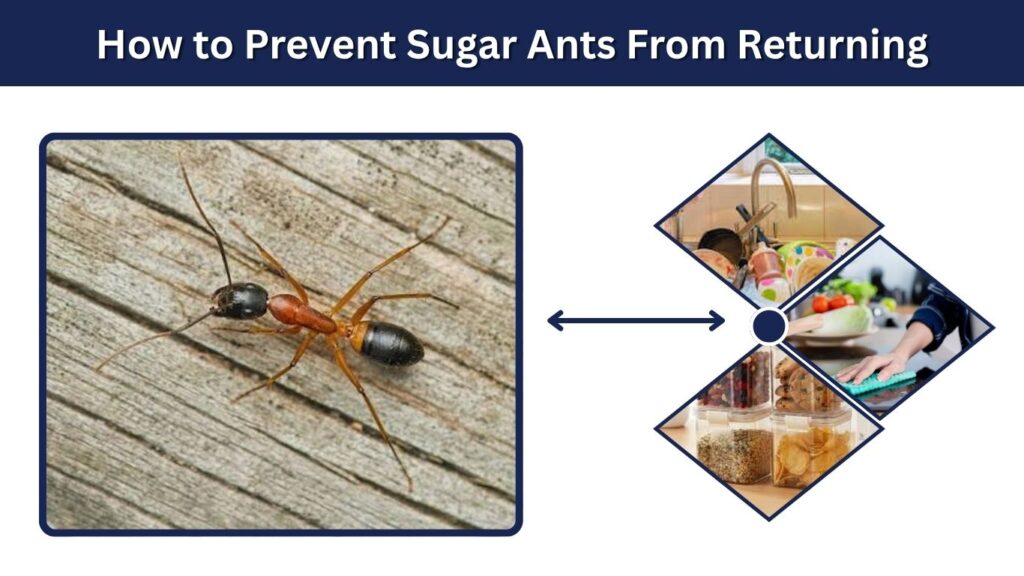
Prevention is easier than repeatedly treating established colonies. Sugar ants are persistent foragers, so reducing access to food, moisture, and indoor shelter can significantly lower the risk of another infestation.
Long-Term Prevention Checklist
- Store sweet foods in sealed containers.
- Clean crumbs and spills every day.
- Keep sinks dry overnight whenever possible.
- Repair leaking faucets and pipes.
- Seal cracks around windows and doors.
- Keep garbage bins clean and covered.
- Trim trees and shrubs away from the house.
- Inspect pet feeding areas regularly.
- Clean underneath refrigerators and stoves.
- Watch for new ant trails during warm weather.
FAQs
1. What is the best sugar ant control method?
Ant bait combined with good sanitation is generally one of the most effective approaches. Bait can target workers and potentially reach the colony, while cleaning removes competing food sources.
2. Does borax kill sugar ants?
Borax can kill ants when used at an appropriate concentration in bait. However, homemade mixtures should be kept safely away from children and pets.
3. Can baking soda and powdered sugar control sugar ants?
Powdered sugar may attract ants, but baking soda is not considered as consistently effective for colony control as properly formulated commercial ant bait.
4. How do I control sugar ants naturally indoors?
Remove food, clean ant trails with soapy water, fix moisture problems, store food in airtight containers, and seal entry points. Food-grade diatomaceous earth may also help in suitable dry locations.
5. Why do sugar ants keep coming back?
Sugar ants usually return because a nearby colony remains active or because food, water, or entry points are still available. Effective long-term control requires addressing both the colony and the conditions attracting the ants.