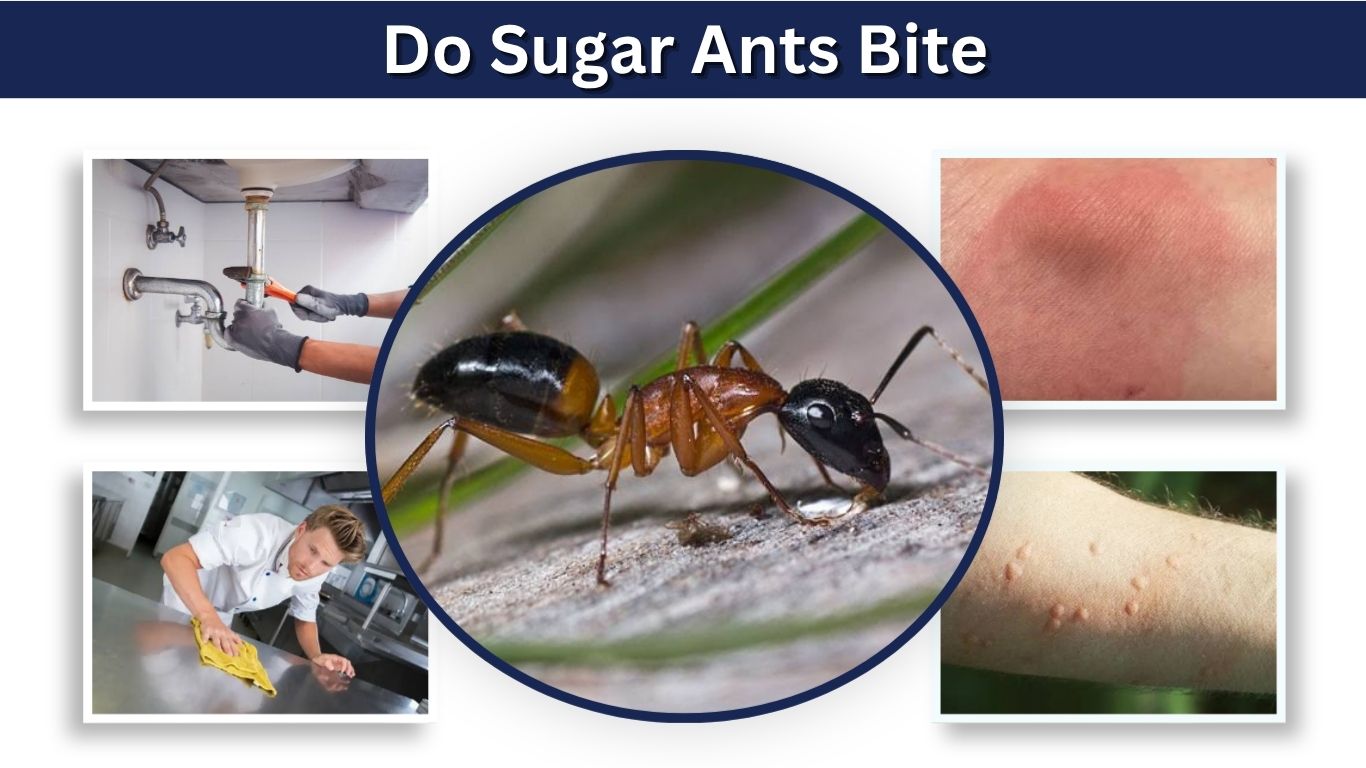
Do sugar ants bite? Some ants commonly called sugar ants are capable of biting humans, but their bites are usually mild and rarely dangerous. These tiny ants are primarily interested in sweet foods rather than attacking people. However, they may bite when trapped against the skin, disturbed, or defending their colony. A sugar ant bite can sometimes cause temporary redness, itching, or irritation. This guide explains why sugar ants bite, what their bites look like, possible risks, and what to do after being bitten.
Do Sugar Ants Bite Humans?
The name “sugar ant” is commonly used for several ant species attracted to sugary foods, so their ability to bite can vary. Some have jaws strong enough to pinch human skin, while others are unlikely to cause a noticeable bite. Even when a bite occurs, symptoms are generally minor compared with bites or stings from more aggressive ants.
What Happens When a Sugar Ant Bites?
A sugar ant may use its mandibles to pinch the skin. Depending on the species and your sensitivity, you might notice:
- A quick pinching or prickling sensation.
- A tiny red mark on the skin.
- Mild itching around the bite.
- Slight swelling or irritation.
- Tenderness that usually disappears relatively quickly.
Many people may not notice the bite at all because smaller sugar ants have tiny jaws.
Do Sugar Ants Bite or Sting?
Most ants referred to as household sugar ants are more likely to bite than deliver a painful sting. However, “sugar ant” is an informal name rather than one specific species.
Because several different ants may be called sugar ants, behavior varies depending on which species is actually present.
This distinction is important. If an ant causes an intense burning sensation, severe swelling, or painful pustules, you may be dealing with another ant species rather than the small household ants typically called sugar ants.
Why Do Sugar Ants Bite People?
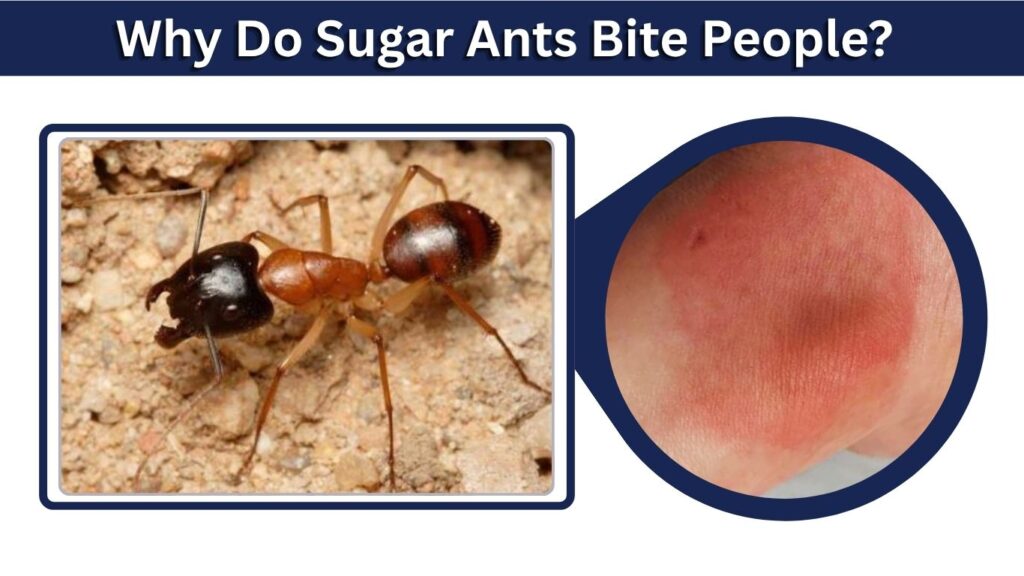
Sugar ants generally have little reason to interact with people. Their workers spend most of their time searching for food and transporting it back to their colony. Biting usually occurs accidentally or defensively rather than because the ant considers a person food or actively hunts humans.
Common Reasons Sugar Ants May Bite
- An ant becomes trapped underneath clothing.
- You accidentally press an ant against your skin.
- A nest or colony is disturbed.
- You handle ants directly.
- Ants become trapped between your skin and bedding.
- You disturb an area where large numbers of ants are nesting.
Why Do Sugar Ants Bite Me?
If ants seem to crawl on you frequently, it usually means something nearby is attracting them rather than the ants specifically targeting you.
Food residue, sweet drinks, crumbs, scented products, and nearby ant trails can bring workers into contact with people.
Someone eating outdoors, for example, may have ants crawl onto their hands or clothing while workers investigate food. An ant trapped against the skin may then bite in an attempt to escape.
What Does a Sugar Ant Bite Look Like?
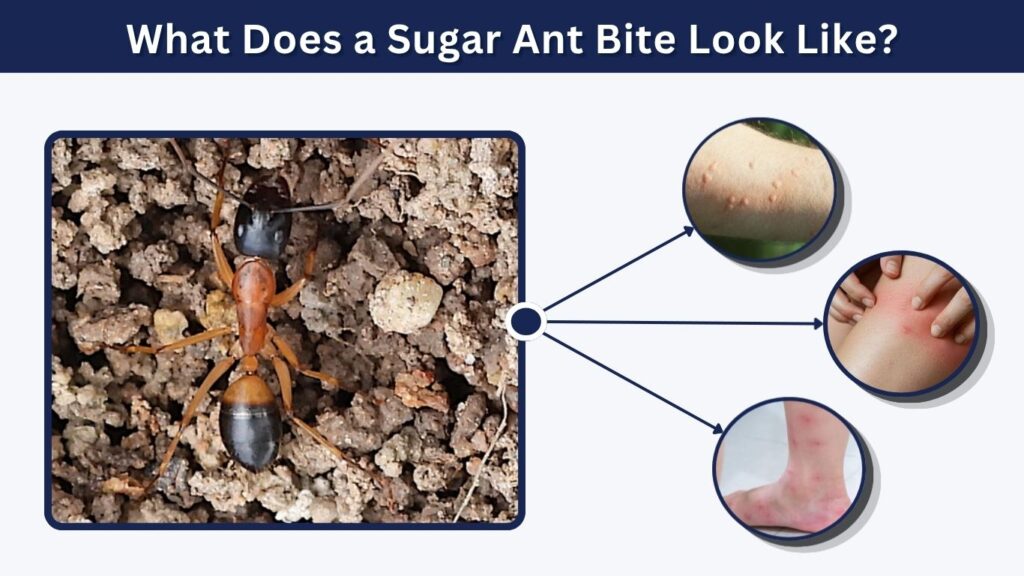
Sugar ant bites are usually difficult to identify based only on appearance. Small insect bites can resemble one another, and mild skin irritation may have many possible causes. If you actually see ants crawling on your skin before irritation appears, however, an ant bite becomes a more reasonable explanation.
Common Sugar Ant Bite Symptoms
Possible symptoms include:
- A small red spot.
- Mild localized swelling.
- Temporary itching.
- Slight burning or stinging.
- Minor tenderness.
- A small raised bump in sensitive individuals.
These reactions usually remain concentrated around the affected area.
Do Sugar Ant Bites Itch?
Yes, a sugar ant bite can itch, although not everyone experiences itching. The reaction depends partly on the ant species and partly on individual skin sensitivity.
Mild itching may develop shortly after the bite and gradually improve. Scratching should be avoided because broken skin can become irritated or infected.
If itching becomes intense, spreads significantly, or is accompanied by widespread hives or other unusual symptoms, the reaction may be more serious than an ordinary minor ant bite.
Are Sugar Ant Bites Dangerous?
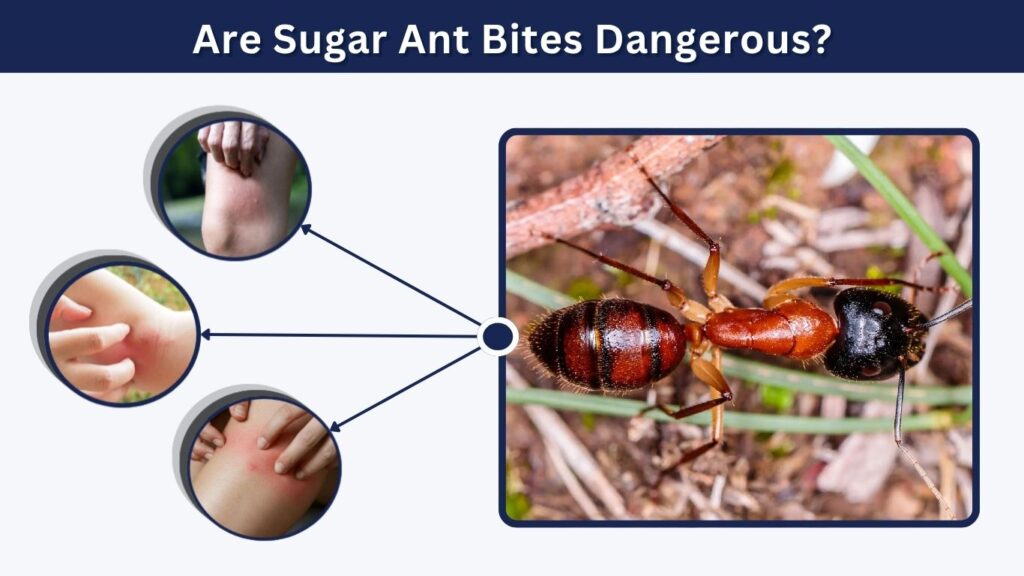
For most people, bites from small household sugar ants are more annoying than dangerous. Serious medical problems are uncommon. The greatest concern is usually irritation caused by scratching rather than the original bite itself.
Possible Risks After a Bite
- Temporary skin irritation.
- Redness around the bite.
- Mild itching or swelling.
- Scratched skin becoming infected.
- An allergic reaction in sensitive individuals.
Signs That Need More Attention
Seek appropriate medical care if you develop severe or rapidly increasing swelling, trouble breathing, dizziness, widespread hives, or other signs of a serious allergic reaction.
You should also watch for increasing pain, warmth, pus, or spreading redness in the days following a bite. These symptoms can suggest that damaged skin has become infected.
A painful reaction that is much stronger than expected may also indicate that another insect or ant species was responsible.
How to Treat a Sugar Ant Bite
Most minor sugar ant bites can be managed at home with simple skin care. The goal is to clean the area, reduce irritation, and avoid scratching while your skin recovers.
What to Do After Being Bitten
- Wash the affected area gently with soap and water.
- Apply a cold compress for several minutes if swelling develops.
- Avoid scratching the bite.
- Keep the affected skin clean and dry.
- Monitor the area for increasing redness or irritation.
- Follow directions carefully when using any over-the-counter anti-itch product.
How Long Does a Sugar Ant Bite Last?
A mild bite may improve within several hours or a few days. Slight redness or itching can sometimes remain longer, particularly if the area has been repeatedly scratched.
Healing time varies depending on your skin sensitivity and the amount of irritation.
If symptoms continue worsening rather than gradually improving, consider having the reaction evaluated by a healthcare professional.
Do Sugar Ants Bite Dogs and Cats?
Pets can encounter sugar ants around food bowls, outdoor feeding areas, bedding, or floors where crumbs accumulate. Although ants may crawl onto dogs or cats, serious attacks from ordinary household sugar ants are unusual.
Signs Your Pet May Have Been Bitten
- Licking one particular area repeatedly.
- Mild redness on exposed skin.
- Scratching more than usual.
- Small irritated spots.
- Pawing at the face after encountering ants.
Because fur hides much of a pet’s skin, identifying a tiny ant bite can be difficult.
What Should You Do?
Move your pet away from the ants and inspect exposed areas such as the paws, belly, nose, and ears. Clean minor irritation gently when appropriate.
Do not apply human medications or insect-control chemicals directly to your pet unless they are specifically approved for veterinary use.
Contact a veterinarian if your pet develops significant facial swelling, breathing difficulty, weakness, extensive skin irritation, or other concerning symptoms.
How to Prevent Sugar Ant Bites Indoors

Preventing contact is primarily a matter of controlling the ant infestation. Sugar ants usually enter homes looking for food or moisture, so sanitation and exclusion can significantly reduce their numbers.
Sugar Ant Prevention Tips
- Wipe up sugary spills immediately.
- Keep countertops free of crumbs.
- Store sweets in sealed containers.
- Keep pet food tightly covered.
- Empty trash regularly.
- Repair leaking pipes and faucets.
- Clean ant trails with soap and water.
- Seal cracks around doors and windows.
- Use appropriate ant bait near active trails.
- Avoid leaving food uncovered overnight.
Reducing the number of ants inside your home also reduces the chances of accidental bites.
FAQs
1. Do sugar ants bite people?
Yes, some ants commonly called sugar ants can bite people. However, the bites are typically mild and usually happen when an ant is trapped against the skin or disturbed.
2. Do sugar ants bite or sting?
Most small household sugar ants are more likely to bite than cause a noticeable sting. Because “sugar ant” can refer to several species, the exact behavior varies.
3. Why do sugar ant bites itch?
A minor skin reaction to the bite can cause itching, redness, or irritation. Scratching can make the affected area more uncomfortable.
4. Are sugar ant bites dangerous to dogs?
Sugar ant bites are generally not a major threat to dogs, but pets should be monitored for unusual swelling, severe irritation, or allergic reactions.
5. Why are sugar ants crawling on me?
Sugar ants generally are not targeting people. They may crawl onto you while following food odors, investigating sweet residues, or traveling along an established ant trail.